Rechercher dans ce blog

Monday, June 1, 2020

G-7 members reject Trump's bid to bring Russia in from the cold - POLITICO

President Donald Trump’s pitch to re-invite Russia to the G-7 got a swift thumbs-down from fellow world leaders on Monday.

The U.S. president, who is hosting the next gathering of leaders from major industrial nations, suggested Saturday the group ought to expand to include Russia, India, Australia and South Korea. The current members include Japan, Germany, United Kingdom, France, Italy and Canada. “I don’t feel that as a G-7 it properly represents what’s going on in the world,” Trump said.

The G-7 nations agreed to suspend Russia's membership in what was then the G-8 after Moscow annexed the Crimean peninsula in Ukraine in 2014. Readmission would require unanimous support among members of the current group.

Trump spoke by phone with Russian President Vladimir Putin Monday. According to a readout from the White House, “the two leaders discussed progress toward convening the G7,” among other subjects.

U.K. Prime Minister Boris Johnson has occasionally been an ally of Trump’s, but his spokesperson told journalists on Monday that he would veto any plan to readmit Russia.

The U.K. could only change its view if Russia "ceases aggressive and destabilizing activity that threatens the safety of U.K. citizens and the collective security of our allies," the spokesperson said.

Johnson "is unlikely to be pushed around by anyone on this," a senior British diplomat told POLITICO. The U.K. has taken a tougher stance against Moscow since blaming Russia for the 2018 nerve agent poisoning of a former Russian double agent in Salisbury, England.

Canadian prime minister Justin Trudeau also told reporters Monday that Russia should not be welcomed back. "Its continued disrespect and flaunting of international rules and norms is why it remains outside of the G-7 and it will continue to remain out," said Trudeau.

This is the third time Trump has urged that Putin be allowed back in the forum. Ahead of the 2018 G-7 summit, hosted by Trudeau in Canada, Trump called for Russia’s reinstatement into the group. He repeated that call in 2019, when only Italy supported the idea of extending an invitation to Putin.

Trump’s suggestion to expand the group piggybacks on a British proposal to form a “D-10” alliance of democracies to coordinate policy in the face of global concerns about China, from the role of Huawei in 5G networks to China’s handling of the coronavirus.

An Australian government spokesperson said Sunday that "Australia would welcome an official invitation" the group. "Strengthening international cooperation among like-minded countries is valued at a time of unprecedented global challenges."

India has not responded to the suggestion that it join the G-7, but its leader attended the G-8 summit in 2005, at the request of British Prime Minister Tony Blair.

European officials have expressed concern to POLITICO that under Trump, there has been very little of the traditional preparation that precedes the annual G-7 summit, including detailed discussion about the agenda and often intensive negotiation over the drafting of formal conclusions. Those negotiations are expected to be particularly tough given Trump's divergence from the others on a number of issues, especially trade and climate change.

Charlie Cooper and Andy Blatchford contributed reporting

Let's block ads! (Why?)


World - Latest - Google News
June 02, 2020 at 06:13AM
https://ift.tt/3covaub

G-7 members reject Trump's bid to bring Russia in from the cold - POLITICO
World - Latest - Google News
https://ift.tt/2SeTG7d

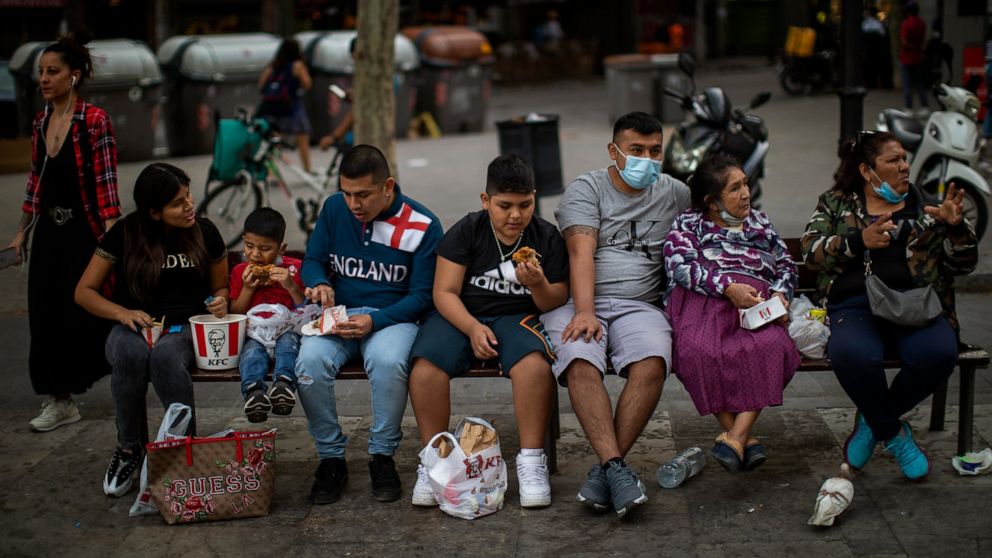
Spain reports no virus deaths for first time since March - ABC News

Spain is reporting no deaths in a 24-hour period from the new coronavirus for the first time since March

MADRID -- Spain on Monday reported no official deaths from the new coronavirus in a 24-hour period for the first time since March.

The development is “very, very encouraging,” emergency health response chief Fernando Simón said.

Also, Spain recorded only 71 new COVID-19 infections over the past 24 hours, he told a news conference.

“We are in a very good place in the evolution of the pandemic,” Simón said. “The statistics are following a trend. They are going in the right direction.”

Spain reported its first two deaths on March 3. Another was reported two days later. Spain’s number of infections and death jumped exponentially. On April 2, it recorded 950 deaths in 24 hours — the peak death toll.

The official death toll now stands at 27,127, with 240,000 confirmed cases.

Spain was the second European country after Italy to be forcefully hit by the pandemic before it also spread death in France and Britain. One of the world’s strictest lockdowns was put into place in mid-March and managed to eventually reduce the pressure on hospitals after some were overwhelmed with patients suffering from the virus.

The lockdown is gradually being relaxed as the medical situation improves.

The Spanish government has warned, however, that the threat is not over and that the loosening of restrictions could be reversed.

Spanish Prime Minister Pedro Sanchez said last weekend he will be asking parliament for an extension of the government’s special emergency powers for another two weeks. That enables authorities to order people to stay home.

Simon said recent hot spots caused by people holding unauthorized “fiestas” can potentially bring a major new resurgence.

“We are still at risk. Any of these outbreaks can mean a new wave of infections,” he said. “We must remain cautious.”

———

Follow AP pandemic coverage at https://ift.tt/2xPjH8c and https://ift.tt/2wrCaXK

Let's block ads! (Why?)


World - Latest - Google News
June 01, 2020 at 11:41PM
https://ift.tt/2Mi515t

Spain reports no virus deaths for first time since March - ABC News
World - Latest - Google News
https://ift.tt/2SeTG7d

New Ebola outbreak flares up as measles, COVID-19 rage in DRC - Ars Technica

Health workers operate within an Ebola safety zone in the Health Center in Iyonda, near Mbandaka, on June 1, 2018.
Enlarge / Health workers operate within an Ebola safety zone in the Health Center in Iyonda, near Mbandaka, on June 1, 2018.

A new outbreak of Ebola has ignited in the Democratic Republic of the Congo, which is still trying to stamp out an Ebola outbreak from 2018—and is now also battling a massive measles outbreak and COVID-19.

The new Ebola outbreak is in the western city of Mbandaka, the capital of the Équateur Province. The city—situated at the junction of the Congo and Ruki Rivers—is a major trade and travel hub and home to more than 1 million people.

On Monday, June 1, 2020, officials confirmed an outbreak with six cases so far (three confirmed, three probable). Four of the cases have died, and two are being treated. The World Health Organization reported that officials expect to find more cases as outbreak responses ramp up.

The outbreak is the 11th recorded in the DRC since Ebola was discovered in the country in 1976.

Officials believe that the DRC’s new outbreak is unrelated to the ongoing 10th outbreak, which began in August 2018 on the eastern side of the country—in the North Kivu, South Kivu, and Ituri provinces. That outbreak has included 3,463 cases (3,317 confirmed and 146 probable), and 2,280 people have died, making it the second-largest outbreak recorded.

The outbreak is now considered to be in its final stages. Health workers haven’t identified a new case since April 27, and the last person with a confirmed case who survived was released from treatment on May 14. That day began a 42-day countdown—two incubation periods for Ebola—before the outbreak can be officially declared over.

In April, officials were just days away from declaring the outbreak over, only to discover a new cluster of cases.

Meanwhile, the DRC has been battling on of the world’s largest measles outbreaks, with 369,520 cases and 6,779 deaths reported since 2019.

And as of May 31, officials have reported 3,195 cases and 72 deaths from COVID-19.

The new Ebola outbreak is “happening at a challenging time,” Dr. Matshidiso Moeti, WHO Regional Director for Africa, said in a statement. WHO already has members in Mbandaka helping with the response but is also sending an additional support team to help scale up response efforts.

“Given the proximity of this new outbreak to busy transport routes and vulnerable neighbouring countries we must act quickly,” Dr. Moeti said.

WHO Director-General Tedros Adhanom Ghebreyesus noted that the new outbreak “is a reminder that COVID-19 is not the only health threat people face. Although much of our attention is on the pandemic, WHO is continuing to monitor and respond to many other health emergencies.”

Let's block ads! (Why?)


World - Latest - Google News
June 02, 2020 at 05:49AM
https://ift.tt/2XskmXT

New Ebola outbreak flares up as measles, COVID-19 rage in DRC - Ars Technica
World - Latest - Google News
https://ift.tt/2SeTG7d

Amazon sees surging sales of pepper spray, Black Lives Matter merch - CNBC

Demonstrators hold signs during a protest at the Country Club Plaza on May 31, 2020 in Kansas City, Missouri.

Jamie Squire | Getty Images

Amazon shoppers are stocking up on pepper spray and Black Lives Matter merchandise as protests continue to erupt nationwide, according to sales rankings on its web site.

The e-commerce site lists self-defense items, educational books on racial justice and Black Lives Matter t-shirts as top-selling items across several categories of its Best Sellers page.

The rankings show that the protests against police brutality are at the forefront of some consumers' minds, as many of them grapple with the aftermath of the killing of George Floyd in Minneapolis.

Cities across America continued to demonstrate on Monday following a weekend of widespread protests over Floyd's death at the hands of police officers in Minneapolis. On Friday, Derek Chauvin, a former Minneapolis police officer who was filmed kneeling on Floyd's neck before he died, was taken into custody and charged with murder and manslaughter.

The Sports and Outdoors category showed pepper spray as the top-selling item, while a rechargeable taser was listed at No.44, illustrating that consumers are buying self-defense items amid protests that have turned violent in some areas of the country. 

Outrage over the killing of Floyd appeared in the novelty clothing section of Amazon's Best Sellers page, where two "I can't breathe" t-shirts were among the top 10 best-selling items. One Black Lives Matter shirt ranks No. 60 in the best-selling clothing on Amazon, which is a significant rise from last Friday, when it didn't appear among the top 1,000 best sellers in that category, said Juozas Kaziukenas, who runs the e-commerce research firm Marketplace Pulse.

In the Books category, "White Fragility: Why It's So Hard for White People to Talk About Racism" is listed as the top-selling item, while "How to Be an Antiracist" is ranked third and "We're Different, We're the Same" is ranked seventh.

Amazon's Best Seller page calculates top sellers based on sales volume, according to the company's website. Amazon updates rankings every hour "to reflect recent and historical sales."

It's unclear if other factors are considered when determining Best Seller rankings, such as search volume. Representatives from Amazon didn't immediately respond to a request for comment.

Kaziukenas said Amazon tracks Best Sellers based on search volume but the data is shared with vendors and isn't viewable by the public.

The sales of Black Lives Matter shirts and other activism-inspired merchandise could be used as a vehicle for donating to those causes, Kaziukenas said.

"It's an opportunity for Amazon to donate those proceeds," he said. "Amazon takes a cut of each sale. All of that should be donated if Amazon cared."

Let's block ads! (Why?)


World - Latest - Google News
June 02, 2020 at 07:50AM
https://ift.tt/302pBPt

Amazon sees surging sales of pepper spray, Black Lives Matter merch - CNBC
World - Latest - Google News
https://ift.tt/2SeTG7d

Hong Kong Police Block Tiananmen Square Vigil, Citing Coronavirus Concerns - NPR

Thousands attend a 2019 candlelight vigil in Hong Kong for victims of the Chinese government's 1989 crackdown on protesters in Beijing's Tiananmen Square. Organizers question why police are blocking the demonstration this year. Kin Cheung/AP hide caption

toggle caption
Kin Cheung/AP

For the first time in 30 years, police in Hong Kong have denied permission for organizers to hold an annual vigil for victims of the Tiananmen Square massacre. Police have cited concerns over the spread of the coronavirus.

The rally has been held each year since 1990 to commemorate the lives lost in the June 4, 1989, crackdown in Beijing's Tiananmen Square. The Chinese military opened fire on citizens who were calling for economic and democratic reforms.

The Hong Kong Alliance in Support of Patriotic Democratic Movements of China, which organized the vigil, told the South China Morning Post that alliance members still planned to enter Victoria Park to observe a moment of silence that night.

The alliance also asked the public to join an online gathering and light candles across the city.

NPR's Emily Feng reported that the move to deny the demonstration comes amid controversy surrounding China's proposed national security law that could limit Hong Kong's autonomy.

The potential law has concerned pro-democracy advocates, and as Feng noted, "Legal scholars question whether Beijing has the authority to impose this law on Hong Kong."

In justifying an earlier extension of restrictions to June 4, police cited a lingering threat of the spread of the coronavirus, The Guardian reported.

"Police believe the event will not only increase participants' chances of contracting the virus, but also threaten citizens' lives and health, thus endangering public safety and affecting the rights of others," police said, according to the newspaper.

Lee Cheuk-yan, who chairs the alliance that organized the event, told the South China Morning Post that he believes the government was using the pandemic to shut down the demonstration.

"We believe this is totally unreasonable and unscientific, because everything is normal in Hong Kong. They are just using this excuse to suppress our rally," he said, adding that many other facilities had already reopened.

Let's block ads! (Why?)


World - Latest - Google News
June 02, 2020 at 05:26AM
https://ift.tt/2AulPng

Hong Kong Police Block Tiananmen Square Vigil, Citing Coronavirus Concerns - NPR
World - Latest - Google News
https://ift.tt/2SeTG7d

New Ebola Outbreak in Congo, Already Hit by Measles and Coronavirus - The New York Times

DAKAR, Senegal — A fresh outbreak of the deadly Ebola virus has flared up in the Democratic Republic of Congo, a country that was already contending with the world’s largest measles epidemic, as well as the coronavirus.

Congo’s health ministry said that the new Ebola outbreak has killed four people, and infected at least two more, in Mbandaka, a city of 1.2 million people on the country’s western side. A fifth person died on Monday, according to UNICEF, the United Nations agency for children.

Less than two months ago, Congo was about to declare an official end to an Ebola epidemic on the eastern side of the country that had lasted nearly two years and killed more than 2,275 people. Then, with just two days to go, a new case was found, and the outbreak could not be declared over. But officials say it is in its final stages.

It is unclear how Ebola emerged in Mbandaka, which is about 750 miles west of the nearly-vanquished outbreak on the country’s eastern edge. Congo (formerly known as Zaire) is the largest country in sub-Saharan Africa, and has been under travel restrictions to prevent the spread of the coronavirus.

Reported cases of coronavirus have so far been mostly in the capital, Kinshasa, also in the country’s west. Congo has reported 3,049 cases of coronavirus, including 71 deaths, but testing is limited, so it is impossible to know the true scale of the outbreak.

More than 350,000 people have been infected with measles in the country since January 2019, and over 6,500 have died.

Dr. Matshidiso Rebecca Moeti, the World Health Organization’s regional director for Africa, wrote on Twitter that although the new outbreak of Ebola posed a challenge, the W.H.O., along with Congo’s health ministry and the Africa Centers for Disease Control and Prevention, were ready to tackle it.

“With each experience we respond faster ​and​ more effectively,” Dr. Moeti wrote.

The five people who died included a 15-year-old girl, according to UNICEF. Two other patients were being treated in the isolation unit of a city hospital.

Ebola causes fever, bleeding, weakness and abdominal pain, and kills about half of those it infects. It is transmitted through contact with sick or dead people or animals, and is named for the Ebola River, in Congo, where it was first identified, in 1976.

The largest known outbreak of Ebola erupted in 2014 in the West African countries of Guinea, Liberia and Sierra Leone, and killed more than 11,000 people. But since then, researchers have developed vaccines and treatment methods that can limit transmission of the disease.

This is not the first time that Ebola has hit Mbandaka, an equatorial port city on the Congo River. An outbreak in May 2018 resulted in at least 54 cases and 33 deaths in the area. But the W.H.O. delivered more than 7,500 doses of an Ebola vaccine to Congo, and the outbreak in Mbandaka was quickly brought under control. It was declared over on July 24 of that year.

  • Frequently Asked Questions and Advice

    Updated June 1, 2020

    • How do we start exercising again without hurting ourselves after months of lockdown?

      Exercise researchers and physicians have some blunt advice for those of us aiming to return to regular exercise now: Start slowly and then rev up your workouts, also slowly. American adults tended to be about 12 percent less active after the stay-at-home mandates began in March than they were in January. But there are steps you can take to ease your way back into regular exercise safely. First, “start at no more than 50 percent of the exercise you were doing before Covid,” says Dr. Monica Rho, the chief of musculoskeletal medicine at the Shirley Ryan AbilityLab in Chicago. Thread in some preparatory squats, too, she advises. “When you haven’t been exercising, you lose muscle mass.” Expect some muscle twinges after these preliminary, post-lockdown sessions, especially a day or two later. But sudden or increasing pain during exercise is a clarion call to stop and return home.

    • My state is reopening. Is it safe to go out?

      States are reopening bit by bit. This means that more public spaces are available for use and more and more businesses are being allowed to open again. The federal government is largely leaving the decision up to states, and some state leaders are leaving the decision up to local authorities. Even if you aren’t being told to stay at home, it’s still a good idea to limit trips outside and your interaction with other people.

    • What’s the risk of catching coronavirus from a surface?

      Touching contaminated objects and then infecting ourselves with the germs is not typically how the virus spreads. But it can happen. A number of studies of flu, rhinovirus, coronavirus and other microbes have shown that respiratory illnesses, including the new coronavirus, can spread by touching contaminated surfaces, particularly in places like day care centers, offices and hospitals. But a long chain of events has to happen for the disease to spread that way. The best way to protect yourself from coronavirus — whether it’s surface transmission or close human contact — is still social distancing, washing your hands, not touching your face and wearing masks.

    • What are the symptoms of coronavirus?

      Common symptoms include fever, a dry cough, fatigue and difficulty breathing or shortness of breath. Some of these symptoms overlap with those of the flu, making detection difficult, but runny noses and stuffy sinuses are less common. The C.D.C. has also added chills, muscle pain, sore throat, headache and a new loss of the sense of taste or smell as symptoms to look out for. Most people fall ill five to seven days after exposure, but symptoms may appear in as few as two days or as many as 14 days.

    • How can I protect myself while flying?

      If air travel is unavoidable, there are some steps you can take to protect yourself. Most important: Wash your hands often, and stop touching your face. If possible, choose a window seat. A study from Emory University found that during flu season, the safest place to sit on a plane is by a window, as people sitting in window seats had less contact with potentially sick people. Disinfect hard surfaces. When you get to your seat and your hands are clean, use disinfecting wipes to clean the hard surfaces at your seat like the head and arm rest, the seatbelt buckle, the remote, screen, seat back pocket and the tray table. If the seat is hard and nonporous or leather or pleather, you can wipe that down, too. (Using wipes on upholstered seats could lead to a wet seat and spreading of germs rather than killing them.)

    • How many people have lost their jobs due to coronavirus in the U.S.?

      More than 40 million people — the equivalent of 1 in 4 U.S. workers — have filed for unemployment benefits since the pandemic took hold. One in five who were working in February reported losing a job or being furloughed in March or the beginning of April, data from a Federal Reserve survey released on May 14 showed, and that pain was highly concentrated among low earners. Fully 39 percent of former workers living in a household earning $40,000 or less lost work, compared with 13 percent in those making more than $100,000, a Fed official said.

    • Should I wear a mask?

      The C.D.C. has recommended that all Americans wear cloth masks if they go out in public. This is a shift in federal guidance reflecting new concerns that the coronavirus is being spread by infected people who have no symptoms. Until now, the C.D.C., like the W.H.O., has advised that ordinary people don’t need to wear masks unless they are sick and coughing. Part of the reason was to preserve medical-grade masks for health care workers who desperately need them at a time when they are in continuously short supply. Masks don’t replace hand washing and social distancing.

    • What should I do if I feel sick?

      If you’ve been exposed to the coronavirus or think you have, and have a fever or symptoms like a cough or difficulty breathing, call a doctor. They should give you advice on whether you should be tested, how to get tested, and how to seek medical treatment without potentially infecting or exposing others.

    • How can I help?

      Charity Navigator, which evaluates charities using a numbers-based system, has a running list of nonprofits working in communities affected by the outbreak. You can give blood through the American Red Cross, and World Central Kitchen has stepped in to distribute meals in major cities.


In eastern Congo, ongoing violence and insecurity that has forced people to flee their homes has also made it difficult to end the epidemic. By comparison, the western Équateur Province, where the new Ebola cases have emerged, is relatively safe and stable.

There have been many outbreaks of Ebola in Congo over many years, and most have been resolved relatively quickly.

The government imposed travel restrictions between the country’s provinces in response to the coronavirus outbreak, which may now also help limit the spread of Ebola from Mbandaka.

Let's block ads! (Why?)


World - Latest - Google News
June 02, 2020 at 06:33AM
https://ift.tt/2zGKbu9

New Ebola Outbreak in Congo, Already Hit by Measles and Coronavirus - The New York Times
World - Latest - Google News
https://ift.tt/2SeTG7d

Featured Post

Qatar 'appalled' by reported criticism from Israel's Netanyahu - BBC.com

By David Gritten BBC News Reuters Qatar's foreign ministry said the Israeli prime minister's reported remarks were ...

Popular Posts