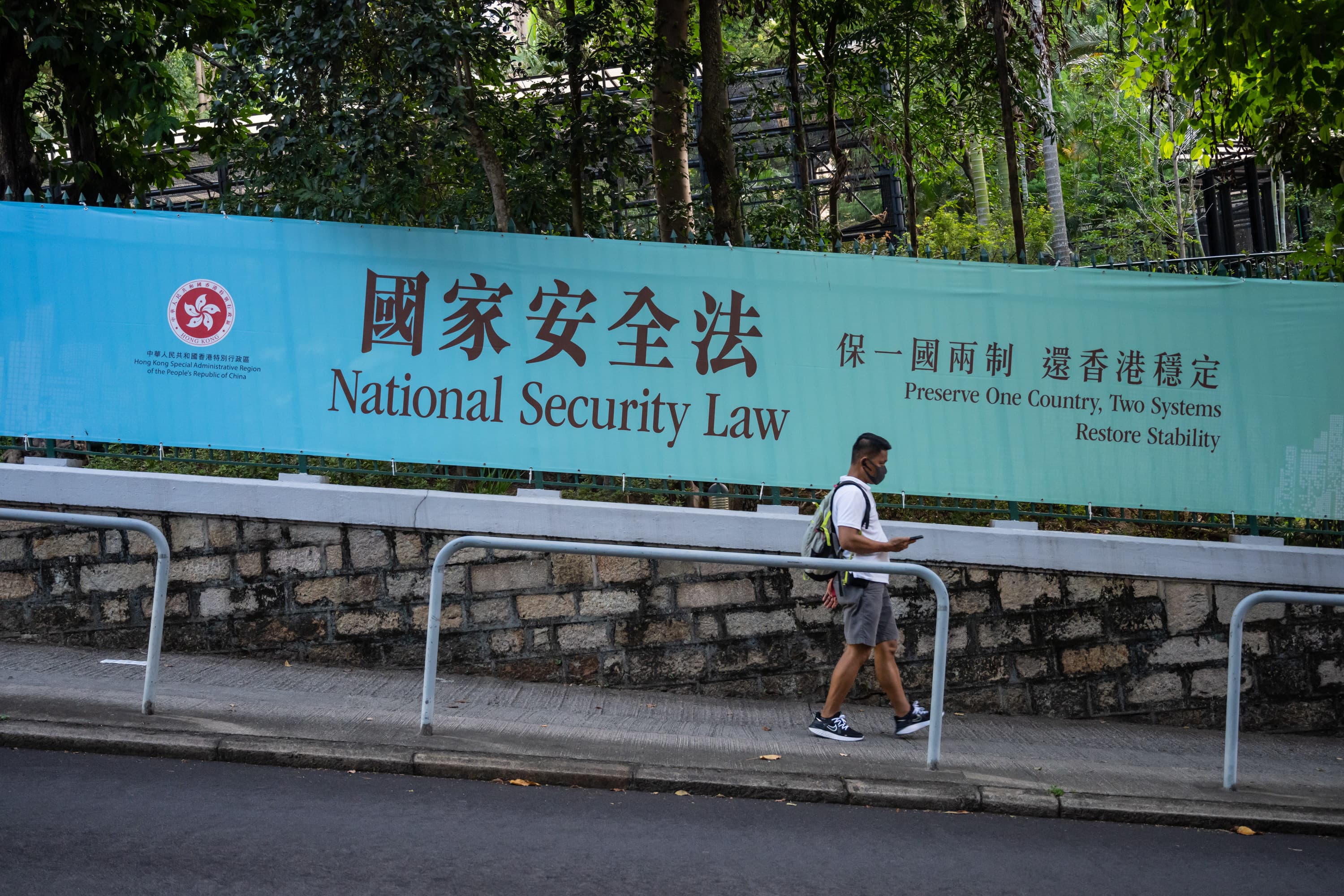
Pedestrians walks past a government-sponsored advertisement promoting a new national security law on June 30, 2020 in Hong Kong, China.
Billy H.C. Kwok | Getty Images
BEIJING — The central Chinese government passed a sweeping new security law for Hong Kong that took effect just hours before the 23rd anniversary of the city's handover from the U.K to China on Wednesday.
The National Security Law strengthens Beijing's control on Hong Kong, a semi-autonomous region with greater democratic freedoms and alignment with international business standards than the mainland. That special status has made Hong Kong an attractive hub for many international companies wanting to tap the Greater China market.
Under the new legislation, many of the activities carried out by protesters in Hong Kong over the last year become punishable by law. What began as largely peaceful mass protests against a controversial extradition bill more than 12 months ago turned into violent clashes with police.
An official English translation of the new law stipulates that a person who acts with a view to "undermining national unification" of Hong Kong with the mainland faces punishment of up to lifetime, depending on the severity of the offense. Financial support for such activities is also a crime.
The security law also laid out in broad strokes what could be deemed offenses by "terrorist organizations" and those who collude with foreign entities.
The text also says those who are not permanent Hong Kong residents can be deported if they break the law.
Under Chinese President Xi Jinping, Beijing's decision to move ahead with the law comes despite strong criticism from Europe and the U.S.
EU Council President Charles Michel said Tuesday that "We deplore the decision," according to a Reuters report.
U.S. President Donald Trump's administration has also taken steps toward eliminating Hong Kong's special trading status with the world's largest economy, beginning with restrictions on defense exports and access to high technology products.
Other aspects of the law indicated how Beijing would strengthen its hand in Hong Kong's affairs.
A national security advisor designated by the central government will sit in on meetings of a Committee for Safeguarding National Security of the Hong Kong Special Administrative Region, the law said.
Hong Kong will also promote national security education through schools and media, according to the law.
COLUMBUS, Ohio -- Virginia five-star defensive back of Princess Anne High School in Virginia Beach, Va., has committed to North Carolina.
Rated as the nation’s top cornerback and No. 7 player, Grimes chose the Tar Heels over Ohio State, Georgia and Texas A&M. Head coach Mack Brown adds Grimes as his 17th commitment in a class that ranks fourth in the country and second in the ACC behind Clemson.
Not only is he the highest player to join the class, but he’s just the fourth recruit rated as a five-star to head to Chapel Hill, joining defensive tackle Marvin Austin and wide receiver Dwight Jones in 2007 along with defensive end Donte Moss in 2009. Had he chosen the Buckeyes, it would’ve been the second time in the past five years that OSU has landed the No. 1 cornerback in the country after doing so in 2017 with Jeff Okudah. They also landed the No. 2 cornerback in the country that year in Shaun Wade.
Grimes was one of six players from Virginia with an Ohio State offer and the third to come off the board. Five-star running back TreVeyon Henderson chose OSU despite never visiting the campus, while three-star linebacker Bryce Steele committed to South Carolina. The Buckeyes could still land another player out of the state in five-star offensive lineman Tristan Leigh, who listed OSU in his top 15 in May.
Ohio State will have another chance to get its class back to 19 commits on Friday when four-star cornerback Jamier Johnson makes his decision between OSU and six other schools.
Here’s a look at Ohio State’s 2021 recruiting class as it stands:
Sports - Latest - Google News
July 01, 2020 at 04:45AM
https://ift.tt/3ePFgX5
Tony Grimes, 2021′s top cornerback and Ohio State football target, commits to North Carolina: Buckeye Recruit - cleveland.com
Sports - Latest - Google News
https://ift.tt/2Mbsnt7
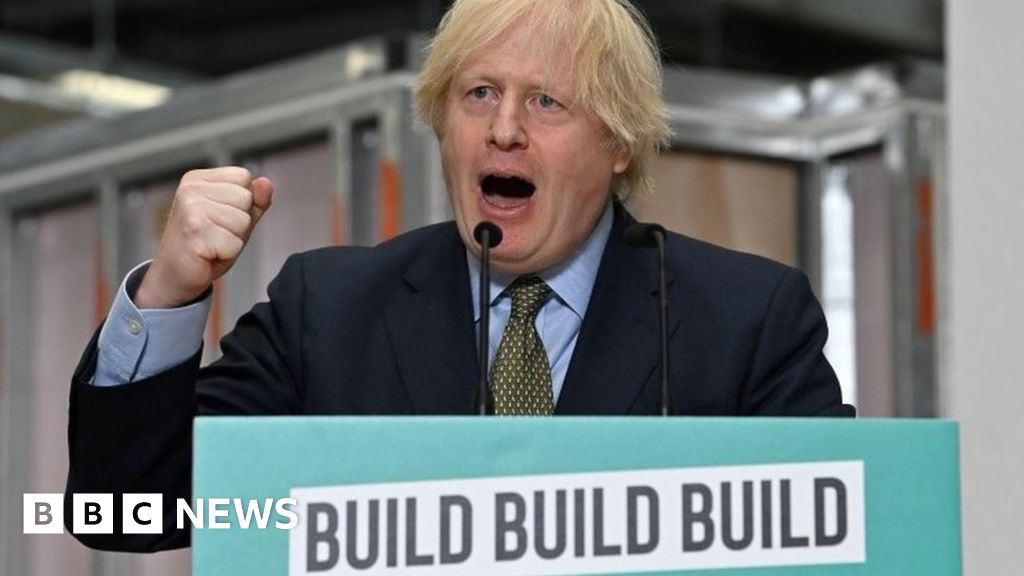
The prime minister has set out £5bn worth of infrastructure spending that he says will mean the UK can "bounce back better".
Reality Check has taken a closer look at some of the announcements:
1. A New Deal
Boris Johnson said: "It sounds like a New Deal... because that is what the times demand."
In the early 1930s, President Franklin D Roosevelt's New Deal programme increased the state's role in the economy and was designed to help the US recover from the Great Depression.
Comparisons between government programmes in different countries, 90 years apart, are very difficult to make.
Also, there are strong arguments that it was Roosevelt's structural reforms involving things like banking and social security that brought about the recovery.
Nonetheless, there have been a few valiant attempts at trying to get New Deal spending into some sort of modern context.
Remember that the New Deal ran over several years, with spending each year between about 5% and 7% of the total output of the economy (GDP) each year.
Boris Johnson's £5bn would be less than a quarter of one percent of GDP if it were spent in a single year (which is unlikely).
To get an idea of the scale of increased government spending in the 1930s, US federal government debt grew from 16% of GDP in 1929 to 44% of GDP in 1939.
2. Hospital spending
Before the speech, it was announced £1.5bn would be made available for hospital maintenance and construction, the removal of mental health dormitories and increasing A&E capacity.
It would be part of the pot of money known as the capital budget. This spending is the money we use to build new hospitals or fix existing ones. It is also spent on new equipment, such as MRI machines.
This spending was cut between 2010-11 - when the Conservatives entered power - and 2017-18 by about 7% in England, according to the Health Foundation. This was because the NHS was focusing its resources on day-to-day running of the health service, such as staff pay. However, recent announcements have seen spending refocus on capital projects.
In the Spring Budget 2020, the Department of Health and Social Care's capital budget increased by £1.1bn, taking the annual budget to £8.2bn.
The department has said that the £1.5bn announced on Tuesday is all on top of the earlier £1.1bn.
There is an existing backlog of £6.5bn already needed to fix problems in NHS buildings.
3. Road and rail projects
The government has pledged £100m this year for 29 projects to "get Britain moving", including:
bridge repairs in Sandwell, in the West Midlands
improving the A15 in the Humber region
£10m for ''unblocking the central Manchester bottleneck''
But this is a relatively small amount of money for a large number of projects.
And it is not new.
It has been allocated from the money set out in the Spring Budget for infrastructure investment.
4. Planning and housing
The prime minister said "we will build fantastic new homes on brownfield sites" and promised the "most radical reforms" of the planning system since World War Two.
The UK's planning system was effectively established in 1947, two years after the end of the war, with the Town and Country Planning Act.
There has been criticism in recent years of the amount of time it takes to get planning permission.
But it has also been pointed out that many developers secure planning permission and then don't immediately build. Homeless charity Shelter said 280,000 homes were given planning permission in England between 2011 and 2016 but were never built.
In 2017-18, 382,997 applications were granted, which would be more than enough to meet the government target of 300,000 new homes a year.
The government has also said that it would spend £12bn to build houses over the next eight years, something which had been announced previously.
5. Schools
The prime minister repeated Monday's pledge of £1bn for 50 school-building programmes starting in September 2021.
This is also the allocation of some of the infrastructure spending announced in the Spring Budget.
And there have been no details of which 50 schools will be given the money.
On Monday, Mr Johnson announced £200m for further education.
But this turned out to be just bringing forward some of the £1.5bn over five years promised in the Conservative manifesto for further education.
And on Tuesday, Mr Johnson made no mention of this £200m, referring to the whole £1.5bn instead.
6. Tree planting
The PM repeated a commitment to plant over 75,000 acres of trees (about 30,000 hectares) every year by 2025.
But Conservative-led governments over the past decade have consistently fallen short of targets for tree-planting set out in their election manifestos.
Tree-planting is a devolved issue in the UK, but England's tree-planting record is particularly poor compared with other European countries.
Government funding and support saw about 3.6 million trees newly planted in England in the two years from 2017 to 2019, covering an area of about 2,300 hectares.
That figure does not include trees planted to replace others that have been cut down.
In the same period, Scotland planted 18,300 hectares - including 84% of all the new trees planted in the UK in 2018-19.
7. Deporting criminals
The prime minister spoke about wanting "to end the lunacy that stops us - for instance - deporting some violent offenders".
He didn't give any details, but the Conservative 2019 manifesto said: "We will use our new freedoms after Brexit to prevent more foreign national offenders entering our country. We will cut the number of foreign nationals in our prisons."
After the transition deal ends on 31 December, it will be easier to deport criminals who are EU citizens. Previously deportations of EU citizens had to be "proportionate" to the crime and after an assessment on the actual threat they present to the UK.
But after 31 December both EU and non-EU citizens will still be covered by human rights rules - these include whether someone might be tortured on return to their country of origin or if they had a close family link to the UK.
In 2019, 5,110 foreign national offenders were deported.
"These are unprecedented times for our country and our organization as this is the first time in our history that we've had a summer without minor-league baseball played," O'Conner said in a statement. "While this is a sad day for many, this announcement removes the uncertainty surrounding the 2020 season and allows our teams to begin planning for an exciting 2021 season of affordable family entertainment."
While the news was expected, that didn't lessen the general fear and uncertainty about the immediate future of professional baseball swelling below the level of Major League Baseball. The reason for the cancellation -- the ongoing coronavirus pandemic that has gripped the globe for most of 2020 -- is beyond the control of officials at any level of the game. But as unfortunate as those circumstances would be even in normal times, for MiLB teams, the timing is especially fraught.
That building fight screeched to a halt when the coronavirus stole the spotlight, putting everything into months of limbo. Teams throughout the minors waited out the combative talks between MLB and the MLBPA regarding the season at the sport's highest level, all while holding out hope of salvaging at least part of a campaign of their own. Those hopes were abandoned with Tuesday's announcement.
The fallout from the minors' lost season will take months to untangle, even as the mostly dormant talks regarding a new PBA invariably resume. Still, let's try to take a snapshot of the current landscape of the minor leagues after Tuesday's sad news.
1. Why did this happen?
The pandemic was the reason, of course. From a more technical standpoint, however, it was this: To play baseball, you need to have players. Minor league teams weren't going to get them and were officially informed as such this week.
The structural foundation of the PBA is that minor league organizations provide the infrastructure -- the cities, teams, stadiums, leagues, umpires, etc. -- with which their Major League Baseball overlords can develop their future players. Thus big league clubs supply players to their affiliates and pick up the vast majority of the associated labor cost.
However, when MLB announced its own return last week, it was not a full resumption of operations. Teams have been announcing player pools of up to 60 players for the truncated big league season, but that's it. Players not on the active roster, which starts off at 30 players per team and decreases as the season progresses, are assigned to a taxi squad. The taxi squad players will include a number of high-level prospects who will receive some developmental work. However, this will be done through practice, simulated games and workouts as opposed to the normal competition of minor league games.
Simply put: Big league teams will not be assigning players to their affiliates. Thus minor league teams could not have conducted a season even if they wanted to.
2. What happens to the players?
As mentioned, many of the top prospects are being included in their organization's player pool, even if there are no plans to have them see big league competition this season. Those players will receive some much needed developmental repetitions. Some of those players, and other lesser prospects who would otherwise qualify as organizational depth, will indeed see action in the majors as teams try to navigate this unusual, 60-game season. The situation for those players is straightforward.
For others, it's also straightforward, but in a less encouraging way. Teams released scores of minor leaguers in recent weeks in advance of the season-resumption announcement. Many of those players would have been released at the end of spring training anyway, but according to Baseball America, the number of players released during that wave of transactions appears to outnumber similar moves in recent seasons.
However, there are also numerous players caught in between. They remain on their organization's reserved list but haven't been added to the 60-player-per-team pool. But with Tuesday's announcement, they have no place to play. On Monday, Baseball America's J.J. Cooper reported that if a player in this large class gains consent from his organization, he would be allowed to seek a spot in one of the independent minor leagues this summer. Some independent leagues, such as the American Association, plan to play in a reduced form. Others, such as the Frontier League, have already canceled their season.
Continued pay for minor leaguers has been a hot-button issue since the shutdown began, with each team's policy being scrutinized. There is still no uniform approach. Some teams, such as the Kansas City Royals, have pledged to pay players until the end of what would have been the regular minor league season. Others, such as Oakland and Washington, reversed initial decisions to stop paying their minor leaguers. As of Tuesday, every team was pledged to pay players a $400 weekly stipend at least through the end of June. Most teams have extended that at least through July.
One silver lining is that minor league players will receive service time credit even with the season being canceled. The minor league version of service time is crucial for the class of players beyond the top-prospect lists. It determines what level they can be assigned to, with the higher levels receiving higher pay. More importantly, it determines when they will be eligible for the Rule 5 draft, which forces their organization to either place them on the 40-man big league roster or expose them for selection by another club.
Rule 5 eligibility is a crucial benchmark in the career of a minor leaguer from both a competitive and financial standpoint. Luckily, for any minor leaguer who does not play this season but would otherwise have been Rule 5-eligible this winter, that will still be the case.
3. Will minor league teams survive this?
Teams at the Double-A and Triple-A level will survive, even though many have had to lay off or furlough staff in recent months. One thing that nearly all teams at those levels have is the certainty of being a high-level affiliate of a big league club next season and beyond, however the negotiations for a new PBA are resolved. They reside in larger municipalities than lower-level clubs and thus have more corporate support and a larger season-ticket base. Nevertheless, even for those clubs, the loss of an entire season is a major setback.
Unlike MLB, which has massive revenue streams from its broadcast and digital partners, nearly the entire revenue model of minor league baseball revolves around staging games in front of fans. Even most of their corporate sponsorships and merchandising endeavors are built around this dynamic. Teams have pivoted to creating as many new revenue streams as they can. One team turned its ballpark into an Airbnb. Others have screened movies, drive-in style.
Several Texas-based organizations joined a college wood-bat summer league, planning to stage those games in front of limited-capacity gatherings. While the full list of alternate-site locations for MLB taxi squads has not yet emerged, many of those sites will be those of nearby affiliates. While the taxi squads won't participate in games in front of fans, presumably MLB teams will have to compensate minor league clubs for the use of their facilities.
Still, even as minor league teams scramble to recover as much revenue as they can, the receipts will invariably be a drop in the bucket of a normal season's income. Last week, fifteen minor league teams filed a federal lawsuit against five insurance companies, claiming "action and inaction by federal and state governments" contributed to "catastrophic financial losses" for ballclubs.
This means that some clubs in the lower levels of the minors, many of which have been mentioned in conjunction with MLB's contraction proposal and thus lack certainty about future marketing efforts, will struggle to survive.
Compounding the issue, teams will have to reach out to season-ticket holders and corporate partners about contingency plans for monies already collected and, in most cases, already spent. Options could include simply rolling the commitment over to next season, or converting 2020 expenditures into gift cards, which would help teams preserve cash flow. Invariably, as many industries beyond baseball have struggled in recent months, some fans and companies will seek refunds, and it's possible that a few cash-strapped teams will not have the funds to make them.
All of this will be sorted out in the weeks to come, now that the season has been definitely called off.
4. How does this impact negotiations for a new Professional Baseball Agreement?
Recent talks between MLB and MiLB have been sporadic, as big league owners had their own season to worry about. Those talks should resume in earnest soon. When they do, MLB negotiators will proceed with the knowledge that many minor league clubs are operating in precarious terrain. That was true before the minor league season was called off, but now that it has been, MiLB's worst-case scenario has become reality.
To put it succinctly: Nearly every avenue minor league owners had to create leverage in their effort to stave off contraction has been blocked.
5. What will minor league baseball look like when it returns?
Before the pandemic, there was considerable public and political pressure building on MLB negotiators to reach an accord with MiLB that did not involve contraction. Jobs could be lost. Economic activity could be curtailed. But the coronavirus turned the heads of the politicians, who had to concern themselves with similar issues on a much larger scale.
Now, some of the clubs believed to be on the cut list might go out of business anyway, and MiLB owners everywhere are looking for any life raft they can grab. MLB negotiators hold all the cards. Its trump card is that if no agreement is reached, then MLB can simply walk away and create their own feeder system from scratch.
That's not likely to happen. Mostly, that's because of the expense that would come with setting up an entirely new minor league system. New teams, new venues, a new infrastructure and what would likely be a whole slew of litigation by MiLB owners and municipalities of contracted teams. Of course, the litigation could occur anyway unless MLB insists on that option being waived in the final PBA agreement.
The most likely outcome is that a new PBA will be agreed to, and it will be on MLB's terms. Given the terrain, desperate MiLB owners will latch onto pretty much anything that comes their way. Thus expect to see a reduced list of affiliated teams next season, a shuffling of affiliations, and a restructuring of the leagues themselves as Major League clubs seek greater geographic efficiency.
When the minor league season ended last summer, business was good, perhaps as good as it had ever been. Most teams were profitable, with more than 40 million fans clicking the turnstiles of minor league parks across the nation. When we next see affiliated baseball at the minor league level, we don't exactly know what the landscape will look like. We don't, in fact, know if we will even be able to recognize that landscape at all.
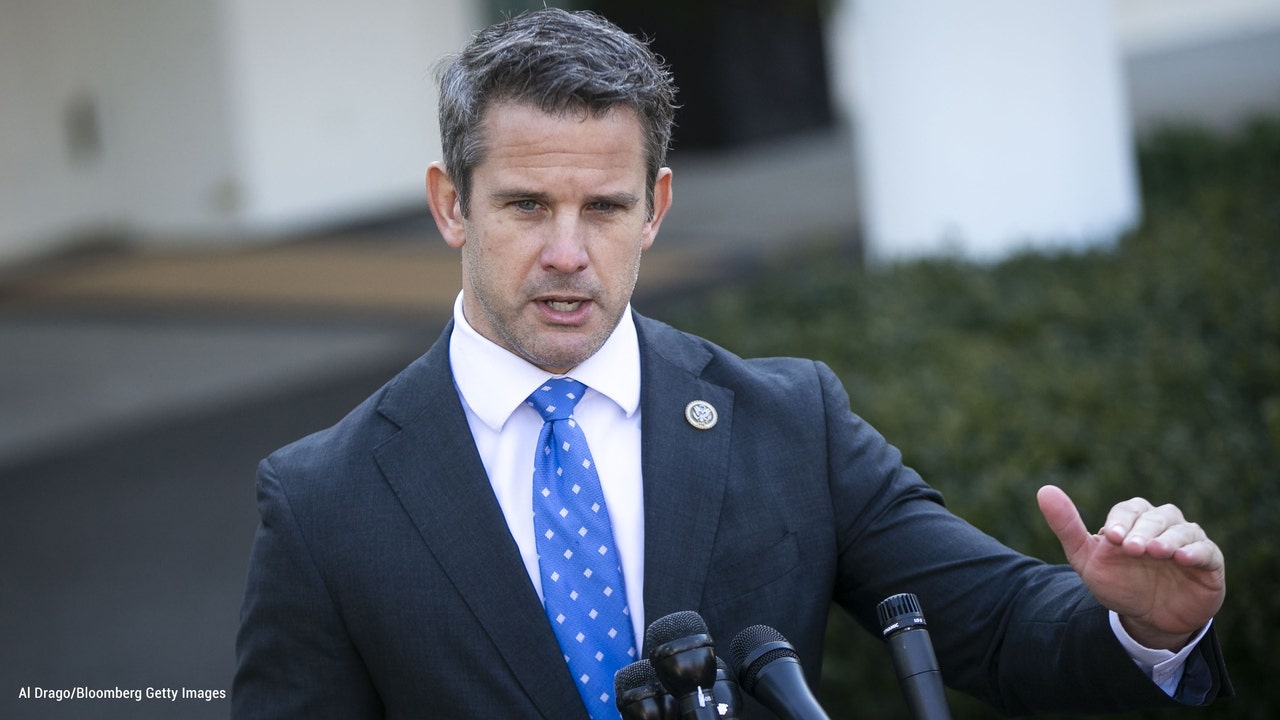
Rep. Adam Kinzinger, R-Ill., told Fox News Radio Tuesday that it is unlikely President Trump was briefed on intelligence that Russia secretly offered bounties to Taliban-linked militants for killing American troops in Afghanistan due to the information's unverified nature.
"I don't think the president was briefed," Kinzinger told "The Brian Kilmeade Show." "The briefer made the decision when he -- keep in mind this is when the coronavirus pandemic is kicking off as well -- skipped over that issue to wait for more information."
The New York Times report on the intelligence sent shockwaves throughout Washington over the weekend. A senior U.S. official told Fox News Monday that the National Security Council recently met to come up with a "menu of responses" to Russian action in Afghanistan. However, a White House official said the president was not briefed on the matter until "after the NY Times reported on unverified intelligence" Friday.
"What I do know is that whether or not the president was briefed, frankly, is irrelevant because the intelligence agencies could not yet agree on this," explained Kinzinger, a member of the House Foreign Affairs Committee who attended a White House briefing on the subject. "If this is something, you need to have large agreement or at least [agreement] to a point of significant confidence to be able to take action.
"Otherwise, in theory, if it's not true and you're reacting against the Russians, think of the damage of that."
Kinzinger added that the intelligence leak to the Times is more than likely going to "dry up any trails we have been pursuing to get more information on this," but urged lawmakers to resist politicizing the issue as they wait for more information.
"I think where we're at now, unfortunately, this has become a political issue," he said. "Republicans and Democrats should both agree that if Russia is doing this, there has to be harsh consequences. Instead, a lot of people have taken this as a moment to do politics with it and embarrass the president."
Fox News' Jennifer Griffin and Kristin Fisher contributed to this report.
World - Latest - Google News
July 01, 2020 at 06:57AM
https://ift.tt/31xeWgD
Rep. Kinzinger explains why question of Trump being briefed on Russia bounty intel is 'irrelevant' - Fox News
World - Latest - Google News
https://ift.tt/2SeTG7d
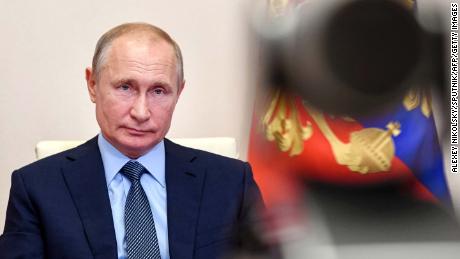
At first glance, everything seems to be going to plan for the Kremlin. Back in March, Valentina Tereshkova, a Russian MP from the ruling United Russia party, called in a theatrically staged parliament session for a constitutional amendment that would allow Putin to run for president again after his current term ends in 2024.
It was a move laden with patriotic symbolism: Tereshkova, a former cosmonaut and the first woman to fly in space, is a living connection to the days of Soviet achievement.
Putin appeared in the parliament building just an hour and a half later to endorse the proposal, which then sailed through both houses and the country's constitutional court. But plans for a yes-or-no referendum on the constitutional amendments on April 22 were put on hold amid the coronavirus pandemic, and the rescheduled balloting is now going ahead, backed by a get-out-the-vote blitz.
But more is at stake than just a resetting of term limits. The vote has also become a referendum on the system that has been built around Putin during his two decades in power. As many observers of Russia note, Putin's system of "vertical power" makes him the final arbiter among elites, and their fortunes are, quite literally, tied to him remaining in charge.
Russia in 2020 is not a dictatorship in the classic sense: Putin depends on regular elections as a kind of plebiscite to lend legitimacy to his rule. To be sure, Russia's political system lacks checks and balances: The parliament is packed with loyalists and what Russians call a "pocket" (i.e. powerless) opposition; the president has wide latitude to hire and fire regional leadership; and the courts defer to executive power.
But Putin must follow the letter of the law: After all, he did leave the office to Dmitry Medvedev, staying in power behind the scenes during a four-year interregnum while the new president changed the constitution.
What followed is instructive today: Medvedev introduced a set of constitutional reforms that increased presidential terms to six from four years, and allowed Putin to run again. But widespread allegations of voting fraud that followed 2011 parliamentary elections led to a wave of pro-democracy protests that deeply worried the Kremlin.
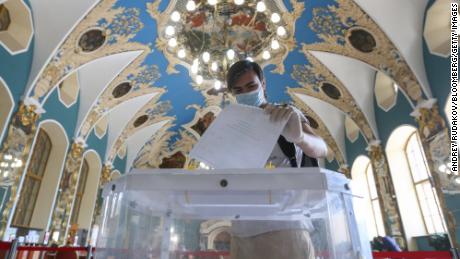
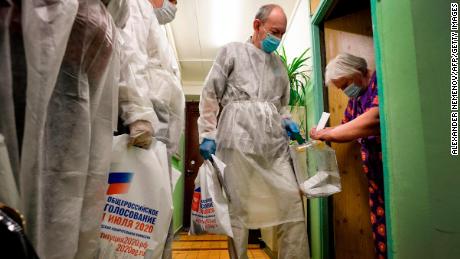
Will Wednesday's referendum prompt the same challenge to Putin, or a new wave of street protests? That is difficult to predict, but members of the country's small and embattled opposition have already raised questions about tampering and irregularities in the referendum, which has been opened for early voting since last week, a measure cast by election officials as a coronavirus precaution to allow social distancing.
Some Russians have taken to social media to show their preference, posting NYET (no) on their profiles. Residents of Moscow and other large cities glued anti-Putin stickers next to pro-amendments posters. Others have taken note of a curious fact: Copies of the constitution recently went on sale in bookstores, with the amendments already included, something widely commented on in social media. That suggested to many Russians that the fix was in.
State-run pollster VTsIOM on Monday released early results from exit polling that suggest Putin will win approval for the amendments: According to those results, around 76% of respondents at 800 polling stations around Russia said they supported the constitutional changes.
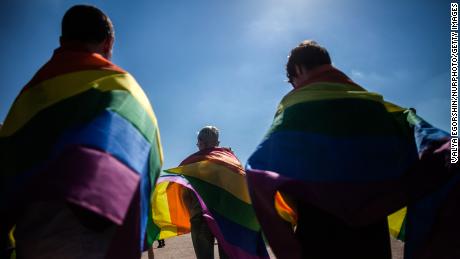
Putin's popularity has taken a hit during coronavirus, but his approval ratings are still high. And the constitutional amendments include some provisions -- for instance, language that enshrines marriage as being solely between a man and a woman -- that will appeal to a segment of conservative voters.
There is little to suggest the result will not satisfy the Kremlin, but the apparatus of the state has been working overtime to increase the voter turnout to add legitimacy to controversial changes. A massive campaign for the vote launched by authorities on all levels has a range of appeals: TV ads promising great social benefits, billboards showing happy families that voted 'Yes' and brochures with recipes and crosswords plastered on the entrances to residential buildings. But the official ad campaign for the referendum does not highlight that the constitution could solidify Putin's reign until he is 84 and give him immunity from prosecution when he retires.
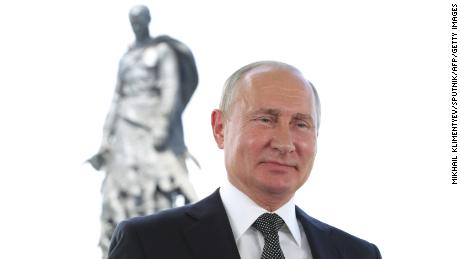
The same goes for Putin's own messaging. In a short video clip released Tuesday, Putin appears before a new monument to Soviet soldiers and urges Russians to vote for "stability, security, and prosperity," saying a new constitution means a future with good healthcare, education and an "effective government beholden to the public." He makes no mention of the resetting of his term limits.
Independent voting monitors have also raised questions about widespread reports of voting violations. Even before the vote kicked off last week, independent outlets and NGOs posted dozens of screenshots and audio messages suggesting forced voting by employers of big corporations and state-financed organizations.
"In the past few days we have also seen a large numbers of ballot stuffing, so it feels like at some stage it was clear to [the organizers] that the administrative resources to mobilize controlled electorate are running out, they may also be voting in a slightly different way compared to a desired one and they've resorted to good old ways of rigging," Stanislav Andreychuk, co-charman of the non-governmental group Golos, told CNN.
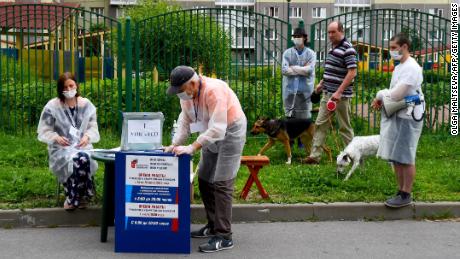
According to Andreychuk, this plebiscite is way less regulated than previous elections his organization monitored: Voting booths set up on park benches violate the secrecy of voting, the usual restrictions on releasing exit polls are not enforced and unregulated campaigning -- aided by raffles promising apartments to lure voters to stations -- muddy the voter's right to freely exercise their will.
Asked about anecdotal evidence of voting irregularities, Kremlin spokesperson Dmitry Peskov questioned reports shared on local media about polling stations being set up in the trunks of cars or on park benches.
"The interest in voting is great, but it's too early to draw conclusions, wait, it's just begun," he said in response to questions on a conference call with reporters.
Putin has already signaled strongly that he will run, and that talk of stepping down from office is a needless distraction. In an interview that aired on state television in the run-up to the vote, Putin said he had "not ruled out" running for another term if voters approve the constitutional amendments.
"If this [constitutional change] does not happen, in two years -- I know this from my own experience -- instead of normal, steady work at various levels of power, everyone will start looking around for possible successors," he said. "We need to get on with work, not look for successors."
Still, the referendum has a chance to cast a cloud on Putin's potential re-election -- and theoretically, on his next two terms in office.
World - Latest - Google News
July 01, 2020 at 04:13AM
https://ift.tt/2Bpt3K7
Russians hit the reset button for Putin, but questions of legitimacy linger over his long-term rule - CNN
World - Latest - Google News
https://ift.tt/2SeTG7d
Bill Belichick signing a former No. 1 overall pick and one-time NFL MVP for a veteran minimum deal in the middle of June feels a little too on brand, but considering he had his dog Nike draft a Division II hybrid defensive back linebacker with his first pick after trading out of the first round, maybe the Patriots coach is just feeling himself this offseason.
Cam Newton is now a member of the Patriots, a surprisingly obvious conclusion for the last few months. The Patriots clearly believe in Jarrett Stidham, but Newton makes more sense as a replacement for Tom Brady. If he fails to live up to the lofty standards set by the 20-year Patriots quarterback, it means one of two things: Newton wasn't healthy enough to perform or Stidham is good enough to beat out a healthy Cam for the QB1 role.
There's a common perception about Newton's health and how much he's deteriorated over the last several years. Newton's health is spoken about in a way indicating his body has betrayed him and he's just completely fallen apart. People talk about him as being "broken." It's ridiculous. I absolutely take umbrage here -- Newton has shown multiple times in the last two seasons that he's close to being completely healthy.
It's my belief Newton was completely healed from his shoulder injury that offseason, but no one ever actually saw Newton throw the football much prior to him suffering a foot injury against the Patriots in the preseason. The Panthers downplayed it, but by Week 2 of 2019, something was clearly wrong. Newton re-aggravated the foot injury against Tampa Bay during a 20-14 loss that featured ugly weather. People wanted to focus on his inaccuracy because of the shoulder injury, but it was unquestionably the foot injury causing him to miss throws. Newton hardly stepped into anything that night.
via NFL Gamepass
It got worse after Newton came up limp late in the first quarter.
People claim "Cam wasn't ever accurate" and point to the shoulder injury to suggest Cam is toast. Cam completed almost 68 percent of his passes in 2018 and 67.3 percent prior to injuring his shoulder in Norv Turner's offense. He can be accurate in a reasonable offensive system. He wasn't sailing everything against Tampa Bay because of his shoulder -- he couldn't step into anything with a crunked up foot.
Unfortunately for Cam, there's no guarantee he comes back from foot injury in perfectly smooth fashion. CBS Sports' Brady Quinn and I have talked about this a bunch on the Pick Six Podcast -- Brady suffered a Lisfranc injury when playing in the NFL but didn't have surgery on his foot until about a year ago. Obviously it's not the same issue as Cam, but talking to Brady about it, there are clearly some issues adjusting to life after getting your foot surgically repaired, like how to adjust workouts, overcompensating for the foot injury and some mobility issues.
Again, I'm not saying Cam will battle those issues, but it would be surprising if the recovery was completely seamless and done with in just six months (he really should have had the foot surgery in October, but that's a whole different story).
That's precisely why New England convinced Newton to settle on a vet min deal jammed with incentives.
Why didn't anyone else want Cam?
I got asked this roughly four billion times on the radio Monday in the wake of Newton's deal with the Pats, and a large reason for the skepticism from people examining this deal is New England. Anywhere else with no offers and the anti-Cam crowd -- and buddy is it a large crowd -- is flying out of the woodwork to scream about how he can't be accurate or run an NFL offense, blah, blah, blah.
The reality of the situation is New England was the only landing spot for the former MVP. Cam wanted a chance to start but couldn't visit anyone for physicals during the early portion of free agency. If you want to play the rule-out game, you can rule out the Dolphins, Bills, Jets, Browns, Texans, Chargers, Bengals, Browns, Ravens, Redskins, Giants, Broncos and Cardinals because they all have young quarterbacks they recently drafted in the first or second round. The Colts, Titans and Buccaneers all signed quarterbacks this offseason. The Panthers cut Cam. The Bears traded for Nick Foles. The Falcons, Saints, Cowboys, Eagles, Lions, Bears, Packers, Steelers, Chiefs, Raiders, 49ers and Rams all have veteran quarterbacks.
That leaves the Pats and Jaguars as the only possible mutual landing spots for Cam. Jacksonville wants to see what it has in Gardner Minshew and is rebuilding. The Pats always made sense, especially with the way Belichick has long revered Newton.
"Not saying that there aren't a lot of other good players that do that, but I would say, of all the guys we play or have played recently in the last couple of years, he's the hardest guy to deal with," Belichick said back in 2017. "He makes good decisions. He can run. He's strong. He's hard to tackle. He can do a lot of different things, beat you in a lot of different ways. We saw that in the game down there in '13, so I would put him at the top of the list.
"Not saying the other guys aren't a problem, because they are, but he's Public Enemy No. 1."
I'm absolutely fascinated by what the Patriots are doing this offseason. They just lost Tom Brady. The greatest quarterback in the history of football "left" (in my opinion he didn't get asked back, like it was boarding school, but that's also another story for another day) and they're rebooting for the first time in the history of the greatest dynasty in sports history.
Belichick spends all offseason making overt gestures to indicate he's ready to roll with Jarrett Stidham and then in the middle of the summer he picks up one of the most unique players the sport has ever seen for the vet minimum.
It's so compelling and even more so when you consider how the Pats have been building this season. I'm firmly of the belief Belichick wants to run the living crap out of the ball this year, knowing an incredibly shortened and distanced offseason will make adding any sort of complex layers to his offense will make things more difficult for teams with limited amount of practices available. It makes sense -- consistency is going to be king in 2020, but if you decide to kick 20 years of consistency to the curb, the obvious next move is to make things as simple as possible.
This already was in place before Newton came into play. The Patriots didn't add a bunch of weapons in the passing game this offseason, instead deciding to toss the franchise tag on guard Joe Thuney (TBD if a deal happens, but that move is a pretty clear indication how important the run game is) and then spent two early draft picks on tight ends for the first time since 2010, picking up Devin Asiasi and Dalton Keene in the third round of the draft. Sony Michel was 2018's first-round pick and Damien Harris was a third-round pick last year; this shift has been happening longer than Belichick would like you to know.
My personal Stidham theory involves Belichick hoping he could recreate 2001, putting a strong defense in place with a good run game and getting some game management and clutch throws out of his young quarterback. People forget, but Brady didn't come out gunning, he was a game manager who made an obscene number of clutch throws and smart decisions for the early portion of his career.
But Cam provided some very nice value and a ton of upside. And you know what makes a power run game immediately better? The threat of a quarterback who can run. If you've followed football the last 10 years you should know the math on it -- when the offense is reading a defender it becomes 11-on-10 if you run the play correctly. That's the sort of calculus/economics Belichick would probably have been involved in a decade ago if he hadn't gotten to coach Brady for 20 years. (Aside: the Pats taking Michel instead of Lamar Jackson should be an all-time NFL What If?)
So now you give him Cam Newton, a former NFL MVP and, in my mind, the greatest rushing quarterback of all time. We haven't seen peak Cam in a while, so it's easy to forget, but this was the beginning of 2018. It wasn't that long ago.
If Cam's foot is healthy and he plays 16 games -- not a given, but if -- the Patriots will steamroll this division again. Go back and watch what Josh McDaniels did when Jacoby Brissett started against Houston in 2015 while Tom Brady was serving his Deflategate suspension. They opened with read option. And then the Pats proceeded to run Brissett 10 times in that game. Jacoby Brissett is a good quarterback but he's not a fast runner. The purpose of the plan was to keep the Texans on their heels (it worked) and minimize the amount of the throws Brissett needed to make.
McDaniels drafted Tim Tebow in the first round when he ran things in Denver. It wasn't for his passing prowess.
Julian Edelman and N'Keal Harry aren't overpowering anyone from an air attack standpoint. But Edelman is a perfect Cam receiver. He runs tight routes and has a surprising catch radius for someone his size. Cam can cut it loose and he'll come down and keep running. Harry is red-zone monster who got unfairly dogged last year because A.J. Brown and Deebo Samuel (the latter a PERFECT Patriots player if there ever was one) blew up while Harry didn't do much for the Pats.
If Cam is healthy the Pats are gonna have some wild stuff to work with offensively, and most if it won't force them to get out of their base offense. Go 12 personnel with two tight ends, pound the ball, run some funky stuff with Cam, score 21 points and let your defense take over.
So what's the big takeaway?
The funny thing about Cam Newton is he spent just about every single day of his life from the moment he stepped foot on Florida's campus until now being a lightning rod. There are a million reasons and a bunch of them aren't football related. Some mom wrote a letter to a Tennessee newspaper complaining that Cam had too much fun on the field. There has never been a time in Cam Newton's football career where people didn't yell about whatever he was doing.
And then Bill Belichick signed him. We all agreed it was a great move.
Cam should win this job, unless a) he's not healthy or b) Stidham is a monster. Either way is a win for Belichick, because he gets a free roll with the most dynamic red zone threat to ever play professional football. A healthy Cam feels difficult because of how long it's been since we saw 16 games, but it's not far-fetched. Imagine thinking Belichick finally lost Brady and then somehow got healthy Cam for a couple seasons. The AFC East has been licking its chops for a few years now, but that hubris might have been misplaced. The boats, they might beat ceaselessly.
Sports - Latest - Google News
July 01, 2020 at 07:26AM
https://ift.tt/2NIWjxZ
Cam Newton to Patriots: What are his injuries, why didn't other teams sign him, how will Pats offense look? - CBS Sports
Sports - Latest - Google News
https://ift.tt/2Mbsnt7