Rechercher dans ce blog

Tuesday, September 1, 2020

Houston Rockets vs. Oklahoma City Thunder [GAME 6 HIGHLIGHTS] | 2020 NBA Playoffs - ESPN

[unable to retrieve full-text content]

  1. Houston Rockets vs. Oklahoma City Thunder [GAME 6 HIGHLIGHTS] | 2020 NBA Playoffs  ESPN
  2. Opinion: Rockets shouldn't be faulted for Russell Westbrook trade, even if his miscues lead to more playoff heartbreak  MSN Money
  3. ROCKETS at THUNDER | FULL GAME HIGHLIGHTS | August 31, 2020  NBA
  4. Thunder, Twitter reacts to Lu Dort's big 3-pointers in Game 6 win  OKC Thunder Wire
  5. Rockets vs. Thunder - Game Recap - August 31, 2020  ESPN
  6. View Full Coverage on Google News


Sports - Latest - Google News
September 01, 2020 at 12:30PM
https://ift.tt/3gNvVio

Houston Rockets vs. Oklahoma City Thunder [GAME 6 HIGHLIGHTS] | 2020 NBA Playoffs - ESPN
Sports - Latest - Google News
https://ift.tt/2Mbsnt7

'Abenomics' May Stay, but Japan's Economic Overhaul Is Incomplete - The New York Times

TOKYO — Komaki Fujii opened her central Tokyo vegetarian restaurant in 2013, when the future looked bright. Shinzo Abe, Japan’s prime minister, had just taken office promising a bold package of reforms that would supercharge the country’s stagnant economy and transform the way it did business.

Now, Mr. Abe is preparing to step down with many of those promises unfulfilled. That will make it even harder for Japan to recover from the impact of the coronavirus, which has sent the world’s third largest economy after the United States and China shrinking at its fastest pace since World War II.

Mr. Abe’s successor will face Japanese voters and businesspeople who have seen the hard-won economic gains of the last eight years slip away in the face of the pandemic. Many will wonder whether Mr. Abe’s promises, so tightly identified with him that they came to be known as Abenomics, ever changed much at all.

While Ms. Fujii does not blame her current hardship on Mr. Abe — the whole world is facing a devastating economic crisis — she is unsure whether he deserves much credit for her prior success.

“I don’t know if Abenomics was the right answer,” she said by telephone from her shop in the Akihabara district, which until the coronavirus struck in February had been packed with tourists and businesspeople hungry for dishes like fried noodles.

But when it comes to her own business, she said, “there’s nothing you can really point to and say, ‘That was great.’”

The conservative, governing Liberal Democratic Party is due to choose a replacement for Mr. Abe in September. It is likely to stick with some version of his namesake economic policies, which called for making money cheap and readily available, amping up government spending and transforming the way the country’s bureaucracy and corporations did business.

“Mr. Abe’s resignation happened so suddenly that no one has an agenda, has a strategy, has thought about how they’re going to run this government,” said Gerald L. Curtis, a professor emeritus of political science at Columbia University.

“They’ll try to do things to get the economy coming back after it’s been hit so hard,” he said. “But new ideas? New policies? I don’t think so. It will be a continuation of Abe’s policies, no matter who it is.”

Those policies have had a mixed record.

“The market is up, the unemployment rate is low, so that’s a good thing for the economy,” said Nobuko Kobayashi, a partner in Tokyo with the Japanese arm of consulting firm Ernst & Young. “That said, it’s very hard to single out Mr. Abe’s contribution.”

On the plus side, Mr. Abe’s appointments at the country’s central bank kept borrowing costs low and flooded the economy with yen, Japan’s currency. That helped the country shake off decades of economic stagnation and prop up its stock market.

Credit...Kyodo News, via Associated Press

Other efforts were less successful.

Japan remains a wealthy country and an export powerhouse, but it faces long-term challenges. It has the largest public debt in the developed world when compared with its economic output. It has a shrinking, aging population that will increasingly test the country’s social safety net.

Those concerns clouded Mr. Abe’s pledge to stimulate growth through government spending. While he pumped money into the economy, he also sought to keep the country’s debt burden in check with two consumption tax increases. Both times, the move set off a downturn.

His promise to introduce much-needed structural reforms — fundamental changes to the way Japan does business — also fell short of expectations. He expanded women’s participation in the work force but did little to improve their status there. And his efforts to relax a rigid labor market and shake up Japan’s cushy corporate boardroom culture, which has kept Japanese companies and industries less profitable and efficient, made limited progress.

“When it comes to work style change and faster introduction of digitalization, the shock that came from corona probably made a bigger impact” than Mr. Abe’s policies, said Takuji Okubo, the North Asia director of the Economist Corporate Network.

With the economy in crisis, Japan’s next leader “needs to move in a different direction,” he said. “The next prime minister will not be able to use monetary policy that much. The room for further expansion, for further easing, is very limited.”

When Mr. Abe began his tenure, Japan’s economy was in the doldrums after decades of economic stagnation and the double crisis of the 2011 earthquake and nuclear meltdown in Fukushima.

Soon after taking office, he championed an aggressive monetary policy that kept interest rates low, injected huge amounts of cash into the country’s markets and maintained the yen at a level that made Japanese goods affordable for foreign buyers.

He matched that with big government spending centered on preparations for the 2020 Tokyo Olympics. As money flowed into the economy, unemployment went down and tourism, investment, real estate prices and the financial markets went up.

Beyond Japan’s borders, Mr. Abe worked to increase access to foreign markets and lower tariffs. When the Trans-Pacific Partnership, the largest trade accord in history, collapsed after the Trump administration’s withdrawal, Mr. Abe helped rally the remaining members to reach their own trade accord.

His efforts benefited from timing. China’s economy surged during his tenure, increasing its appetite for Japanese machine tools and the specialized components needed to manufacture things like autos and high-end electronics. Chinese tourists, eager to spend their growing wages, flooded Japan’s cities and tourist sites, splashing out on luxury goods.

But late last year, Japan’s economy began to contract as slowing global demand and the trade tensions between the United States and China cratered Japanese exports.

Japan’s national debt stood at one and a half times its annual economic output, and in an attempt to pay it down and shore up funding for social programs, Mr. Abe pushed through a 2-percentage-point increase in the consumption tax. As prices went up, consumers began buying less. Then a vicious typhoon devastated the country’s center, piling on the damage.

By the time the pandemic was underway, the economy had already sunk into recession, defined as two consecutive quarters of negative growth.

The coronavirus brought it crashing down, forcing Mr. Abe to postpone the 2020 Summer Olympics, zeroing out tourism and taking an even larger scoop out of domestic consumption as people, wary of the virus, stayed home.

Growth nose-dived by an annualized 27.8 percent during the second quarter after a national emergency that spanned most of April and May.

The Japanese government met the crisis with a stimulus package valued at around 40 percent of the country’s G.D.P., including low interest loans and cash handouts.

Credit...Takashi Aoyama/Getty Images

Economic indicators showed modest improvement in June, but consumption has receded again after a second wave of the virus hit the country, forcing some local governors to declare a state of emergency and pushing Tokyo to ask bars and restaurants to reduce their hours.

Analysts hold out little hope that the new government will take bold action to meet the pandemic’s challenge. Mr. Abe has no clear successor. And although his policies have failed to live up to their promise, none of his possible replacements have offered up an alternative.

“Short term, the No. 1 priority of the new prime minister is going to be to consolidate power and to ensure that the markets and the economy stay well supported,” said Izumi Devalier, the chief Japan economist at Bank of America Merrill Lynch. That, she said, “means continuation of the status quo.”

The status quo is something Ms. Fujii can ill afford. The pandemic has pushed her business to the limit. She closed her doors for two months and has had an 80 percent drop in business as the office workers and tourists who made up her customer base have mostly disappeared.

“I realize, now that we’re in this situation, that it felt like this administration always left their citizens behind,” she said.

“Even when Mr. Abe leaves,” she said, “the problems he created will remain.”

Let's block ads! (Why?)


World - Latest - Google News
August 31, 2020 at 11:01AM
https://ift.tt/350KIo3

'Abenomics' May Stay, but Japan's Economic Overhaul Is Incomplete - The New York Times
World - Latest - Google News
https://ift.tt/2SeTG7d

Doctor fact-checks claims on COVID-19 deaths - CBS News

[unable to retrieve full-text content]

  1. Doctor fact-checks claims on COVID-19 deaths  CBS News
  2. L.A. County logs 1,030 new COVID-19 cases; hospitalizations fall  Los Angeles Times
  3. L.A. Coronavirus Report: Public Health Notes Decline In Daily Hospitalizations, Confirms 10 New Deaths And 1,030 New Cases – Update  Deadline
  4. L.A. County reports 1,339 new coronavirus cases, 27 deaths  Los Angeles Times
  5. View Full Coverage on Google News


World - Latest - Google News
August 31, 2020 at 10:50PM
https://ift.tt/34QO8JC

Doctor fact-checks claims on COVID-19 deaths - CBS News
World - Latest - Google News
https://ift.tt/2SeTG7d

Chris Paul's clutch performance helps the Thunder force a Game 7 against the Rockets - Yahoo Sports

Chris Paul celebrates the Oklahoma City Thunder's Game 6 victory on Monday. (Mike Ehrmann/Getty Images)

Chris Paul saved the Oklahoma City Thunder’s season.

In the final minutes of the fourth quarter on Monday, the veteran point guard made back-to-back three-pointers to tie Game 6 of their first-round series with the Houston Rockets, and then sank a pair of free throws to give OKC the lead for good in a 104-100 victory. A win-or-go-home Game 7 is set for Wednesday.

“This is who we are,” Paul told the TNT broadcast afterwards. “We’re built for stuff like this. A lot of guys on our team have been pushed out, traded or whatnot, but we just stick together and we keep fighting.”

Paul scored 28 points on Monday, pushing the team that traded him last summer to the brink. A year after he helped lead the Rockets to Game 7 of the 2018 Western Conference finals, Houston traded him, along with four first-round picks, to Oklahoma City for former MVP Russell Westbrook. The move signal a rebuild for the Thunder, who also shipped Paul George to the Los Angeles Clippers last summer, but Paul’s steady hand guided a Thunder team to the playoffs on the strength of their execution in clutch situations all year.

Monday was no different. A Paul three-pointer gave Oklahoma City a 91-84 lead with 8:11 remaining, but the game appeared to turn in Houston’s favor when a Dennis Schroder layup was waved off, and Paul was called for a technical foul. The sequence capped a 14-1 Rockets run that dug the Thunder a 92-86 hole with 4:19 left. Paul answered with consecutive threes, the second of which he made over the outstretched arms of Robert Covington. Paul could be seen patting Covington on the rear as they headed the other way.

Westbrook and Schroder traded layups, and then Paul beat Covington off the dribble, drawing a reach-in foul to set the stage for the go-ahead free throws. A Westbrook turnover on the other end and a pair of Danilo Gallinari free throws sealed the deal. Westbrook and fellow former MVP James Harden finished 1-for-6 from the field with three turnovers — two of which resulted in Paul steals — over the final four minutes.

“He’s got unbelievable basketball IQ,” Thunder coach Billy Donovan said of Paul. “He’s incredibly smart. He’s a great competitor. He’s got an incredible will to win. When you have a guy with that kind of mind, manipulating and surveying the court the way he does, he did an incredible job. ... He was spectacular.”

Harden totaled 32 points, eight rebounds and seven assists, but got little help from anyone but Covington (18 points) and wilted down the stretch. Westbrook returned from a quadriceps injury in Game 5, but limped to the locker room midway through the third quarter of Game 6. He returned five minutes later, only to miss four of his last six shots and commit three of his seven turnovers. Westbrook finished with 17 points.

The Thunder got 25 points from Gallinari, but Paul ran the show. Oklahoma City outscored Houston by 20 points with the 35-year-old future Hall of Famer on the floor. Every other Thunder starter was a net minus.

It should not be lost on anyone that Paul is the president of the players’ union, a role that required unprecedented leadership during last week’s strike. In a matter of days, he has saved the season for the league in a hotel ballroom and saved it for his team on the AdventHealth Arena court. After Monday’s game, Paul credited the players for their professionalism in the face of injustices outside the Orlando bubble.

Now, Game 7 comes down to Paul and Harden, the two former teammates whose “unsalvageable” relationship led to last summer’s trade. Both will enter with a reputation for falling short of playoff expectations, culminating in last year’s six-game loss to a Golden State Warriors team down Kevin Durant.

The Rockets entered the playoffs with title aspirations. The Thunder were seen as a stepping stone to Houston’s Western Conference semifinals meeting with the top-seeded Los Angeles Lakers, but Paul had other plans. His clutch play on Monday quieted the critics, but Game 7 can change the narrative entirely.

“We gave ourselves a chance,” Paul shouted following his heroic turn. “Game 7, anything can happen.”

– – – – – – –

Ben Rohrbach is a staff writer for Yahoo Sports. Have a tip? Email him at rohrbach_ben@yahoo.com or follow him on Twitter! Follow @brohrbach

More from Yahoo Sports:

Let's block ads! (Why?)


Sports - Latest - Google News
September 01, 2020 at 11:01AM
https://ift.tt/32Ny09r

Chris Paul's clutch performance helps the Thunder force a Game 7 against the Rockets - Yahoo Sports
Sports - Latest - Google News
https://ift.tt/2Mbsnt7

'Pretty amazing': MLB execs on Deadline - MLB.com

In the week leading up to Monday’s Trade Deadline, one executive after another made the same prediction, echoing a sentiment that was nearly universal around the league:

The Padres are going to make a lot of noise.

Words like “aggressive,” “active” and “relentless” were used to describe San Diego’s approach to the Deadline. When all was said and done, general manager A.J. Preller didn’t disappoint.

A total of 26 players were involved in the Padres’ six trades, none bigger than the nine-player deal that brought right-hander Mike Clevinger to San Diego. Seven of those players were on MLB Pipeline’s Top 30 Prospects list for the club, and while three of those players were in their Top 10, the Padres were able to keep their five highest-ranked prospects.

“San Diego gave up a massive amount of future value for some potentially marginal short-term gains,” a National League executive said. “Kudos to them for having the farm system that made it possible.”

Some of the acquisitions are more than rentals, of course. Trevor Rosenthal and Jason Castro will be free agents at the end of the season, but Mitch Moreland is under control through 2021, Clevinger through 2022, Austin Adams through 2024, and Austin Nola through 2025.

“Twenty-six players!” another NL exec said when asked what stood out most from the past few days. “That’s pretty amazing.”

These 7 teams won a wild Trade Deadline

The executive liked the Padres’ moves as a whole, calling San Diego a “really good” team. The only concerns, he said, were the impact inside the clubhouse and the unusual decision to add two catchers (Nola, Castro) this late in the season.

“I do worry about messing with the chemistry of a team that really seemed to be having fun and enjoying playing together,” the executive said. “Adding a whole new catching tandem is going to be a challenge for them, as well; they have to get to know an entire staff really quickly.”

Let's rank every deal on busy Deadline Day

Did Preller’s memorable Deadline shopping spree put the Padres in position to make a deep run in October?

“With every team having to play a three-game series to start the playoffs, anyone can advance,” another NL executive said.

Razing Arizona
Executives were torn on the D-backs’ decision to sell big on Monday, which resulted in the trade of Starling Marte to the Marlins, Archie Bradley to the Reds, Robbie Ray to the Blue Jays and Andrew Chafin to the Cubs for a total haul of seven players.

“Maybe the biggest surprise was watching all of the guys come off the board in Arizona,” an NL executive said. “I didn’t see them moving all of those guys.”

Less than two weeks ago, the D-backs were 13-11, good for the fifth-best record in the NL. A 1-10 skid left them at 14-21 at the Trade Deadline, so while Arizona was just 2 1/2 games out of a playoff spot, GM Mike Hazen decided to collect pieces for the future despite having Marte and Bradley under control for another year.

“It’s been a tough couple weeks for them, which is like a tough month and a half in regular baseball time,” an NL executive said.

“They were the anti-Padres,” a second NL exec said. “It was similar to Cleveland; they acquired a lot of decent pieces. Whether any of them become regulars or two- to three-win players is an open question. It was likely the right strategy for a club with limited financial resources. They need to fill as many Major League holes as cheaply as possible over the next few years.”

Staying put
One of Monday’s biggest surprises was the Rangers’ decision not to trade Lance Lynn, who had plenty of suitors but remained in Texas as the Deadline passed.

“I think the Rangers missed an opportunity to capitalize on Lynn’s value,” an NL talent evaluator said. “It will likely never be higher than it was today.”

Lynn, who had a 1.93 ERA over an MLB-high 51 1/3 innings entering Monday's games, is under control through next season. With an $8 million salary for 2021, the right-hander could be shopped this offseason, but given the number of contenders in need of rotation help, most around the industry considered it a fait accompli that he would be traded by Monday.

“Texas was asking a boatload for him -- and rightly so, given his cost and impact,” an NL executive said. “But I was surprised [that he wasn’t dealt]. I’d guess he’ll be a pretty hot topic of conversation this winter.”

Another pitcher many expected would be traded Monday was Kevin Gausman of the Giants, but San Francisco -- which entered the day just a half-game out of the final NL Wild Card spot -- opted to stand pat, making just one minor deal with the Rays to acquire left-hander Anthony Banda.

“They told us they weren’t moving Gausman unless someone made them move him,” the NL exec said of the 17-19 Giants. “They are giving it a run. That’s how this weird season is impacting everyone. It’s so bizarre.”

Business as usual?
Teams combined to make 32 trades between Aug. 21-31, with 17 of those coming down on Monday. Given that many around the league were predicting a slow trade market, things seemed as frenetic as ever when 4 p.m. ET arrived.

“It was more active than I thought it would be, considering the shortened season,” an American League executive said. “You can tell who is really looking to try to win this.”

“It appears that the Deadline may have been more reflective of normal than anything that we have experienced this season,” another AL exec added.

An NL executive said Monday felt “pretty ordinary” for a Trade Deadline.

“Lots of buyers, not a ton of sellers,” the exec said. “Some big trades, but not as many as were rumored. A lot of teams got reasonably priced guys to shore up weak spots or depth.”

There were certainly some unorthodox aspects to the trade season. With 14 NL teams sitting within 2 1/2 games of a playoff spot as of Monday morning, some seemed undecided whether they should be buying, selling or standing pat.

“The compressed season played into teams defining themselves as buyers or sellers over the past week,” an NL exec said. “It felt almost game-by-game at times, when most of us try to avoid making decisions that way.”

Although the Padres went all-in to upgrade their roster, a number of clubs determined that the shortened season made it more difficult for trade acquisitions to make a major impact.

“It's hard to get significantly better with a one-month Trade Deadline,” a third NL executive said. “If you get a 4 WAR player and have him replace a 1 WAR player, you added a half-win the last month. Whether we win or lose tonight's game is more important than anyone we could add.”

Several contenders were “surprisingly quiet,” one NL exec said. The Rays, White Sox, Braves and Dodgers -- all first-place teams -- made minimal moves, while the Twins and Astros joined the Yankees on the sidelines.

“The prices were high for meaningful impact,” the third exec said.

Despite Monday’s flurry of activity, another NL exec noted the bizarre nature of a Deadline without the benefit of a customary packed war room.

“What a strange day it was, at times trying to get in touch with people that are not in the room,” he said. “I definitely miss the scouts and other staff being around just to talk baseball in the week leading up to the Deadline.”

Mark Feinsand, an executive reporter, originally joined MLB.com as a reporter in 2001.

Let's block ads! (Why?)


Sports - Latest - Google News
September 01, 2020 at 09:51AM
https://ift.tt/2EKksDt

'Pretty amazing': MLB execs on Deadline - MLB.com
Sports - Latest - Google News
https://ift.tt/2Mbsnt7

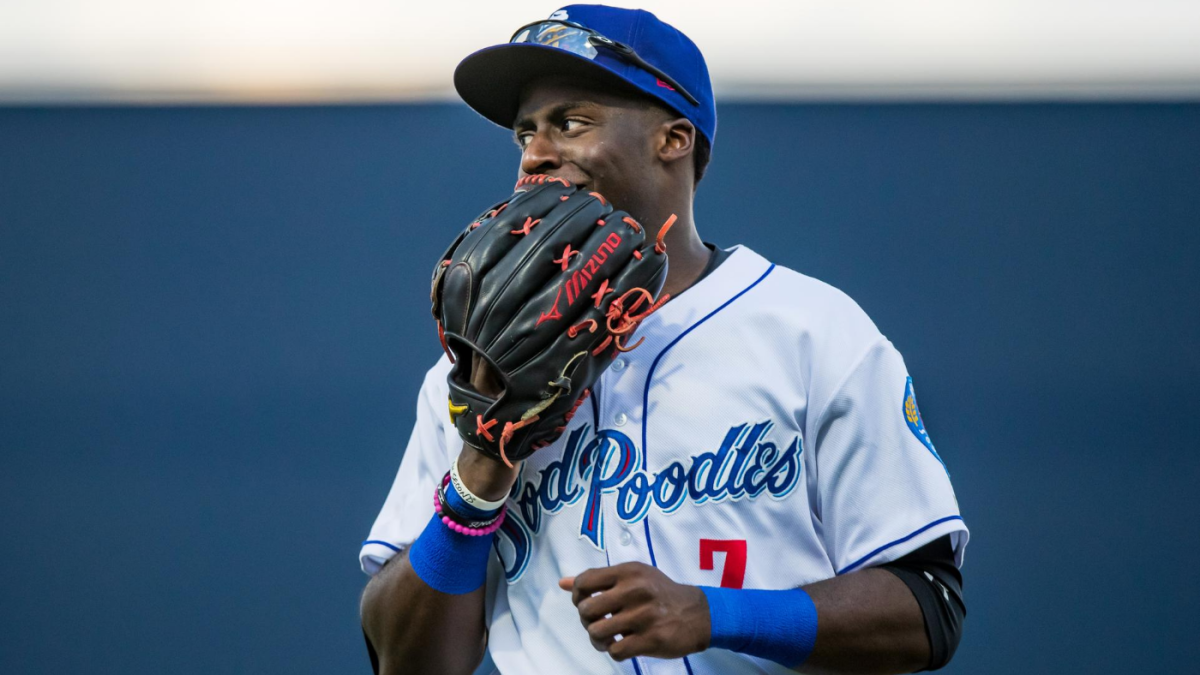
MLB trade deadline: Ranking every prospect moved as Mariners' Trammell, Red Sox's Seabold top list - CBS Sports

Watch Now: Winners From MLB Trade Deadline (3:40)

Major League Baseball's 2020 trade deadline passed at 4 p.m. ET on Monday afternoon. Although it wasn't the standard deadline, a number of interesting moves were made and a lot of prospects were traded in the process. Because some fans might not be familiar with the youngsters, we've taken it upon ourselves to educate folks about their team's additions.

Below, you'll find a ranking of every prospect traded since Aug. 21 (note that this does not include players who have exhausted their rookie eligibility), along with information we've gathered after talking with scouts and executives about each player. 

Obviously the ranking itself is subjective (and these things become a series of coin flips after a certain point), but the intent here is to educate, to entertain, and to provide a snapshot in time of how these players were perceived at this moment in time.

1. Taylor Trammell, OF, Mariners

Acquired: from the Padres for C Austin Nola and RHPs Austin Adams and Dan Altavilla

Trammell was also involved in a big trade last deadline, having been sent from the Reds to the Padres as part of the three-team swap that also involved Trevor Bauer and Yasiel Puig. The change of scenery didn't help much. His strikeout and walk rates darted in the wrong direction, and he finished the season with a slash line of .234/.340/.349 in more than 500 Double-A plate appearances. Trammell, who won't turn 23 until September, has garnered comparisons to Brett Gardner thanks to his on-base skills and defensive upside in left field. Some evaluators have wavered on his chances of living up to his promise, however, because of his well-below-average arm and his perceived inability to play center field or make adjustments. 

2. Connor Seabold, RHP, Red Sox

Acquired: from the Phillies for RHPs Brandon Workman and Heath Hembree

The surest way for a prospect's stock to improve is to get traded to a team generally managed by Chaim Bloom. Case in point: Seabold has ascended from an obscure, overage starter to … well, ranking highly on this list. Depending on who you ask, the hype is justifiable. Seabold's rising fastball grades better using Trackman than the eye test, and his improved changeup gives him a second average or better secondary offering. Factor in his command, and he seems like a decent bet to outpitch the sum of his parts. Some teams had Seabold ranked as one of the Phillies' five best prospects, and while that might say more about the state of their farm system than his actual potential, he should be able to slot in as a mid-to-back-end starter within a year.

3. Gabriel Arias, SS, Cleveland

Acquired: from the Padres for RHP Mike Clevinger, OF Greg Allen, and a player to be named later

Arias, who will be 20 until February, was nearly four years the junior to the average Cal League player last season when he hit .302/.339/.470 with 17 home runs there. He's a fluid defender who should stick at the shortstop position, and he has a chance to be a "cheap" five-tool player -- meaning he could have five average or better tools, not five elite tools. The proverbial fly in the ointment is Arias' approach. There's reason to believe he's improved his judgement over the past year, but he also struck out more than five times as often as he walked last season. There's a slim chance Arias develops into a star. He's more likely to be a decent regular.

4. Terrin Vavra, INF, Orioles

Acquired: from the Rockies for RHP Mychal Givens

Vavra batted .318/.409/.489 with 43 extra-base knocks and as many walks as strikeouts in his first full professional season. Evaluators still have concerns about elements of his game, including his long-term defensive home and his lack of a carrying tool. There's a chance that Vavra reaches maturation with four tools (everything except power) that grade as average or better, but that none of his tools qualify as plus. Those who are more forgiving of his perceived blemishes (perhaps because of his feel for the game), could envision him becoming a second-division starter. Everyone else will see him as a reserve, and maybe a deep one.

5. Edward Olivares, OF, Royals

Acquired: from the Padres for RHP Trevor Rosenthal

Olivares made the leap from Double-A to the Padres' Opening Day roster. He looked overmatched in the 36 plate appearances he took prior to a demotion, as he struck out 39 percent of the time and recorded an average exit velocity in the mid-80s. Whatever. He has a number of average-ish tools, and he should slot in as a reserve outfielder, if not a touch more. (The Padres, by the way, originally acquired Olivares in a trade for Yangervis Solarte. Nifty.) 

6. Riley O'Brien, RHP, Reds

Acquired: from the Rays for LHP Cody Reed

O'Brien remains a work-in-progress despite 1) requiring Rule 5 protection beginning this winter and 2) turning 26 early next February. He's tall and lanky, and he's gained velocity on his promising fastball-breaking ball combination in recent years. That he hasn't made the same progress with his changeup or his control has led many evaluators to peg him as a future reliever. If O'Brien does find a way to stick in a rotation, this will prove to be an underrank.

7. Joey Cantillo, LHP, Cleveland

Acquired: from the Padres for RHP Mike Clevinger, OF Greg Allen, and a player to be named later

Cantillo has been peddled around the league dating back to last deadline, when the Padres attempted to capitalize on his brilliant run in the Midwest League. He was (and remains) a polarizing prospect because of his substandard fastball and breaking ball. Cantillo's boosters will point to his youth (he won't turn 21 until Christmastime) and size (he's listed at 6-foot-4, 220 pounds) as reasons the best is yet to come. That's to be determined. For now, Cantillo does have a good changeup, a deep release point, and a deceptive delivery working in his favor. The range of outcomes here includes everything from mid-rotation starter to organizational depth.

8. Stuart Fairchild, OF, Diamondbacks

Acquired: from the Reds for RHP Archie Bradley

Here's what we wrote about Fairchild earlier in the month, when we named him as a prospect who could be on the move before the deadline: "At worst, Fairchild would be a fine fourth outfielder. He can do a little bit of everything, including playing center, and he's shown an aptitude for improving, demonstrating as much by learning to lift and pull the ball more frequently since turning pro."

9. Hudson Potts, 3B, Red Sox

Acquired: from the Padres for 1B Mitch Moreland

Potts is the most popular of the players acquired by the Red Sox. He was selected 24th overall in the 2016 draft, ahead of names such as Will Smith, Dylan Carlson, and Dakota Hudson. Alas, this Hudson hasn't had an easy path to the Show. He's struck out in 30 percent of his 537 Double-A plate appearances because of an undiscerning, pull-happy approach. Potts does have well-above-average power potential, and the Padres' experimentation with him at the keystone provided him with a touch more defensive value. The Red Sox are hoping they can unlock his offensive upside; if they do, he's a potential regular. Otherwise? He might not make it.

10. Jeisson Rosario, CF, Red Sox

Acquired: from the Padres for 1B Mitch Moreland

Rosario is a high-grade athlete with the wheels and arm to double as a human highlight reel in center. His development at the plate will determine if he's more than a spare outfielder. He hit .242/.372/.314 last season in High-A, with his on-base percentage being buoyed by an absurd walk rate that neared 17 percent. It sounds counterintuitive, but his walk-reliant approach is a red flag. For one, advanced pitchers won't give in to low-wattage batters; for another, it raises questions about Rosario's approach, and whether he's too passive or defensive up there. He could become a starter if the Red Sox are able to help him become more menacing at the dish.

11. Lucius Fox, SS, Royals

Acquired: from the Rays for OF Brett Phillips

Fox has had a presence in prospecting circles since 2015, when the Giants paid him a $6 million signing bonus. (San Francisco sent him to the Rays in the Matt Moore trade a year later.) It's fair to describe his aesthetic as "Royals-y." He's fast and he can defend the shortstop position, but he doesn't have much strength and he's a nominal switch-hitter who is better against left-handed pitching. Sounds like a reserve to us. Fox just turned 23 in July, and he has options remaining, so there's time left for him to improve that projection.

12. Tyler Nevin, 1B, Orioles

Acquired: from the Rockies for RHP Mychal Givens

Nevin had a successful 2019 season in one (and perhaps only one) regard: he played in a career-high 130 games. What he did in those games was less encouraging, as he hit .251/.345/.399 in Double-A. Nevin, who has always walked and kept his strikeout rate in check, did a better job last year of pulling and lifting the ball, but those changes didn't result in a greater power output. Because he's a right-right corner player without a good glove, he's going to have to hit (and then hit some more) in order to stick in the Show, likely as a reserve.

13. Gerardo Reyes, RHP, Angels

Acquired: from the Padres for C Jason Castro

Reyes has some innate traits that should help him improve his career ERA from 7.62 when and if he receives further opportunity. During his 27-game stint in the majors last year, he threw an upper-90s fastball that showed good rise. His lower arm slot creates a flatter angle when he elevates the heater, which makes him appealing to teams who prioritize vertical approach angle. Reyes has shown some promise with his slider as well. Should he find more consistency, particularly with his command, then he should find a long-term home in the late innings.

14. Owen Miller, INF, Cleveland

Acquired: from the Padres for RHP Mike Clevinger, OF Greg Allen, and a player to be named later

Miller spent last season in Double-A, where he batted .290/.355/.430 with a career-high 13 home runs. The power uptick appears to be a product of a friendly hitting environment more so than a meaningful tweak to his swing or approach. He does have quality bat-to-ball skills, though, and he's an average or better runner (even if his mobility hasn't shown up in the stolen-base column). On defense, his arm is stretched thin on the left side of the infield, making him a better fit at the keystone. Because he isn't likely to hit enough to start, he projects as a close-to-ready bench player.

15. Zack Short, SS, Tigers

Acquired: from the Cubs for OF Cameron Maybin

Double-A is the baseball prospect version of the page-69 test. That could be bad news for Short, whose strikeout rate has ballooned since he was promoted to the level in 2018. He has some sneaky power and he's capable of defending at various infield positions. Unfortunately, his contact issues and pull-happy approach could prevent him from a career in reserve.

16. Addison Russ, RHP, Yankees

Acquired: from the Phillies for RHP David Hale

The bespectacled Russ, who will celebrate his 26th birthday two days before Halloween, is a pure reliever with zero MLB starts to his name. His fastball-splitter tandem grades as above-average, but he lacks the top-end stuff necessary to project as a high-leverage reliever. Russ did pitch well enough last year at Double-A to see him debuting before the year ends.

17. Packy Naughton, LHP, Angels

Acquired: from the Reds for OF Brian Goodwin

It's not 100 percent accurate to say that Naughton is Cantillo if Cantillo fails to improve, but there's some validity to the thought. Naughton is a funky left-hander with a deceptive delivery and a good changeup. If you're feeling generous, maybe that's enough to be a bulk type. 

18. Kevin Smith, LHP, Orioles

Acquired: from the Mets for RHP Miguel Castro

Not to be confused with the Blue Jays' infielder, this Smith is a tall left-hander with three fringe or better offerings that he delivers from a tough angle. He pitched well last season across two levels, including a six-game stint in Double-A, and he could conceivably latch on as a bulk type.

19. Humberto Mejia, RHP, Diamondbacks

Acquired: from the Marlins for OF Starling Marte

Mejia made the leap from A-ball to the majors earlier this because of the Marlins' COVID-19 outbreak. In three starts, he looked the part of being overmatched. That doesn't mean he has no future in the big leagues: his fastball sits in the low-90s with spin, and he has a pair of breaking balls. Mejia will require developmental work before he's ready for more than a relief role.

20. Griffin Conine, OF, Marlins

Acquired: from the Blue Jays for UTL Jonathan Villar

Griffin's father is former long-time big-leaguer Jeff, or "Mr Marlin." For those reasons, this is a sentimental acquisition. For other reasons, namely Conine the Younger's swing-and-miss tendencies, it's likely to remain only that. On the off chance the Marlins' player development staff can help him make more reliable contact, he could have value as a bat-only slugger.

21. Julio Frias, LHP, Diamondbacks

Acquired: from the Marlins for OF Starling Marte

Frias spent four seasons in rookie ball before graduating to the New York Penn League last season. In 14 starts, he recorded more than three times as many strikeouts as walks. He's a fastball-slider pitcher who imparts low spin on both offerings. He's probably a reliever.

Let's block ads! (Why?)


Sports - Latest - Google News
September 01, 2020 at 04:59AM
https://ift.tt/2QJZjLY

MLB trade deadline: Ranking every prospect moved as Mariners' Trammell, Red Sox's Seabold top list - CBS Sports
Sports - Latest - Google News
https://ift.tt/2Mbsnt7

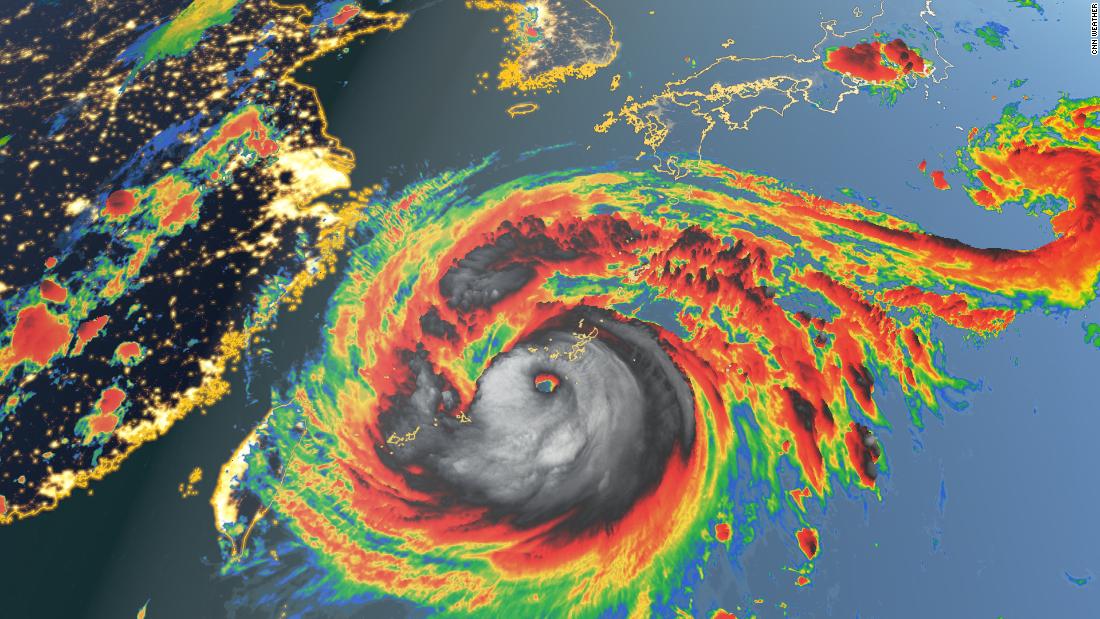
Typhoon Maysak is forecast to strengthen as it moves toward Japan and the Korean Peninsula - CNN

If it makes landfall in the Korean Peninsula, it would be the fourth named storm to do so this year.
That would tie the record number of landfalls of a named storm on the peninsula in a year, tweets meteorologist Sayaka Mori.
Unfortunately for parts of Japan and South Korea, Typhoon Maysak is a significantly stronger system than Bavi was. And further strengthening is expected before its initial landfall on Tuesday morning.
Maysak is forecast to strengthen to a potential Category 4 equivalent hurricane, with winds of 220 kph as it barrels across Japan's Ryukyu Islands.
The system will be dangerously close to the city of Okinawa by early Tuesday and has already prompted significant air travel disruptions in the region.
According to FlightAware, over 100 flights, or nearly 40% of air traffic, has been halted at Okinawa's Naha (OKA) airport. This accounts for the most disruptions to any single airport worldwide as of Monday afternoon local time. The trickle-down effect was felt at Tokyo's Handea airport (HND) as about 90 scheduled flights, or 10% of its departures, were canceled as well.
Maysak, a name of Cambodian origin for a type of tree, is forecast to weaken only slightly as it nears a second landfall west of Busan, South Korea, sometime late Wednesday afternoon.
Winds are forecast to be near 200 kph (124 mph), strong enough to designate it a major Category 3 hurricane if it were in the Atlantic Ocean.
The threat of dangerous storm surge and landslides in the Korean Peninsula's elevated terrain is a significant concern.
After all, the region is currently experiencing one of its wettest monsoons on record. Several bouts of historic rains have soaked the landscape since June.
Long-range forecast computer models suggest another potentially powerful typhoon could impact the region late this weekend or early next week.

Let's block ads! (Why?)


World - Latest - Google News
August 31, 2020 at 09:13PM
https://ift.tt/3jugjlN

Typhoon Maysak is forecast to strengthen as it moves toward Japan and the Korean Peninsula - CNN
World - Latest - Google News
https://ift.tt/2SeTG7d

Featured Post

Qatar 'appalled' by reported criticism from Israel's Netanyahu - BBC.com

By David Gritten BBC News Reuters Qatar's foreign ministry said the Israeli prime minister's reported remarks were ...

Popular Posts