Wednesday, February 2, 2022
Biden orders 3000 troops to Eastern Europe amid Russia-Ukraine conflict - Fox News
World - Latest - Google News
February 02, 2022 at 11:00PM
https://ift.tt/OqinZYXwz
Biden orders 3000 troops to Eastern Europe amid Russia-Ukraine conflict - Fox News
World - Latest - Google News
https://ift.tt/i7xJbvqgf

Tuesday, February 1, 2022
Coronavirus live updates and omicron variant news - The Washington Post

If the vaccine is authorized within weeks, children would probably begin to get their first shots as the omicron surge is expected to be receding. They would begin to build immunity that might offer protection against future variants.
The latest surge in coronavirus cases has prompted school and day-care closures and has thrust parents back into familiar terrain — trying to balance work obligations with a changing patchwork of testing protocols, quarantines and a possible return to virtual schooling.
Here’s what to know
House Majority Leader Steny Hoyer tests positive for coronavirus
Return to menuLink copied
House Majority Leader Steny H. Hoyer (D-Md.) said Tuesday that he had tested positive for the coronavirus, becoming the latest House leader to report an infection despite being vaccinated.
Hoyer, 82, is fully vaccinated and boosted. In a statement, he said he tested positive Tuesday afternoon and is experiencing less severe symptoms.
“In line with CDC guidelines and guidance from the Office of the Attending Physician, I will be working from home this week during my isolation period, and in order to protect the safety of other Members, staff, employees, and visitors to the Capitol, I will utilize proxy voting,” Hoyer said. “I look forward to returning to the Capitol once my isolation period is over to continue carrying out the important work of leading House Democrats as we govern responsibly For the People.”
Unvaccinated 23 times as likely to be hospitalized as those with boosters amid omicron, study says
Return to menuLink copied
Unvaccinated adults in Los Angeles County were 23 times as likely to be hospitalized with covid-19 as vaccinated adults with booster shots at a time when the omicron variant was widespread, according to a new study.
The study shared Tuesday by the Centers for Disease Control and Prevention adds to growing research demonstrating that booster shots protect well against severe illness, even though omicron is better at evading vaccines’ defenses.
Vaccination was even more protective when the delta variant prevailed, the researchers in Los Angeles County found. In the two weeks leading up to Dec. 11, unvaccinated people were 83 times as likely as vaccinated people with boosters to end up in the hospital with covid-19, and 12 times as likely to get infected, they said.
During that period, the unvaccinated were also about 13 times as likely to be hospitalized as vaccinated people without booster shots.
The earliest known omicron infection in Los Angeles County was in late November, and omicron became dominant there in the week ending Dec. 18. By the first full week of January, omicron accounted for 99 percent of all “sequenced specimens,” the study says.
During the week ending Jan. 8, the study states, unvaccinated people were 3.6 times as likely to be infected and 23 times as likely to be hospitalized as vaccinated people with boosters. Compared with fully vaccinated people without a booster, the unvaccinated were twice as likely to be infected and more than five times as likely to be hospitalized.
The study, which spanned Nov. 7 to Jan. 8, notes that hospitalization counts may include people admitted for other reasons. The research focused on hospital admissions occurring within two weeks of a laboratory-confirmed positive test for the coronavirus.
Quebec backs down from proposal to financially penalize the unvaccinated
Return to menuLink copied
TORONTO — Quebec Premier François Legault backed down Tuesday from a contentious proposal to levy a financial penalty on the unvaccinated, saying the measure “divides Quebecers” at a time when unity is critical.
Legault floated the measure last month but provided few details about what the proposed “health contribution” tax would entail. He said then that officials were working through the legalities and that further details would be forthcoming in a bill that would be put before provincial lawmakers.
“My role is to try to bring Quebecers together, to stay united as a people,” Legault said at a news conference on Tuesday. “This is why we won’t go ahead with the health contribution. I understand this divides Quebecers.”
When Legault announced the proposal, he said that unvaccinated people were putting “a very important burden” on the health-care system and that it was “normal that the majority of the population is asking that there be a consequence.”
But the plan drew criticism. Some said it could violate Canada’s public health-care law. Others warned that it would punish and alienate marginalized people “who may be most in need of public health supports.”
White House calls Spotify disclaimer about covid misinformation a ‘positive step,’ says more needs to be done
Return to menuLink copied
White House press secretary Jen Psaki said Spotify adding a disclaimer about coronavirus misinformation in response to growing criticism that the tech company is allowing covid conspiracy theories to run rampant is a “positive step.” But much more needs to be done, she added.
“Our hope is that all major tech platforms and all major news sources, for that matter, be responsible and be vigilant to ensure the American people have access to accurate information on something as significant as covid-19,” Psaki said Tuesday. “That certainly includes Spotify.”
“So this disclaimer, it’s a positive step, but we want every platform to continue doing more to call out misinformation and disinformation while also uplifting accurate information,” she added.
Hundreds of medical professionals criticized Spotify last month for letting popular podcaster Joe Rogan spread “false and societally harmful assertions” about the coronavirus and vaccines. A growing number of musicians and podcasters have pulled their work from the streaming service after it continued to allow Rogan on its platform.
Rogan posted a video Sunday saying he will make some changes to his show to decrease the spread of misinformation, including featuring mainstream experts along with guests who espouse more fringe opinions.
Rogan said he will “do his best” to better research the subjects he and his guests discuss.
Moving forward, the podcaster said, he will more deeply research discussion topics, “the controversial ones in particular — and have all the pertinent facts at hand before I discuss them,” Rogan said. “I don’t always get it right.”
New York cases down more than 90% as omicron wave recedes
Return to menuLink copied
Coronavirus cases and hospitalizations in New York have fallen sharply in the past few weeks, officials said Tuesday, bolstering hopes that the omicron wave is ebbing in some cities.
“We anticipated the surge. The surge came,” New York Gov. Kathy Hochul (D) said at a news conference at North Central Bronx Hospital. “And now it’s starting to go away. Just like the snow is melting, we hope that this winter surge is also melting away.”
“Look at those numbers,” she said as she showed charts representing declines in infection. “That is a beautiful sight, my friends.”
In early January, Hochul said, at the height of the omicron variant’s onslaught, New York reported 90,000 new coronavirus cases in a day. On Tuesday, the state reported about 7,100 new cases, down more than 90 percent from January’s peak. Covid-19 hospitalizations have nearly halved since a mid-January peak.
Hospitalizations and deaths typically lag behind case counts.
“We’re still losing New Yorkers,” Hochul said.
Key update
Key coronavirus updates from around the world
Return to menuLink copied
Here’s what to know about the top coronavirus stories around the globe:
- Portugal’s prime minister said Tuesday that he has tested positive for the coronavirus, two days after his landslide election victory and just as he starts forming his new government. António Costa said he will self-isolate for seven days, in accordance with his country’s pandemic rules.
- Denmark on Tuesday became the first European Union country to lift all of its coronavirus restrictions, relying on vaccinations to tackle the omicron variant. The country said it will remove requirements for masks and covid passes and scrap limited opening hours for shops and restaurants. Neighboring Norway said it will scrap most of its remaining lockdown measures, effective immediately, as a spike in infections is unlikely to jeopardize health services.
- Pakistan will begin a nationwide door-to-door vaccination drive starting Tuesday, its National Command and Operation Center said. About 55,000 mobile vaccination teams will provide the doses, including boosters, and aim to vaccinate more than 35 million people.
- Rwanda reopened its border with Uganda to truckers this week, after nearly three years. Regular travelers will still be restricted to only essential trips, authorities said, a decision that disappointed traders hoping for a return to normal business.
- As the Beijing Winter Olympics kick off later this week, officials in China said Tuesday that the Games’ coronavirus situation is within the “expected controllable range,” despite a number of positive cases being detected. About 200 cases have been reported since Jan. 23 among airport arrivals and those in the “closed loop” area of the Games.
Democratic senators urge Justice Department to ramp up efforts to prevent sale of fraudulent face masks
Return to menuLink copied
Democratic Sens. Edward J. Markey (Mass.), Elizabeth Warren (Mass.) and Richard Blumenthal (Conn.) are urging Attorney General Merrick Garland and the Justice Department to ramp up efforts to prevent the sale of counterfeit face masks in the country.
In a letter, the three Democrats asked that the Justice Department investigate reports of the “proliferation” of fraudulent face masks sold by retailers in the United States. They cited reports claiming that “retailers where many consumers go to purchase high-quality masks sell counterfeit and fraudulent products; this is especially true of online marketplaces where consumers cannot physically inspect and verify product quality.”
The senators call on the Justice Department’s COVID-19 Fraud Enforcement Task Force to ramp up efforts to get the fake masks off the market.
“During this critical time, American consumers need assurances that the products they purchase to protect themselves and their loved ones are safe, effective, and legitimate,” the senators wrote. “Americans trying to protect themselves, their families, and their communities should not face potentially life-threatening exploitation by unscrupulous actors.”
6 questions about travel after recovering from covid-19, answered
Return to menuLink copied
If you’re among the millions of people who tested positive for the coronavirus during the omicron surge, you might be feeling confident about traveling as soon as you have recovered. But how soon after an infection is too soon, especially since it’s possible to test positive long after you have stopped being contagious? With a recent infection behind you, will you still need to follow the same international testing rules for travel?
Anyone flying into the United States is required to test negative for the coronavirus within one day of entering the country. But people who have recovered from the virus in the past 90 days can bypass that testing requirement, with the right documentation.
So what should that ever-expanding group of people do? Victor Tarsia, a co-founder of the telemedicine service MDAnywhere and an urgent-care physician, is hearing that question a lot. The company offers online doctor visits and evaluations to provide clearance to travel when patients have met the criteria.
“It’s exploded in the last month or two,” Tarsia said. “We’ve been seeing a lot of people.”
Most of them, he said, have recently recovered and are preparing for upcoming trips. This is what people in that situation need to know, based on guidance from the Centers for Disease Control and Prevention.
No indication new version of omicron causes more severe illness, WHO says
Return to menuLink copied
World Health Organization officials said Tuesday that a new version of the omicron variant known as BA. 2 appears to be slightly more transmissible. But they said there is no evidence that it causes more-severe disease and cautioned that information is still limited.
WHO chief Tedros Adhanom Ghebreyesus said at a news conference Tuesday that the global health organization is tracking four “sublineages” of the omicron variant, which has fueled a new wave of infections, hospitalizations and deaths. “This virus will continue to evolve,” Tedros said, adding that vaccines also may need to evolve.
Maria Van Kerkhove, the WHO’s technical lead on covid-19, said the agency is working with thousands of experts to track the coronavirus. There is “no indication that there’s a change in severity” with BA. 2, she said.
Officials said the WHO will share more information on BA. 2 as it is available.
WHO leaders also expressed concern about a recent rise in covid-19 deaths in most regions of the world, and Tedros said more cases have been reported in the past 10 weeks — since omicron was identified — than in all of 2020.
Asked about countries that have moved to lift coronavirus restrictions, Van Kerkhove said: “Many countries have not gone through the peak of omicron yet. … Now is not the time to lift everything all at once.” She urged countries to increase vaccination and to use mask-wearing and distancing to slow the virus’s spread, although she acknowledged that each country’s situation is different.
Tedros said the WHO’s goal to have 70 percent of the global population vaccinated by this summer remains attainable.
“Ending this pandemic is not a matter of chance,” he said. “It’s a matter of choice.” By meeting vaccination goals, he said, the world “can end the pandemic.”
D.C.-area covid hospitalizations fall, but hospitals are still suffering
Return to menuLink copied
Coronavirus hospitalizations are falling across the Washington region as the omicron wave begins to recede, but experts say hospitals are still coping with staff shortages that will outlast the pandemic.
Hospitalizations due to covid-19 are down by about half in Maryland and about 25 percent in Virginia, both of which had seen record highs this month, prompting Govs. Larry Hogan (R) and Glenn Youngkin (R) to declare limited states of emergencies. But the staffing crisis remains acute.
“People are still worn out. There’s no doubt about it,” said Gabe Kelen, chair of the emergency medicine department at Johns Hopkins University. “Even though numbers are down and a little more doable, it doesn’t mean the crisis has passed. We are seeing a light at the end of the tunnel for this particular surge.”
Pregnant journalist says she’s returning to New Zealand after strict covid rules left her in Afghanistan
Return to menuLink copied
A pregnant journalist who said she chose to stay in Taliban-ruled Afghanistan because her native New Zealand did not allow her to return due to strict coronavirus restrictions said the government reversed course — and that she would be going home “at the beginning of March to give birth to our baby girl.”
Charlotte Bellis, 35, from Christchurch, said in a statement Tuesday that her emergency application to return despite New Zealand’s closed border was approved overnight after a public back-and-forth with the government.
Bellis attracted international attention when she said in a New Zealand Herald column on Friday that the Taliban offered her “safe haven” as a pregnant and unmarried woman — whereas her own government refused her application for an emergency medical exemption to the lottery system that assigns returning citizens a spot in “managed isolation and quarantine,” or MIQ.
New Zealand officials said Tuesday that Bellis was given a voucher for a spot in government-mandated quarantine because they assessed that she faced threats to her safety in Afghanistan, according to the Associated Press.
Bellis, who says she does not feel like she is in danger in Kabul, said in her statement the government should expand its criteria for medical exemptions, which currently rely on travel being time-critical.
D.C. Health adds ‘test-to-stay’ guidance for District schools
Return to menuLink copied
D.C. Health issued new guidance Monday that recommends how schools considering “test-to-stay” programs should roll out the initiative as an alternative to quarantining and to keep more students in school.
Test-to-stay allows unvaccinated students who are identified as close contacts of a classmate with the coronavirus to test at school and go to classes if they test negative. Unvaccinated students and staff typically have had to quarantine for 10 days if they are an identified close contact.
To participate in test-to-stay, the exposure has to take place at school, and both the person who contracted the virus and the person exposed had to have been masked, according to D.C. Health’s guidelines.
The latest in covid dining etiquette? South Korea’s new nose-only mask.
Return to menuLink copied
A South Korean company has released a new mask designed to help people feel more comfortable dining indoors by covering just their nose while they are eating or drinking. Behold: The “kosk.”
The mask has gone viral on social media and in various online forums, after it was recently unveiled by a South Korean company, Atman. It can be used folded up when eating just to cover the nose, and unfolded to cover both the nose and the mouth after eating. It is available on an online shopping website for about $8 for a box of 10.
The new mask is called “kosk,” or a nose mask — a portmanteau of “mask” and “ko,” the Korean word for nose. “Kosk” is typically used to describe people who wear their masks over their mouth, with their nose revealed.
Florida school district says it will no longer allow excused absences due to covid
Return to menuLink copied
A school district in Florida — the ninth largest in the United States — says it will no longer provide “excused absences” to students kept home during the coronavirus pandemic as of Monday. However, it said parents should still keep children at home when “exhibiting illness or symptoms” of the virus.
Orange County Public Schools is the fourth largest district in Florida, according to its website. The district serves more than 206,000 students at 202 schools and has more than 25,000 employees.
“This is an update regarding parents keeping students home during the increased COVID-19 cases. Beginning January 31, we will no longer be able to provide excused absences in such cases,” it said. The change was due both to the number of coronavirus cases declining and the “additional strain on our teachers as they continue to manage assignments for large numbers of absent students,” the school district said.
However, it will continue to require masks for adults and strongly encourages them for students through February. It also suggested that parents wishing to keep their children out of school could consider enrolling them in home-school programs.
The district has confirmed 20,362 coronavirus cases in total, the vast majority among students, according to its covid-19 dashboard. In Florida, new daily reported deaths were on the rise over the past week but both the number of cases and hospitalizations due to the coronavirus were down, per a Washington Post tracker.
In a statement posted on social media last week it said the change would be implemented starting Jan. 31.
World - Latest - Google News
February 02, 2022 at 06:01AM
https://ift.tt/CyYDa1Pzt
Coronavirus live updates and omicron variant news - The Washington Post
World - Latest - Google News
https://ift.tt/Ce3L6XDHh
In Congo, Floating Pastors Follow Mobile Flocks Along Busy River - The New York Times
MBANDAKA, Democratic Republic of Congo — The ebullient soukous music had been blasting from speakers since before dawn, but at 8 a.m., someone aboard the brightly painted boat docked along the Congo River pressed pause, and a pastor picked up a microphone and began preaching at a volume easily heard on shore.
“You will go to heaven,” he promised his bleary-eyed flock, tired from partying all night aboard the boat, the Super Malou Express. “And also — you will get cars and houses!”
Striding along the deck of the boat, which was slowly taking on passengers for the weeklong journey to Kinshasa, the capital of the Democratic Republic of Congo, he delivered his message for about half an hour. As he spoke, the morning sun illuminated the hulls of the long, slender pirogues — hand-carved canoes — that glided past on the gleaming river below.
Onshore, Fifi Bale Mombonde lay in bed, hoping the pastor’s proselytizing wouldn’t wake her daughter, Annie, 2. Her house was right by the Super Malou Express’s dock, so she was by default a regular at its floating services. They took place almost every day the boat was in port in Mbandaka, an equatorial city surrounded by tropical forests.

“Sometimes I get up and listen,” Ms. Mombonde said. While she didn’t know the names of the pastors, she had come to recognize many of their voices and had listened to their prayers so many times she knew the words by heart. “Sometimes I just listen from bed.”
As in New York’s subway, or on buses in Nigeria and Ghana, evangelical pastors in the Democratic Republic of Congo have spilled out of their churches and are spreading the word to congregations always on the move.
Churches have long been a powerful force in Congo. The biggest, the Roman Catholic Church, wields huge power in election years, when tens of thousands of its faithful fan out across the country to observe the polls and report on any vote-rigging.
Millions of Congolese are members of the Kimbanguist church, named for its revered founder who died in a Belgian colonial prison. And the number of Pentecostal churches in the country has exploded in the past few decades.
In much of Congo, life is based around the river that gives the country its name, and so it’s on the river that many pastors go fishing for souls. They journey along the river’s vast arc, which stretches northeast from Kinshasa, the capital, and up through dense rainforest before bending south again in the country’s east.
Most waterborne pastors in Congo ply their trade aboard the river’s many baleinières, which means “whaleboats,” although they have nothing to do with whale hunting and look nothing like the ship that inspired “Moby Dick.”
The wide, diesel-chugging baleinières are how many people get from Kinshasa to towns and cities upstream, like Mbandaka, and Kisangani, the last navigable port on the Congo River.
José Sumpi, whom many call Apostle, does his preaching aboard the baleinière known as the Ibenge. On a recent day in Mbandaka, he unzipped his battered, leather-bound Bible and rested it on his jeans as some members of the boat’s crew made repairs, getting ready for the 140-mile journey upriver, to the fishing town of Makanza.
Off-duty crew members swung in hammocks. Near the engine, a monkey, the ship’s mascot, scampered and slipped on boards slick with diesel.
From Mr. Sumpi’s Bible spilled out photographs documenting his three decades “in the lord’s service,” as he put it — one snapshot of him blessing a child, another showing him laying hands on the sick. But all the pictures were from his landlubber life, taken when he was standing on the solid ground of his church, a branch of the Ministry of the Word, a modest Pentecostal church.
Why were there no pictures of him on the Ibenge? Perhaps because he is simply too busy preaching while aboard to stop to pose.
“I preach at night, I preach in the daytime,” he said, as the wind ruffled the leaves of the palms lining the river’s banks. “All the time, I’m preaching.”
The Ibenge’s repairs were soon done, and it was about to shove off on its two-day voyage to Makanza, or three days at most, but “that’s God’s problem,” Mr. Sumpi said.
Soon after Mr. Sumpi and the Ibenge departed, an ancient craft hung with tattered tarpaulins thunk-thunked past, a woman pouring fuel into an engine belching smoke. Then another, this one with two men just visible on the lower deck, bailing out river water with yellow plastic tubs.
Women paddled pirogues weighed down almost to the waterline with pondu, or cassava leaves, to sell at busy markets that, after miles and miles of tropical forest, would appear at the river’s edge as if from nowhere.
Many of the baleinières’ passengers are also traders, taking bales of goods upriver to sell.
Several pastors said divine messages of prosperity and smooth business transactions, as well as the usual ones about forgiveness of sins and eternal life, went down well on the baleinières.
Some of the pastors are traders themselves, with a sideline in preaching Pentecostal Christianity when they travel, in part to share the word of God, in part to make a little extra cash.
Because journeys on the baleinières can last weeks, the pastors have captive audiences and plenty of time. And congregations, even those boat-bound and not necessarily ardent believers, are expected to contribute when the collection plate comes around.
The money he can make on the river is part of what motivates Bionique Ebeke, an evangelical pastor who has grown used to the hardships of life there.
For days on end, passengers sleep packed on the hard boards of the boats, breathing in thick smoke from the engine, whose roar drowns out all conversation. If it rains, they get drenched. Food is limited.
Mr. Ebeke spends half his time preaching in a church on land in Bomongo, a town north of Mbandaka, but he also makes about 30 journeys every year aboard a baleinière, offering services each morning and night on the three- or four-day journey between the two spots.
“I work everywhere,” said Mr. Ebeke, 34. “There are lost souls on the baleinières who haven’t even heard the word of God.”
Evangelizing somehow feels more urgent on the river, he said, in part because trips are so hazardous. Traveling at night is technically banned, but this is rarely enforced. Life jackets are mandatory, but this is rarely enforced either. There are many accidents.
Last January at least nine people died when an overloaded vessel capsized. In February, at least 16 died when another ship overturned 60 miles from Kinshasa.
“There are many dangers, everywhere,” Mr. Ebeke said. “You can lose your life, just like that.”
Because of the risks, travelers tend to be religious, he said, and join in his prayers. But the worshipers on the river are not exactly model parishioners, he added.
“It’s not like a church where people listen to you and call you ‘Spiritual Father,’” he said. “People drink and bother other passengers. And other people say: ‘Leave us alone, stop with all your stories, man. We don’t want your God.’”
When they do, Mr. Ebeke said, he merely looks at them, says, “God is just” in his imperturbable voice and moves on down the deck.
World - Latest - Google News
February 02, 2022 at 02:16AM
https://ift.tt/Ipt7iOGBF
In Congo, Floating Pastors Follow Mobile Flocks Along Busy River - The New York Times
World - Latest - Google News
https://ift.tt/Ce3L6XDHh
Amnesty accuses Israel of apartheid over treatment of Palestinians, prompting angry response - CNN
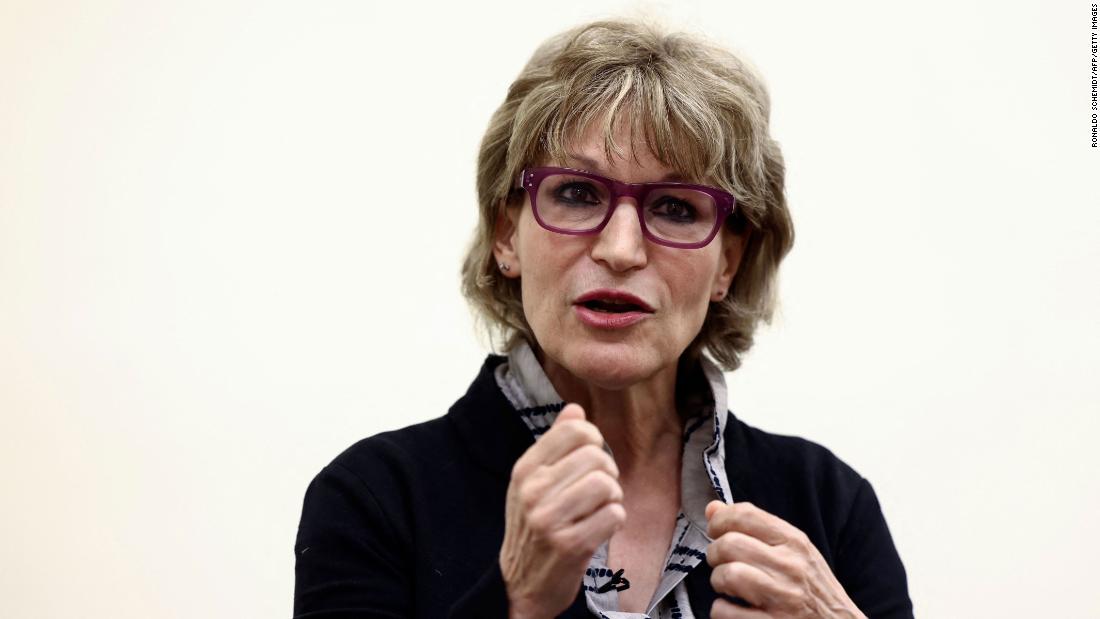
Jerusalem (CNN)Amnesty International has become the latest human rights organization to accuse Israel of apartheid for its treatment of Palestinians, prompting an angry response from Israel, which has denounced the report as anti-Semitic.
Amnesty's nearly 300-page report, released Tuesday, details "inhuman or inhumane acts of forcible transfer, administrative detention, torture, unlawful killings and serious injuries, and the denial of basic rights and freedoms or persecution committed against the Palestinian population," creating "an institutionalized regime of systematic oppression and domination over Palestinians."
"Amnesty International concludes that the State of Israel considers and treats Palestinians as an inferior non-Jewish racial group," it said.
Like two recent reports focusing on the same issue -- from Israeli human rights group, B'Tselem, and from New York-based Human Rights Watch (HRW) -- Amnesty's report examines Israeli policy in both the Palestinian territories, land occupied by Israel since 1967 but never formally annexed, and in Israel.
"Since its establishment in 1948, Israel has pursued an explicit policy of establishing and maintaining a Jewish demographic hegemony and maximizing its control over land to benefit Jewish Israelis," it said.
Even before the report was formally released, Israel denounced it as "false and biased."
In an online briefing with journalists held in advance of the report's publication, Foreign Ministry spokesman Lior Haiat said that Amnesty was "using double standards and demonization in order to delegitimize the existence of Israel as the homeland of the Jewish people."
"These are the exact components from which modern antisemitism is made," the foreign ministry said in a separate statement.
That response was echoed in a joint statement by several Jewish groups in the United States on Sunday, including the American Israel Israeli Public Affairs Committee and the Anti-Defamation League, which said Amnesty's document "fuels those anti-Semites around the world who seek to undermine the only Jewish country on earth, while simultaneously cheapening and downplaying the horrific suffering that was a result of apartheid in South Africa."
The term apartheid originated in South Africa, where a system of racial segregation and "separate development" was official policy between 1948 and 1994. The system was designed to confine non-Whites to "self-governing Bantustans," stripping them of their citizenship, with a system of passes and identity papers controlling where non-Whites could travel and work.
Israel has always rejected comparisons with apartheid-era South Africa. Even some staunch Israeli critics of the occupation have argued that discrimination against Palestinians does not amount to intentional or institutional racism and is the result of genuine security fears.
Clash over words
This clash over words -- and the efforts to make them stick -- have increasingly come to characterize perceptions of the conflict from within the region and abroad.
While the Israeli government response to the previous B'Tselem and HRW reports was critical, Haiat acknowledged concerns that the apartheid narrative is building, prompting a more combative approach this time.
"Of course, there is a concern that people will believe those false accusations," Haiat said.
He pointed to Israel's current government, which for the first time includes Arab lawmakers in its ranks as proof of what he termed Israel's inclusive democracy.
But many Palestinian activists believe those arguments are no longer cutting through, and the see the tide of public opinion turning in their favor.
They point to demonstrations in the United States and around the world last year in support of Palestinian families facing the threat of forced eviction from their homes in the East Jerusalem neighborhood of Sheikh Jarrah.
"The world is coming to the conclusion that for human beings that live in the land between the river and the sea, the levels of freedoms and rights are defined by ethnonational identity," Salem Barahmeh, Executive Director of the Ramallah-based Palestine Institute for Public Diplomacy told CNN.
The charge of anti-Semitism by Israel's defenders has also become a highly contested issue. While research clearly points to rising anti-Semitism around the world, many feel the word is being mis-used and devalued.
Israel's former ambassador to the United Nations, Danny Danon, was ridiculed recently after accusing actress Emma Watson of anti-Semitism after she posted online a picture of a pro-Palestinian rally alongside the words, "Solidarity is a verb."
"No joke, we are at the point where merely posting a vague picture referencing solidarity with Palestinians on Instagram gets you labeled as an antisemite," MSNBC host and former CNN journalist Ayman Mohyeldin tweeted.
At the level of international diplomacy, though, there is little sign so far that the battle over the apartheid label is having much of an impact.
On Monday, the US pushed back at the Amnesty report's characterization of Israel.
Prior to reading the report, US State Department spokesman Ned Price said in a State Department briefing that describing Israel as an apartheid state was "not language that we have used, nor would we ever use." Price added that the administration would not comment more fully until it had had a chance to read the full report.
The report also coincided with the first ever trip by an Israeli head of state to the United Arab Emirates -- underscoring Israel's recent diplomatic achievements.
Read-outs from President Isaac Herzog's two-day trip to the UAE made no reference to any discussions of the Israeli-Palestinian conflict.
World - Latest - Google News
February 01, 2022 at 10:08PM
https://ift.tt/3TriydM4V
Amnesty accuses Israel of apartheid over treatment of Palestinians, prompting angry response - CNN
World - Latest - Google News
https://ift.tt/Ce3L6XDHh
Vladimir Putin says the West has 'ignored' Russia's key concerns over Ukraine - CNN

Moscow (CNN)Russian President Vladimir Putin said Tuesday that his government was studying the responses from the United States and NATO to his security demands related to Ukraine but that it was clear the Kremlin's main complaints "had been ignored."
For weeks Putin had said little publicly about the crisis sparked by Russia's buildup of tens of thousands of troops near Ukraine's borders, which has raised fears of a possible invasion.
But speaking at a Tuesday news conference following a five-hour meeting in Moscow with Hungarian Prime Minister Viktor Orban, the Putin said: "It is already clear -- I informed the Prime Minister about this -- that the fundamental Russian concerns were ignored. We did not see an adequate consideration of our three key requirements."
Putin added that Russia had not seen "adequate consideration of our three key demands regarding NATO expansion, the renunciation of the deployment of strike weapons systems near Russian borders, and the return of the [NATO] bloc's military infrastructure in Europe to the state of 1997, when the Russia-NATO founding act was signed."
The US and NATO have said Putin's demands -- which include a promise to never expand eastward to countries including Ukraine -- violate NATO's open-door policy and are non-starters in negotiations.
Putin ended the news conference with a short lecture about what he characterized as NATO's history of deceptions, claiming that the alliance promised to expand "not an inch" eastward. "They said one thing, they did another," Putin said. "As people say, they screwed us over, well they simply deceived us."
Russian officials have repeatedly made this claim in the past; the US and NATO have denied making such promises.
Putin also reiterated his opposition to the possibility of Ukrain joining NATO, and said Kyiv was attempting to retake Crimea -- the Ukrainian territory annexed by Russia in 2014 -- by military force, potentially bringing the alliance into open conflict with Russia.
"This [Crimea] is sovereign Russian territory, the question is closed for us," he said. "Let's imagine that Ukraine is a NATO country and starts these military operations. Then what, we should fight against the NATO bloc? So, has anyone thought about this? Looks like no."
Diplomats from the US, Russia, Ukraine, NATO and the European Union have been engaged in a flurry of diplomatic activity in recent weeks.
US Secretary of State Antony Blinken and Russian Foreign Minister Sergey Lavrov held a phone call Tuesday. Following that call, a senior State Department official said Lavrov did not give an indication that Moscow will de-escalate from the border with Ukraine.
US State Department officials confirmed Monday they had "received a written followup from Russia" to a document of proposals the US sent to the Kremlin last week on how to defuse tensions and pave the way for further security talks in response to Russia's demands on security.
On Tuesday, however, the Kremlin said that Russia had not yet sent its "main reply" to the US. "There was a mix-up," Kremlin spokesperson Dmitry Peskov said in a conference call. "It [the Russian correspondence] regarded a different matter. The main reply on this issue hasn't been handed over, it's still being prepared."
World - Latest - Google News
February 02, 2022 at 01:46AM
https://ift.tt/YTVnoXE06
Vladimir Putin says the West has 'ignored' Russia's key concerns over Ukraine - CNN
World - Latest - Google News
https://ift.tt/Ce3L6XDHh
Danes halt virus restrictions; rest of Europe a patchwork - Associated Press

COPENHAGEN, Denmark (AP) — Denmark took the European Union lead Tuesday by scrapping most pandemic restrictions as the Scandinavian country no longer considers COVID-19 “a socially critical disease.” European nations elsewhere had a patchwork of different approaches, with some relaxing virus measures while others tightened them.
Officials say the reason for the Danish move is that while the omicron variant is surging in the country, it’s not placing a heavy burden on the health system and Denmark has a high vaccination rate.
Prime Minister Mette Frederiksen told Danish radio it’s too early to know if virus restrictions ever have to make a comeback.
“I dare not say that it is a final goodbye to restrictions,” she said. “We do not know what will happen in the fall, whether there will be a new variant.”
Denmark, a nation of 5.8 million, has in recent weeks seen more than 50,000 new cases a day but the number of COVID-19 patients in hospital intensive care units has dropped.
Some other nations were moving in the same direction as Denmark.
Last week, England lifted almost all domestic restrictions: masks are not mandatory anywhere, vaccine passes are not required for any venue and people are no longer advised to work from home. The only legal requirement is to self-isolate after a positive COVID test.
Ireland has dropped most of its restrictions and the Netherlands also has been easing its lockdown, although Dutch bars and restaurants still have to close at 10 p.m.
France — which is still reporting the continent’s highest daily positive cases — plans on lifting some restrictions Wednesday, notably outdoor mask rules in Paris, a part-time work-from-home order and limits on crowd sizes. But face masks are still required indoor in many public places, nightclubs are closed and no eating or drinking is allowed in cinemas, stadiums or public transport.
Finland will end its COVID-19 restrictions this month. On Monday, border controls between Finland and the other Schengen countries that form Europe’s ID check-free travel area, ended. Travelers coming from outside the EU will continue to face border controls at least until Feb. 14.
In Serbia, there are hardly any controls, so the few rules in place — mandatory face masks in closed spaces, passes for bars, restaurants and nightclubs in the evening and only 500 people at events — don’t mean much. Nightclubs have been open all along.
Italy, however, has been gradually tightening its health pass requirements during the omicron surge. As of Monday, Italy requires at least a negative test within the previous 48 hours to enter banks and post offices, and anyone over 50 who has not been vaccinated risks a one-time 100-euro ($112) fine.
Austria has imposed a vaccine mandate that takes effect this month and Greece has ordered fines for people 60 and over who refuse to get vaccinated. Germany politicians, meanwhile, have opened a debate on whether to impose a national vaccination mandate.
The head of the Danish Health Authority, Søren Brostrøm, told Danish broadcaster TV2 that his attention was on the number of people in ICUs rather than on the number of infections. He said that number had “fallen and fallen and is incredibly low.”
The most visible restriction disappearing is the wearing of face masks, which are no longer mandatory on public transportation and shops. Authorities only recommend mask use in hospitals, health care facilities and nursing homes.
Another restriction that no longer is required is the digital pass to enter nightclubs or eat indoors in restaurants.
Stefano Tandmark, a Copenhagen waiter, said bars and eateries can stay open now till 5 a.m. “We can dance and yeah, just be yourself again and don’t worry about if corona is gone or where it is at the moment.”
Still, many Danes took a cautious approach Monday, wearing face masks on public transport and in shops. Some noted that the omicron variant had led to staff shortages.
“There’s a lot of our employees who are sick without the restrictions being lifted, and it’s going to be even worse now,” said Ulla Vestergaard, 59-year-old social care worker.
Health authorities urged Danes to get tested regularly so the country can react quickly if necessary but also praised citizens for embracing vaccines.
″ A lot of people (in Denmark) have received two vaccination shots and a lot have received three doses as well, and many of those doses were provided in the fourth quarter of 2021,” Jens Lundgren, a professor of viral diseases at Copenhagen University Hospital told The Associated Press.
More than 60% of Denmark’s population over age 12 have gotten a third vaccine shot.
___
Follow AP’s pandemic coverage at https://apnews.com/hub/coronavirus-pandemic
——
James Brooks contributed to this report.
World - Latest - Google News
February 01, 2022 at 05:57PM
https://ift.tt/6ao8tYgb4
Danes halt virus restrictions; rest of Europe a patchwork - Associated Press
World - Latest - Google News
https://ift.tt/Ce3L6XDHh
Anders Behring Breivik, Norwegian Terrorist, Is Denied Parole - The New York Times

Mr. Breivik, who killed 77 people in two attacks, has served 10 years of a 21-year sentence.
Anders Behring Breivik, the Norwegian terrorist who killed 77 people in gun and bomb attacks in 2011, was denied parole on Tuesday by a Norwegian court that said he “appeared devoid of empathy and compassion for the victims of the terror.”
Mr. Breivik, 42, who has served 10 years of a 21-year sentence for the attacks, showed no signs that his extremist views had waned during his years of incarceration. When the parole hearing began on Jan. 18, he entered the courtroom and made a Nazi-style salute. He also carried and wore signs emblazoned with racist messages, including one that read “Stop your genocide against our white nations.”
Speaking to the judge, Mr. Breivik demanded that he be treated as a prisoner of war.
Judge Dag Bjorvik oversaw the parole hearing, which lasted for two weeks and was held at Skien prison for security reasons.
Mr. Breivik’s lawyer, Oystein Storrvik, said on Tuesday that they would appeal the verdict, after expressing pessimism at the start of the hearing. “No Norwegian lawyer wants a case to begin with a Hitler salute,” he said in an interview with The Times last month. He said he was not particularly concerned with Mr. Breivik winning his parole, adding that his long-term strategy was to “improve the conditions under which he is sitting” in prison.
On July 22, 2011, Mr. Breivik detonated a fertilizer bomb in downtown Oslo, killing eight people. He then went on a shooting rampage at a summer camp on the island of Utoya, killing 69 people, most of them teenagers. The camp was organized by the youth arm of the country’s center-left Labor Party.
The judgment said Mr. Breivik “verbally expressed grief over those affected — but at the same time, he defended and possibly legitimized his actions by saying that most of those affected on Utoya were not children, but people with ‘leadership positions.’ This despite the fact that he must know that among those killed were children as young as 14 years old.”
At the start of the parole hearing, Hulda Karlsdottir, the lead prosecutor, said that Mr. Breivik should remain in prison and that he would “remain dangerous after serving his sentence.”
She added: “Both the survivors and relatives alike are left with bottomless grief, and the atrocities committed are unparalleled in Norwegian history.”
Mr. Breivik, who legally changed his name to Fjotolf Hansen in 2017, said he had carried out the attack as part of a violent campaign against what he characterized as a Muslim invasion of Europe, which he said was contributing to the country’s “cultural suicide.”
Mr. Breivik was convicted on terrorism and murder charges in 2012 and sentenced to 21 years in prison, the maximum under Norwegian law. The sentence can be extended indefinitely if he is deemed a continued threat to society.
The parole hearing, revived memories of the most horrific crime in modern Norwegian history, and showcased the extremist views of the country’s neo-Nazi fringe.
In past court appearances, Mr. Breivik has betrayed little emotion when recounting his deeds. His crimes, which he detailed in a sprawling 1,500 page tract discovered after the attacks, have since influenced right-wing extremists around the world, including an American white nationalist, Christopher Paul Hasson, who was indicted on federal gun and drug charges and accused of plotting to commit mass murder.
Mr. Breivik last appeared before Norwegian and European courts in 2016 to argue that his long-term solitary confinement amounted to torture. He is being held in a three-room suite that includes a treadmill, a refrigerator, a television with a DVD player and a Sony PlayStation. He has also threatened to go on a hunger strike.
Lisbeth Kristine Royneland, a spokeswoman for the families of victims and survivors of the attacks, said the decision was “as expected,” and only confirmed what they had heard in previous rounds in court: “The terrorist is very dangerous and must not be released.”
The judgment Tuesday said that Mr. Breivik posed the same risk to society today that he did when he was first sentenced.
“In the court’s view, it cannot be assumed that the accused comes across as nonviolent,” the ruling said. “His verbal assurances and his words of honor are of little value, even if meant sincerely in the moment they are spoken.”
Ms. Royneland, whose daughter Synne Royneland was killed during the attack on Utoya, said that with appeals and Mr. Breivik’s attention-seeking stunts, “It feels like he is poking at a wound that is never allowed to heal.”
World - Latest - Google News
February 02, 2022 at 12:05AM
https://ift.tt/sHtZVaPBg
Anders Behring Breivik, Norwegian Terrorist, Is Denied Parole - The New York Times
World - Latest - Google News
https://ift.tt/Ce3L6XDHh
Subscribe to:
Posts (Atom)
Featured Post
Qatar 'appalled' by reported criticism from Israel's Netanyahu - BBC.com
By David Gritten BBC News Reuters Qatar's foreign ministry said the Israeli prime minister's reported remarks were ...

Popular Posts
-
Military & Defense Iran ups the ante against US, proxies strike Iraq military base with ballistic missiles Rebecca Rommen 2024...
-
Gaza’s Health Ministry said the number of people killed in the Strip during this war has passed 25,000, a grim marker reached in just over...
-
CNN — Hungary’s Prime Minister Viktor Orban told NATO Secretary-General Jens Stoltenberg that his government supports Sweden’s membershi...


