Rechercher dans ce blog

Saturday, September 2, 2023

Nobel Foundation reverses decision to invite Russia to prize ceremony following backlash - CNN

CNN  — 

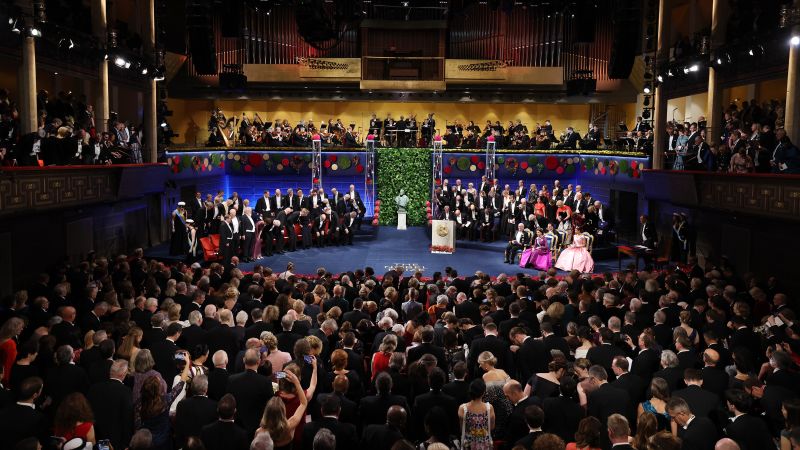
The Nobel Foundation has U-turned on a controversial decision to invite the ambassadors of Russia, Belarus and Iran to the Nobel Prize award ceremony after facing widespread criticism.

The foundation announced in a press release Saturday that ambassadors from the three countries would not be invited, after initially saying that it wanted to involve even those who did not share the values of the Nobel Prize.

Ukraine had condemned the decision to invite the Russian and Belarusian ambassadors, who had been left out of Stockholm’s Nobel Prize awards ceremony last year because of the war in Ukraine. A Swedish member of the European Parliament called the decision “extremely inappropriate.”

“The decision by the Nobel Foundation to invite all ambassadors to the Nobel Prize award ceremony, in accordance with previous practice, has provoked strong reactions,” the foundation said in its statement Saturday, adding that the basis for the decision is the belief that “it is important and right to reach out as widely as possible with the values and messages that the Nobel Prize stands for.”

“For example, through last year’s clear political message with the peace prize awarded to human rights fighters from Russia and Belarus as well as to Ukrainians who work with documenting Russian war crimes,” it said.

“We recognize the strong reactions in Sweden, which completely overshadowed this message. We, therefore, choose to repeat last year’s exception to regular practice – that is, to not invite the ambassadors of Russia, Belarus and Iran to the Nobel Prize award ceremony in Stockholm,” the foundation said.

The move on Saturday was welcomed by the Swedish prime minister and Ukrainian officials.

“I welcome the new decision of the board of the Nobel Foundation regarding the Nobel Prize award ceremony in Stockholm,” Sweden’s Prime Minister Ulf Kristersson said in a post on X, formerly known as Twitter, while Oleg Nikolenko, a spokesperson for Ukraine’s Ministry for Foreign Affairs, called the reversal a “restoration of justice” in a post on Facebook.

The Nobel Banquet takes place annually in Stockholm on December 10, where five out of six Nobel Prizes are awarded. The Nobel Peace Prize is awarded in Oslo, Norway.

Russians and Belarusians have been excluded from countless events since Moscow launched its full-scale invasion of Ukraine, which has been heavily assisted by Minsk, in February 2022.

Athletes from Russia and Belarus have also been banned from competing in numerous sporting events, and diplomats are regularly excluded from summits.

Russia ‘trying to silence’ Nobel winner

In another development, Nobel committee chair Berit Reiss-Andersen on Saturday accused Russia of “trying to silence” Nobel Peace Prize-winning journalist Dmitry Muratov, after Russia added Muratov to its register of “foreign agents” on Friday.

Under a law expanded in December 2022, Russia requires all individuals or organizations receiving either funding or support from abroad to be classified as “foreign agents.”

“Mr. Dmitry Muratov was awarded the Nobel Peace Prize in 2021 for his efforts to promote freedom of speech and freedom of information, and independent journalism. It is sad that Russian authorities are now trying to silence him,” said Reiss-Andersen, adding that the “accusations against him are politically motivated.”

Adblock test (Why?)


World - Latest - Google News
September 02, 2023 at 11:28PM
https://ift.tt/AL2yvxJ

Nobel Foundation reverses decision to invite Russia to prize ceremony following backlash - CNN
World - Latest - Google News
https://ift.tt/amF6Xzf

India launches sun probe after moon landing success - Nikkei Asia

NEW DELHI -- Just over a week after it became the first nation to soft-land a spacecraft near the moon's south pole, India on Saturday launched another ambitious mission, this time to study the sun.

The Indian Space Research Organisation's Aditya-L1 -- Aditya means the sun in Sanskrit -- lifted off around noon local time from the Satish Dhawan Space Centre in Sriharikota, in southern India.

Adblock test (Why?)


World - Latest - Google News
September 02, 2023 at 01:32PM
https://ift.tt/SP8cF4v

India launches sun probe after moon landing success - Nikkei Asia
World - Latest - Google News
https://ift.tt/amF6Xzf

Friday, September 1, 2023

Putin claims 'invincibility', new drone strikes in Russia - Euronews

All the latest developments from the war in Ukraine.

Putin tells children Russia is 'invincible'

Russia is as "invincible" today as it was during the Second World War, Vladimir Putin said on Friday during a meeting with teenagers to mark the start of the new school year.

"I understood why we won the Great Patriotic War: it's impossible to defeat a people with that kind of mindset. We were absolutely invincible and, today, we still are", said the Russian president, in remarks broadcast on television.

Putin regularly draws parallels between the war against Nazi Germany and the offensive he has unleashed in Ukraine.

Russia claimed on Friday to have seized "key positions on high ground" near the town of Kupiansk in eastern Ukraine, a sector of the front on which its troops have been on the offensive for several weeks.

Russia has deployed major resources to regain control of the Kupiansk sector, which was recaptured by Ukraine last year, and according to Ilia Yevlach, spokesman for the Ukrainian army's Eastern Command, 45,000 of its soldiers are massed there.

Ukrainian drones hit Kursk as Moscow repels attack

Ukrainian forces targeted Russia's Kursk region with two drones early on Friday, damaging residential and administrative buildings, local authorities said. 

Two buildings were damaged, which emergency services were still assessing, the region's governor Roman Starovoit wrote on Telegram. 

Russian forces downed another drone bound for Moscow on Friday morning, the capital's mayor Sergei Sobyanin said. 

The drone was shot down just 20 kilometres southeast of central Moscow, Sobyanin wrote on Telegram, without disclosing further details. 

Moscow's three major airports had to reschedule and cancel flights after an unidentified flying object was detected by air defences, the Russian state-run news agency TASS reported.  

Sobyanin has been vocal about expanding the Russian capital's air defence capabilities, after repeated attacks in recent months – one even striking the Kremlin building in May.

Anger over Russian ambassador's Nobel invitation

The invitation extended to the Russian ambassador to Sweden to attend the forthcoming Nobel Prize gala dinner caused controversy on Friday, with the Swedish prime minister openly expressing his disagreement.

"The Nobel Foundation of course invites whoever it wants. But like many others, I was very surprised to learn that Russia had been invited," said Ulf Kristersson in a statement to AFP.

"I wouldn't have done it if I had to deal with invitations to a prize-giving ceremony, and I understand that this upsets people in Sweden and Ukraine," he added.

The Nobel Foundation, which organises the award ceremony and gala dinner in Stockholm, announced on Thursday that this year it would invite all the ambassadors of the countries present in Sweden and Norway.

In 2022, the Foundation decided not to invite the Russian and Belarusian ambassadors because of the war in Ukraine, and the Iranian ambassador because of the repression of the protest movement. These three representatives have been invited this year.

"It is clear that the world is becoming increasingly divided into spheres and that dialogue between divergent points of view is becoming increasingly limited", said Vidar Helgesen, the Foundation's Director, in a press release.

"To reverse this trend, we are extending our invitation to celebrate and understand the Nobel Prize and the importance of free science, free culture and free and peaceful societies", he added.

A number of Swedish politicians, including environmental, centre and left-wing leaders, have said they will boycott the gala dinner because of the Russian ambassador's invitation.

UK defence firm to speed up arms supply to Ukraine

UK arms giant BAE Systems has set up a legal body in Ukraine to speed up supplies of arms and equipment to the war-torn nation. 

President Volodymyr Zelenskyy met with the firm's chief executive Charles Woodburn on Thursday to iron out the details of the new agreement. 

"The development of our own weapons production is a top priority," Zelenskyy wrote on X, formerly known as Twitter, following Thursday's meeting. 

He said Ukraine will be able to deploy BAE-manufactured artillery L119 and M777 systems and armoured vehicle robust CV90. 

BAE has been a large contributor to the UK's defence supplies to Kyiv following the start of the invasion in February 2022. It is, by value, Europe's biggest defence contractor operating in more than 40 countries across the globe. 

The defence firm, however, has not yet decided on setting up a physical office in Ukraine, despite Zelenskyy's previous claims that Kyiv was in negotiation to do so. 

Russia unhappy with Black Sea grain deal proposal

Russia wants the West to follow "a list of actions" in addition to the United Nations chief's new Black Sea grain proposal, Russian Foreign Minister Sergey Lavrov said on Thursday. 

UN Secretary-General Antonio Guterres had sent a new letter addressing Lavrov, hoping to revive the deal that lifted a Russian blockade and allowed Ukraine to ship almost 33,000 tons of grain at a time of growing global hunger.

But Moscow wasn’t satisfied with the letter, Lavrov hinted after a meeting with Turkish Foreign Minister Hakan Fidan, whose country helped broker the deal. 

“As soon as talks turn into concrete decisions, we’ll be ready to resume the Ukrainian part of the grain package that same day," Lavrov said. 

Describing the grain deal as “quite a complicated and laborious job,” Turkey's Fidan said when Erdogan and Putin get together they “will take a more strategic and political view.”

Guterres told UN reporters on Thursday he had written a letter to Lavrov with “a set of concrete proposals, allowing to create the conditions for the renewal of the Black Sea initiative.”

The United Nations and Turkey brokered the deal in July 2022 that allowed Ukraine to ship grain and other foodstuffs from three Black Sea ports.

A separate memorandum between the UN and Russia, following the start of the invasion, pledged to overcome obstacles to Moscow’s shipment of food and fertilizer to world markets.

Russia suspended the Black Sea grain initiative in July, calling it a lop-sided deal, repeatedly alleging Ukraine of fostering its wealthy allies in the West.

Adblock test (Why?)


World - Latest - Google News
September 01, 2023 at 09:28PM
https://ift.tt/O4nhNq1

Putin claims 'invincibility', new drone strikes in Russia - Euronews
World - Latest - Google News
https://ift.tt/amF6Xzf

Ecuador prisoners hold 57 guards, police hostage - DW (English)

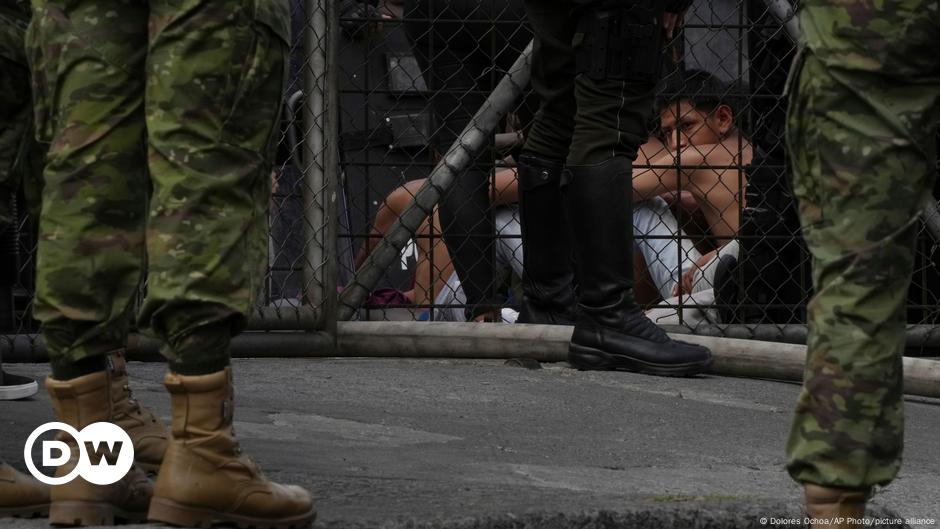
Inmates at a correction facility in the Ecuadoran city of Cuenca took 50 guards and seven police officers hostage, said Interior Minister Juan Zapata.

"We are concerned about the safety of our officials," he said at a press conference in the capital, Quito. Zapata's comments came in the middle of a day when two car bombs exploded in Quito, allegedly in response to authorities' efforts to clean up the nation's prison system.

"There are violent actions like that of the two cars burned in Quito last night, clearly that's a reaction to an action. The action of imposing order in the prisons, the reaction to intimidate," President Guillermo Lasso said at a housing event in Los Rios province.

Local journalist Christian Sanchez Mendieta reported prisoners had reached the prison roofs on Thursday.

What led to the hostage situation?

Drug trafficking gangs in Ecuador are currently engaged in a war for power, with the prisons as centers of operations.

The three prisons of Latacunga, Cuenca and Azogues are allegedly controlled by the criminal gang Los Lobos. Altercations between Los Lobos and members of other organized crime gangs have killed over 430 inmates in Ecuador prisons since 2021.

Lasso, on July 24, decreed a 60-day state of emergency for the entire penitentiary system, allowing him to deploy the military in prisons for a clean-up spree. 

Hundreds of soldiers and police officers carried out a search operation at the Andean Latacunga prison on Wednesday in an attempt to find and seize weapons, ammunition and explosives.

Authorities confiscated 49 bladed weapons, two bulletproof vests, ammunition, cash, thirteen gallons (49.2 liters) of alcohol, 39 mobile communications devices, five telephone chips and four additional micro SD cards from the Latacunga prison.

The Latacunga raid followed similar raids carried out in previous weeks in the Guayas prison complex, where authorities found rifles, grenades and grenade launchers, among other prohibited items.

The riot in the prison of Cuenca initially began as a protest against this intervention. Later, authorities indicated that the detention was in protest against the transfer of inmates to other prisons.

Appeal from the hostages

A viral video, allegedly recorded inside the Cuenca prison by the detained police and correctional officers, showed them appeal to the government to secure their release.

One of the spokespersons in the video, police lieutenant Alonso Quintana, appealed that the government "not make decisions that violate the human rights of the persons deprived of their freedom."

There are reportedly 400 military and 200 police officers deployed outside the prison, who have been unable to enter the premises since Wednesday.

mk/sms (AFP, EFE)

Adblock test (Why?)


World - Latest - Google News
September 01, 2023 at 09:40AM
https://ift.tt/1xgslHX

Ecuador prisoners hold 57 guards, police hostage - DW (English)
World - Latest - Google News
https://ift.tt/amF6Xzf

Lost Jet Ski Tourists Shot Dead After Crossing Border by Mistake - The Daily Beast

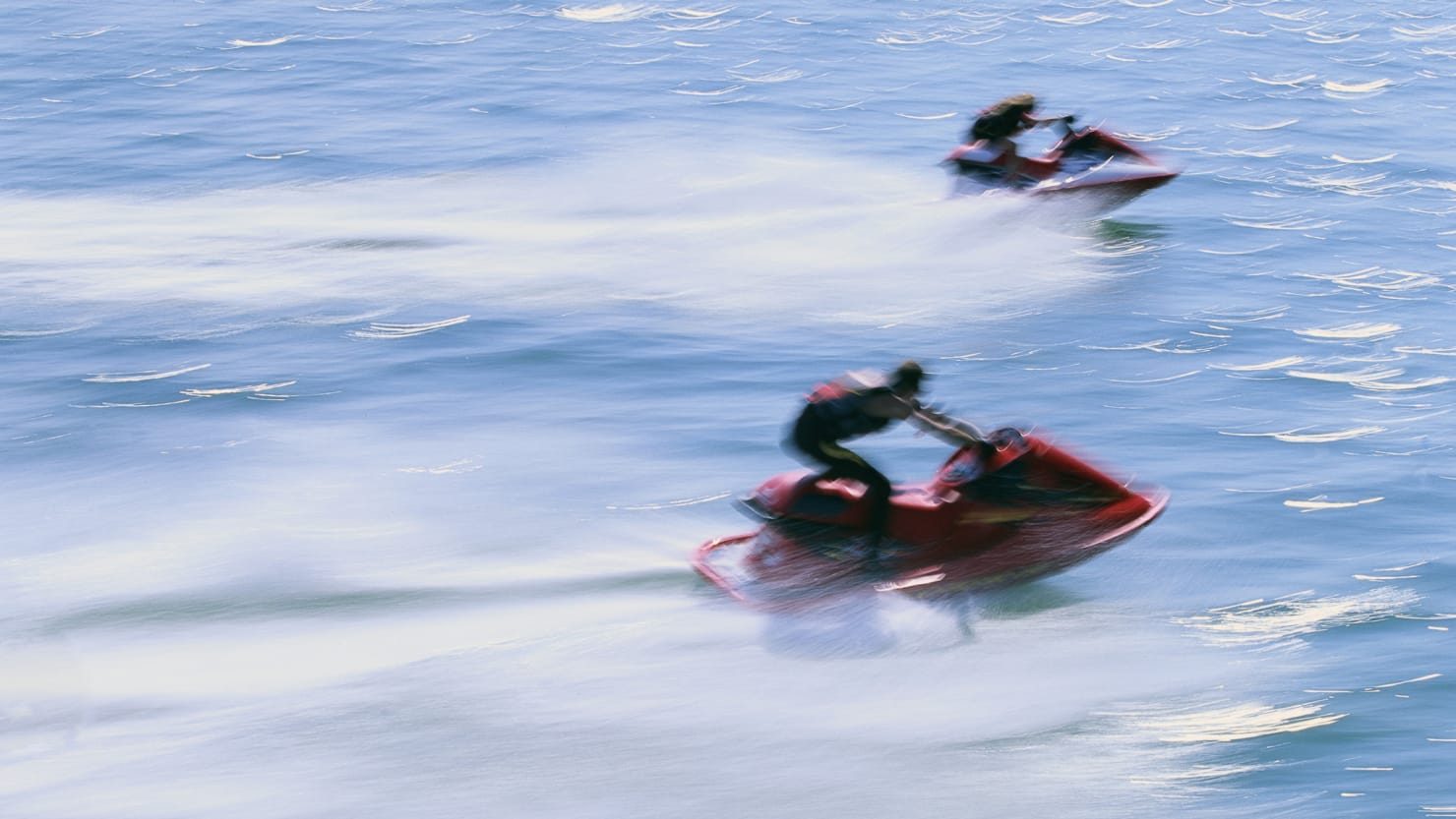
A pair of tourists riding jet skis off the coast of Morocco were shot dead by the Algerian coast guard when they got lost and accidentally strayed across a border on Tuesday, reports say.

The two victims were named as Bilal Kissi and Abdelali Mechouer, both French-Moroccan dual nationals, by Morocco’s Le360 news site. They were reportedly part of a group of four who were targeted with gunfire after inadvertently setting off in the wrong direction from the Saidia resort in northeast Morocco.

Smail Snabe, another French-Moroccan, was arrested by the Algerian coast guard, accoridng to Le360. The only member of the group to make it safely back to Morocco was Mohamed Kissi, who spoke about the incident with local media.

“We got lost but we kept going until we found ourselves in Algeria,” Kissi said, according to the AFP news agency. “We knew we were in Algeria because a black Algerian dinghy came towards us,” Kissi said, and those in the boat then “fired at us.”

“Thank God I wasn’t hit, but they killed my brother and my friend,” he said. “They arrested my other friend.” He added that the group had “got lost and we were out of fuel,” and that he escaped the same fate as the others by being picked up by the Moroccan navy as he swam for his life.

Kissi also denied that the group had made an attempt to flee the Algerian coast guard, telling reporters that his brother had attempted to speak to the officials before they opened fire. A Moroccan fisherman later found one of the bodies in the water and shared online a video of the lifeless man floating in the waves.

Abdelkarim Kissi, an actor who is the cousin of both Mohamed and Bilal, expressed outrage at the incident and called for Moroccan authorities to take the case to international courts. “They killed Bilal Kissi my little cousin,” he wrote online. “His only fault was crossing the Algerian territorial waters, he was on vacation with his friends.”

Moroccan media reported that Snabe, the arrested tourist, appeared before an Algerian prosecutor on Wednesday, but any charges against him have not been disclosed. A spokesperson for the Moroccan government would not comment on the case to the AFP, saying it was a “matter for the judiciary.”

The killings come amid declining relations between Algeria and Morocco. The North African countries have long disputed the status of the Western Sahara and the border between the nations has been closed since 1994. Two years ago, Algeria broke off diplomatic ties with Morocco altogether, accusing its neighbor of “hostile acts.” Algerian President Abdelmadjid Tebboune told Al Jazeera in March that relations with Morocco had “practically reached the point of no return.”

Adblock test (Why?)


World - Latest - Google News
September 01, 2023 at 05:18PM
https://ift.tt/awWIKVb

Lost Jet Ski Tourists Shot Dead After Crossing Border by Mistake - The Daily Beast
World - Latest - Google News
https://ift.tt/MaIydSu

How Russian Globalized the War in Ukraine - Foreign Affairs Magazine

From the outset of his invasion of Ukraine, Russian President Vladimir Putin’s vast ambitions for the war were obvious. He intended to topple the government in Kyiv and either partition or take control of Ukraine. But Putin’s aspirations extended beyond carving a sphere of influence in central and eastern Europe. By subjugating the Ukrainian polity, Putin hoped to initiate a new era of global politics, one detached from American leadership. He promised an international system that would be genuinely postcolonial, solicitous of conservative values, and robustly multipolar, with Russia serving as one of its central arbiters.

Even after setback after setback on the battlefield in Ukraine, Putin remains committed to a brutal, immiserating war effort. He will do what he can to isolate and impoverish Ukraine in pursuit of an international order that sidelines the West and restores Russia’s proper place in the world, as he construes it. Announced by Putin at the 2007 Munich Security Conference, Moscow’s turn from the West accelerated after the annexation of Crimea in 2014, reaching a breaking point with the invasion of Ukraine in 2022. The longer the war lasts, the more Putin will look for opportunities to undermine and supplant the West.

Russia’s strategy to globalize the war has multiple dimensions. In its economic relations, Moscow has capitalized on the opportunism of countries indifferent to the conflict: the Kremlin aims to integrate Russia into non-Western networks of trade, defense, and commerce. Ideologically, Russia blames the war on Western deceit and Ukrainian betrayal, leveling accusations of hypocrisy against the United States and its allies. Diplomatically, Russia and the West are carrying the conflict into international institutions. Whether in the UN Security Council or at the International Atomic Energy Agency, whatever modus vivendi there had once been between Russia and the West has come apart. By nurturing apathy and frustration with the war in non-Western capitals, Moscow hopes that other countries will join its ranks or at the very least distance themselves from the West.

Central to Russia’s global strategy are force and fear. Consciously stoking anxiety about nuclear catastrophe, the Kremlin seeks control over global pressure points. Its bid to strong-arm Europe through gas and energy exports may have failed, but the Kremlin has other tools at its disposal, one of which concerns the global supply of food. By pulling out of the Black Sea Grain Initiative in July 2023, after threatening to do so for months, Russia has upped the ante. Brokered by Turkey and the UN, this agreement ensured the wartime export of Ukrainian grain. Since leaving the deal, Russia has tried to impose a de facto blockade on civilian shipping to and from all Ukrainian-held Black Sea ports. To hinder Ukrainian shipments, it has attacked ports, grain storage facilities, and other sites along the Danube River. In so doing, Russia hopes to gain long-term coercive leverage over Ukraine, while waging a prolonged military struggle to subdue the country.

The United States, along with other countries supporting Ukraine, must avoid wishful thinking about Russia’s chronic decline. They should not underestimate the scale of Moscow’s ambitions. Neither a great power nor a regional power in the classic sense, Russia exists in a confusing category of its own: it is a regional power with considerable global reach. To fend off Putin, the United States and its partners should think of the war in similarly global terms. This involves recognizing the limits of sanctions, preemptively identifying Russia’s next pressure points, emphasizing the importance of food security, and developing a diplomatic stance that is less narrowly transatlantic and more broadly appealing to non-Western countries. Russia will use its global assets and instruments to prolong the war. The United States must harness its global influence to shorten the war, maximize support for Ukraine, and contain Russia.

RUSSIA’S WORLD

Putin’s Russia inherited the dual legacies of imperial Russian foreign policy and Soviet great-power status. Russia had been a part of the European state system since the seventeenth century, extending far west in the decades before World War I and making its presence felt throughout Asia and the Middle East. The Soviet Union embraced Russia’s imperial past and was extremely active in Africa, Latin America, and the Middle East, especially when Soviet leader Nikita Khrushchev came to power in the mid-1950s and devoted himself to new varieties of Soviet internationalism. Yevgeny Primakov, the foreign minister under Russian President Boris Yeltsin, contended in the late 1990s that the world was “multipolar” and that Russia was too large, consequential, and proud to be impeded by Washington’s hegemonic pretensions.

Once a political rival to Primakov, Putin soon became a disciple of the former foreign minister and prime minister. Money poured into Russia after 2000, allowing Putin to modernize the Russian military and revive the Soviet Union’s soft power. By 2015, Moscow’s military modernization had enabled power projection in the Middle East, and Russia intervened in Syria on the side of President Bashar al-Assad’s regime. The Kremlin’s soft power might have appeared negligible to the casual observer; Russia lacked the economic might of China, the lifestyle appeal of Europe, and the military power of the United States. Yet Putin’s Russia avidly fostered ties with non-Western countries, often by invoking historical grievances about the West. Putin has consistently presented Russia as an autonomous global actor and an antidote to a reckless, revisionist United States. In this guise, he seeks to appear as a role model for other leaders dissatisfied with the international status quo.

Putin’s invasion of Ukraine has tarnished Russia’s reputation in Europe and the United States, raising doubts about his regime’s competence. But the war has not isolated Russia from the world. Instead, the war has signaled a new chapter in Russia’s global orientation. Styling itself as a David to the Western Goliath, Russia has cultivated a wartime soft power that resonates. Many countries perceive the West as focused on the Ukraine war to the exclusion of other urgent challenges. They contend that the United States, having fought wars of aggression in Vietnam and Iraq, falls short of its purported standards and principles. Some governments, including those of Brazil, Syria, Venezuela, and Zimbabwe, parrot the Kremlin’s line about the West’s aggressive and arrogant policies toward Russia, blaming the war on the West. Moscow invokes these sentiments in the UN Security Council, at the diplomatic gatherings it convenes (such as the Russia-Africa Summit held in St. Petersburg this past July), and at the summits of the BRICS grouping, which brings together Brazil, Russia, India, China, and South Africa, and will soon be expanded to include six other nations. Time and again, Russia argues that Ukraine and the West—not Russia—are out of sync with the global majority.

The durability of Russia’s economy illuminates the war’s global context. The West has not knocked Russia’s economy substantially off balance, and many major economies ranging from India’s to South Africa’s are either continuing or expanding their commercial ties with Russia. The war has shifted Russia’s trade and technology transfers, whether it be drones supplied by Iran, microchips smuggled through the “roundabout trade,” or emerging energy markets in Asia. Although the West initially assumed that the threat of sanctions would deter Russia from invading or that sanctions themselves would prevent Russia from waging a long war, the conflict has thus far shown otherwise.

UNDER PRESSURE

Trapped in a forever war of its own making, Russia is increasing global pressure in critical areas. Russian foreign policy experts and media propagandists alike have insinuated that a nuclear conflagration could occur unless the West backs down over Ukraine. These veiled nuclear threats have been heard in the West and globally, bolstering the belief (held by some) that Russia should not be pushed too far and that its demands should not be dismissed. Russia has greatly curtailed collaboration with the West on pressing global challenges such as nuclear arms control and nonproliferation while also becoming more and more obstructionist at the UN, where cooperation was unexpectedly robust in the months following the February 2022 invasion of Ukraine. Russia has recently undermined multilateral arrangements it once tolerated, such as a mechanism facilitating cross-border aid into Syria. Russia’s appetite for tackling global problems jointly with the West is gone. Putin blithely attributes this decline of multilateralism to the West.

When yesterday’s pressure points do not deliver, Russia moves on to other ones. The Kremlin’s most recent preoccupation is the global food supply. Putin’s abandonment of the Black Sea Grain Initiative was a cruel, calculated action in line with Russia’s broader strategy: blocking Ukraine’s access to international markets and gaining control over a major global chokepoint. Beyond the Black Sea, Russia has attacked Ukrainian grain terminals near Romania. This follows the Kremlin’s futile attempts to degrade Ukraine’s economic wherewithal through strikes on Ukrainian energy infrastructure last winter. Russia’s attacks against Ukraine’s grain supply are affecting global foodstuff prices, with Russia standing to profit as one of the major global alternatives.

In withdrawing from the grain deal, Russia is pursuing aims beyond mere profit. With the twinned goals of gaining advantage in Ukraine and pushing back against Western influence, Moscow is asserting itself as a pivotal global actor in the supply of foodstuffs. Having imposed immense suffering on the people of Ukraine, Russia’s attacks on grain supply are expanding the perimeter of this suffering to people all over the world, and in this suffering resides real geopolitical leverage. Such behavior is yet another reason for the United States and other countries—states that are food producers or have viable alternatives to Russian grain—to counter Russia’s brutal war on Ukraine.

But the situation is different for countries dependent on Russian and Ukrainian grain or for those vulnerable to rising food prices. Countries struggling to feed their populations—the most fundamental obligation of any society—may be compelled to work with Russia to ensure a steady supply of grain at acceptable prices. To achieve their food goals, these countries may need to flatter Russia or reconsider votes in international institutions on issues critical to Russia. At the Russia-Africa Summit, Putin melodramatically offered free grain to six African countries—an act of empty showmanship. The Kremlin may provide grain at high cost, low cost, or no cost at all, but it will always press for something in return.

In November 2022, Turkish President Recep Tayyip Erdogan used his leverage with the Kremlin, after it had reneged on the Black Sea Grain Initiative, to get it back to the deal; that deal required periodic renewal. At the urging of Erdogan, who is scheduled to visit Russia soon to discuss the grain deal, among other topics, Putin may eventually agree to a revised deal. Even if he does, he retains a source of leverage he can dial up or down at will.

Russia’s control of food supplies has dramatic implications. Scarcity is driving up the price of grain and other foodstuffs, generating inflation in global markets. Rising inflation is eroding support for incumbent governments while bolstering the popularity of opposition parties and movements. Despite subsiding inflation in the United States, Europe is still grappling with this challenge, coinciding with the rise of far-right parties throughout the continent. By releasing or continuing to withhold grain through a temporary deal, Russia can try to shape global economic conditions in accordance with its foreign policy agendas.

Food scarcity begets hunger, behind which looms instability. When coupled with global warming, which increases competition for agricultural resources such as water and arable land, hunger can generate political upheaval. It was a source of revolutionary anger in eighteenth-century France and in twenty-first-century Syria, where civil war was preceded by drought. Migrant flows, such as those that Europe experienced in 2015, can quickly export instability from one part of the world to another—Russia and Belarus have long exploited migration in pursuit of geopolitical objectives. Russia’s manipulation of global grain supplies is surely targeted at Europe and the United States, where a clear concordance exists between political actors opposed to migration and those reluctant to back Ukraine.

Putin’s goal is not to create vulnerability in a specific area. Rather, he aims to foster global dependence on Russia’s policy decisions. These elements of global influence matter more to Putin than his good reputation in Africa or the Middle East, where Moscow’s withdrawal from the Black Sea Grain Initiative dismayed many countries.

A LONG WAR

Effective support for Ukraine demands a policymaking imagination that extends beyond Europe. Ukraine’s well-being runs through global networks, which Russia—confronted with constraints on the battlefield—seeks to disrupt and damage. The Kremlin’s ultimate goal is clear: strangling the Ukrainian economy, society, and state by whatever means necessary. Moral scruples, appeals, and accusations will not deter Putin. Instead, it is essential to preserve Ukraine’s integration into the global economy, which Russia is deliberately attempting to degrade.

The United States’ most immediate challenge is food security. While energy’s geopolitical significance has long been recognized, with the U.S. government calibrated to handle energy contingencies, it is important to invest in similar interagency mechanisms for food security. These efforts—helping countries such as Ukraine protect their commercial grain industry, supplying food where it is urgently needed, and increasing the grain available to global markets—could rally global support behind Ukraine more effectively than abstract arguments about international order or the merits of the UN Charter.

Over the past two decades, Moscow’s foreign policy decisions have often caught U.S. policymakers off-guard, whether it was the 2008 invasion of Georgia, the annexation of Crimea, or meddling in the 2016 U.S. presidential election. Yet the U.S. government correctly anticipated Russia’s invasion of Ukraine in late 2021, acting decisively to complicate the Kremlin’s plans. Washington should now understand that Moscow is geared up for a long war over the future of both Ukraine and the international order and that it will use global levers of power and influence to hurt Ukraine and the West. The effects of Russia’s actions will not be trivial. Nor will the Kremlin’s ruthlessness necessarily turn non-Western countries against Russia. The sooner U.S. policymakers appreciate the global dimensions of the war in Ukraine, the sooner they may be able to engineer the failure of Russia’s designs for Ukraine.
  • MICHAEL KIMMAGE is Professor of History at the Catholic University of America and a Visiting Fellow at the German Marshall Fund. From 2014 to 2016, he served on the Policy Planning Staff at the U.S. Department of State, where he held the Russia/Ukraine portfolio.
  • HANNA NOTTE is Director of the Eurasia Nonproliferation Program at the James Martin Center for Nonproliferation Studies and a Nonresident Senior Associate with the Europe, Russia, and Eurasia Program at the Center for Strategic and International Studies.
  • More By Michael Kimmage
  • More By Hanna Notte

Adblock test (Why?)


World - Latest - Google News
September 01, 2023 at 11:00AM
https://ift.tt/XGRpzPY

How Russian Globalized the War in Ukraine - Foreign Affairs Magazine
World - Latest - Google News
https://ift.tt/MaIydSu

Pope Francis becomes first pontiff to visit Mongolia, as neighboring Russia, China look on - National Catholic Reporter

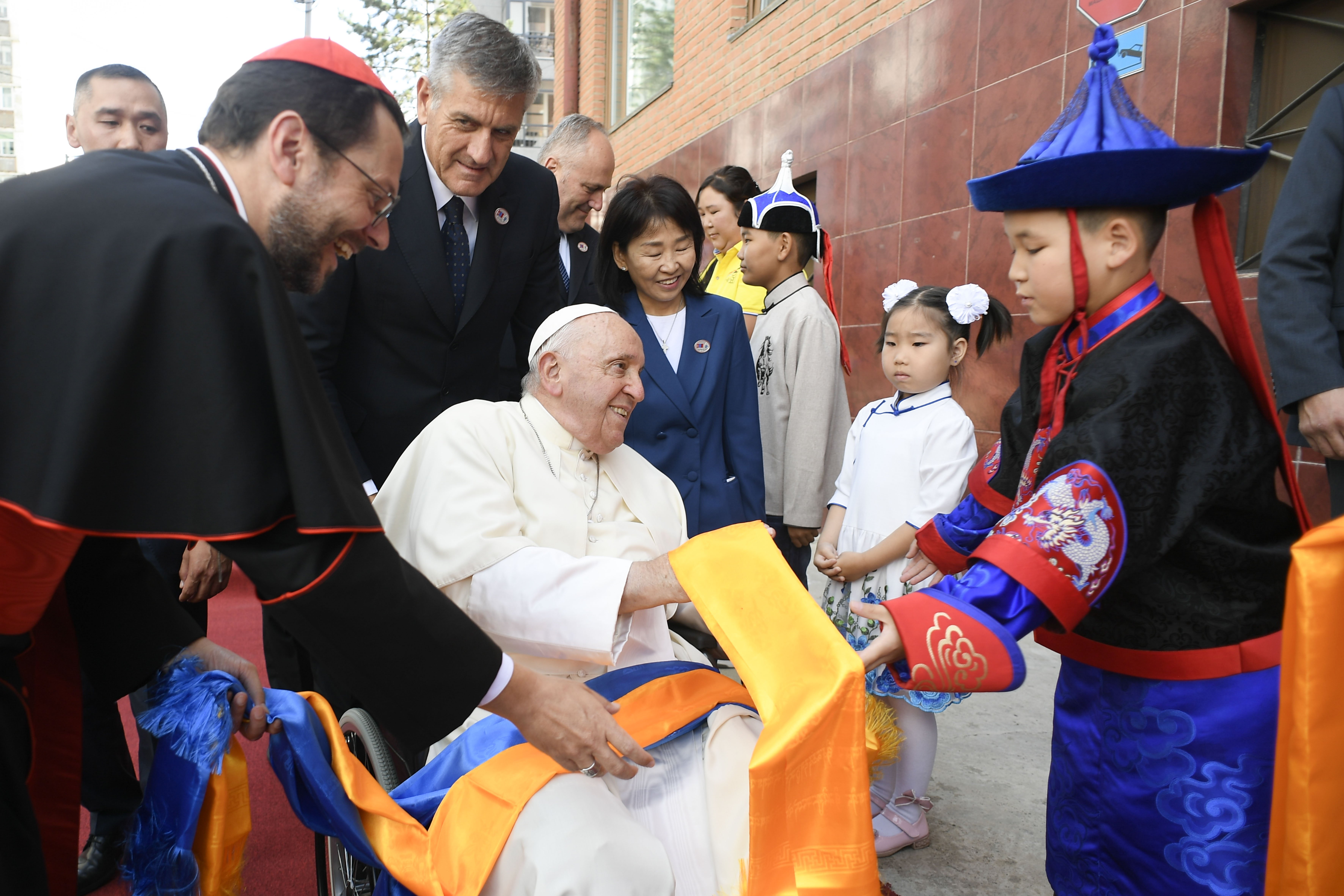
Pope Francis on Sept. 1 arrived in Mongolia, becoming the first pope to visit the vast country with one of the world's smallest Catholic populations, nestled between Russia and China — two nations with complicated Vatican relationships. 

China — which shares a nearly 3,000 mile long border with Mongolia — granted the pope's plane permission to travel over its airspace and Francis sent a customary in-flight telegram to Chinese President Xi Jinping offering his prayers "for the wellbeing of the nation." 

The Holy See and China do not have formal diplomatic relations, and despite entering into a controversial agreement with China in 2018 over the appointment of bishops in the country, the Vatican's relationship with Chinese officials have grown increasingly strained in recent months after several violations of their accord. 

As the pope departed for Mongolia on Aug. 31, America magazine reported that the United Front Work Department of the Chinese Communist Party had prohibited any bishops or lay Catholics from mainland China from traveling here to participate in any activities related to the papal visit. 

The Vatican's press office did not immediately respond to NCR's request for comment on the report. 

Francis' plane touched down here in the Mongolian capital just before 10 a.m. local time, where the pontiff was greeted by the country's foreign minister, Battsetseg Batmunkh. 

Unlike many papal visits, where the streets are filled with onlookers and well wishers, here in Mongolia where there are fewer than 1,500 Catholics in a country of 3.4 million inhabitants, there were few noticeable signs that such a high profile visitor was in town. 

En route to Mongolia, the pontiff — who is making the 43rd international visit of his papacy — greeted reporters for 25 minutes, saying Mongolia is a large country best understood not through the intellect, "but through the senses." 

When one reporter asked him about the reaction to his remarks published earlier this week criticizing reactionary American Catholics who are resistant to church reform, the pope replied "they got angry!" 

"But," the pontiff continued, "avanti, avanti"  — using an Italian expression that means "to go forward." 

Another reporter showed the pope a canteen riddled with bullets that belonged to a Ukrainian soldier. 

"You can’t imagine how hard it is," the pope said about the challenges of global diplomacy. "Sometimes it takes a sense of humor." 

Following the nine-and-a-half hour flight from Rome, the 86-year-old Francis will spend the rest of his first day in the country resting, ahead of a full day of meetings on Sept. 2 with the country’s political and diplomatic leaders, followed by a speech to Mongolian priests and missionaries. 

Despite the country's minuscule Catholic population, the pope's Sept. 1-4 visit has been described as "the event of the century" for the young, burgeoning church here. 

Adblock test (Why?)


World - Latest - Google News
September 01, 2023 at 11:56AM
https://ift.tt/VqZb5TO

Pope Francis becomes first pontiff to visit Mongolia, as neighboring Russia, China look on - National Catholic Reporter
World - Latest - Google News
https://ift.tt/MaIydSu

Featured Post

Qatar 'appalled' by reported criticism from Israel's Netanyahu - BBC.com

By David Gritten BBC News Reuters Qatar's foreign ministry said the Israeli prime minister's reported remarks were ...

Popular Posts