Protesters at a rare anti-war rally in Tel Aviv Thursday. The crowd was made up of people of all ages, many belonging to groups that have long called for an end to Israel's occupation of Palestinian territories. Ayman Oghanna for NPR
Ayman Oghanna for NPR
TEL AVIV, Israel — Omri Goren holds a stack of purple flyers that say: "Only peace will bring security."
He's part of a small anti-war movement in Israel calling for a cease-fire in the Gaza Strip, where 2.3 million people are struggling to survive months of Israeli bombardment and a near total siege of the territory.
Goren was among a few hundred people who came out to march and protest in Tel Aviv Thursday night in support of peace.
Emotions in Israel are still raw from the stunning Hamas attack on southern Israeli communities on Oct. 7 that killed 1,200 people and took about 240 hostages, according to Israeli officials. That assault set off what some conflict experts have called one of the most destructive wars in recent history. Many Israelis believe the only way to crush Hamas and secure Israel is militarily.
But Goren says Israel's continued bombardment of Gaza more than 100 days since the Oct. 7 attack only serves the political interests of Hamas and Israel's far-right government, led by Prime Minister Benjamin Netanyahu.
"The war is bad for Israelis and Palestinians. The war is good for the Hamas and Bibi," he said, referring to Netanyahu by his nickname. "They both have interests in the war, of dead people, people scared from each other."
Cease-fire calls in Israel remain rare
The anti-war protest was made up of Israeli Jews of all ages, many belonging to groups that have long called for an end to Israel's occupation of Palestinian territories.
Hundreds of protesters at an anti-war rally in Tel Aviv Thursday. Ayman Oghanna for NPR
Ayman Oghanna for NPR
"I hope we are not the minority, I hope that most of the people want to live in peace and have a good relationship with our neighbors," said Avigail Arnheim, a protester in her 60s.
She said she's horrified by the suffering of Gaza's children, who've borne the brunt of this war.
More than 10,000 children have been killed in Gaza since the war began, according to Gaza's Health Ministry. And thousands of kids have been orphaned and lost limbs from Israeli airstrikes, according to aid groups.
The U.N. children's fund, UNICEF, says children there are exposed to a lethal combination of malnutrition, hunger and a spike in cases of diarrhea because of a lack of clean drinking water. Thousands face "child wasting," the most life-threatening form of malnutrition due to the siege and war in Gaza.
"My people did it. My government did it," Arnheim said, referring to the humanitarian crisis in Gaza. "This is why I stand here. I want to change this kind of thinking."
There's nationwide support for freeing hostages, but disagreement over how
The protesters represent a small minority in Israel, where most people support the war. A poll taken by the Israel Democracy Institute in late December found that two-thirds of Israelis don't think the military should scale back its bombardment of densely populated areas of Gaza.
Shay Daniely said he understands the fears evoked by the Oct. 7 attacks in Israel. He's with the group Breaking the Silence that collects accounts of veteran Israeli soldiers speaking out about their time in service. But Daniely said most Israelis either do not understand what's happening in Gaza or prefer not to look.
"You can look at the mainstream news. It looks like the 7th of October happened yesterday," he said, referring to Israeli media coverage of the war. "There's no understanding or footage of the Palestinian people, the Gazans, so it's really one-dimensional."
The streets of Tel Aviv are plastered in signs that read "Bring Them Home," a reference to the hostages taken in the attacks. It's a rallying cry everyone in Israel supports, particularly as a growing number of captives have died in the war there.
But how to free the hostages — through continued fighting or diplomacy — is a point of fierce debate and disagreement, including among Israel's War Cabinet.
The families of hostages blocked a major highway on Thursday night in another attempt at pressuring the government to do more to secure their release.
Cindy Cohen, an antiwar activist at the march in Tel Aviv, said talking about Palestinians and Jews living in peace threatens the Israeli government that "only wants separation and fighting." She said if the war ends, new elections would be held, threatening Netanyahu's grip on power.
Cindy Cohen, an anti-war activist at the march in Tel Aviv. Ayman Oghanna for NPR
Ayman Oghanna for NPR
"I believe that Netanyahu is only self-interested. He wants to continue the war so he can continue in power," she said. "As long as the hostages are being held, there's a reason to continue the war."
As she and others marched against the war, Netanyahu told Israeli reporters the war will continue for "many more months."
"We will continue to fight at full strength until we achieve all our goals," he said, adding that includes "the return of all our hostages — and I say again, only military pressure will lead to their release."
Anti-war protesters march on, despite pushback
As protesters chanted for a cease-fire to the beat of drums through Tel Aviv's busy streets, a young reservist with a rifle slung over his shoulder and his girlfriend shook their heads at the protesters. One woman shouted against the marchers as others just looked on.
Lawyers for The Association for Civil Rights in Israel had to seek a court order to hold the protest in Tel Aviv after police refused to issue permits for it. Police have arrested and beaten protesters in other, smaller anti-war rallies in past weeks in Israel. The group is trying to get permits issued in other cities for similar protests.
ACRI's Executive Director Noa Sattath said there is an "unprecedented" crackdown on free speech in Israel. Police are tracking and arresting activists not only at protests, but also on their way to protests, she said.
ACRI filed an official complaint against Israel's police chief, Kobi Shabtai, after he said anyone who wants to identify with Gaza can go there.
The National Theater of Tel Aviv is illuminated with signs that read "Bring Them Home," a reference to Hamas' hostages in Gaza. Ayman Oghanna for NPR
Ayman Oghanna for NPR
A "massive human rights crisis" in Gaza
Protesters held signs that read: "Only peace will bring security." One sign said: "Stop the genocide."
Israel faces the charge of genocide at the International Court of Justice in The Hague, Netherlands. Its military campaign in Gaza has killed more than 24,000 Palestinians, most of them women and children, and wounded more than 61,000, many with amputations and severe burns, according to Gaza's Health Ministry and aid groups there.
Most of Gaza's hospitals have been forced shut with the rest partially functional and unable to sufficiently treat the stream of wounded.
Israel's government vehemently rejects the charge of genocide, arguing the war is against Hamas and not all of Gaza. Israel says Hamas is to blame because it uses civilian infrastructure to hide and carry out its attacks against Israel.
Israeli airstrikes have reduced to rubble hundreds of thousands of homes and businesses, displacing nearly the entire population of Gaza.
The head of the U.N. Human Rights Office for the Palestinian territories, Ajith Sunghay, described seeing children this week in Gaza's southernmost city of Rafah, where more than 1 million Palestinians have fled, digging for bricks to hold in place tents made with plastic bags.
"This is a massive human rights crisis and a major, human-made, humanitarian disaster," Sunghay said. "It is a pressure cooker environment."
Daniel Estrin contributed reporting from Tel Aviv.
Plus get unlimited access to thousands of articles, videos and more with your free account!
Please enter a valid email address.
North Korea tested a nuclear-capable underwater attack drone designed to destroy naval vessels and ports, it said Friday.
North Korea’s military said it conducted the test in the country’s eastern waters in response to naval drills by the U.S., South Korea and Japan which ended Wednesday. The underwater drone is among a broad range of weapon systems North Korean dictator Kim Jong Un continues to test and develop as he expands his arsenal of nuclear-capable weapons.
"Our army’s underwater nuke-based countering posture is being further rounded off and its various maritime and underwater responsive actions will continue to deter the hostile military maneuvers of the navies of the U.S. and its allies," North Korea’s Defense Ministry said in a statement.
It added: "We strongly denounce the U.S. and its followers for their reckless acts of seriously threatening the security of (North Korea) from the outset of the year and sternly warn them of the catastrophic consequences to be entailed by them."
North Korean dictator Kim Jong Un scrapped the idea of a peaceful reunification with South Korea.(Korean Central News Agency/Korea News Service via AP)
North Korea did not specify when the test occurred. It first tested the drone last year.
Tensions on the Korean Peninsula have risen to their highest point in years, with the test of the drone coming days after the North Korean dictator declared he would be scrapping the idea of a peaceful reunification with South Korea.
In this photo provided by South Korea's Joint Chiefs of Staff, the aircraft carrier USS Carl Vinson, left, sails with South Korea and Japan's destroyers in the international waters of the southern coast of Korean peninsular during a recent joint drill in 2024. The three countries conducted combined naval drills that ended Wednesday, Jan. 17.(South Korea's Joint Chiefs of Staff via AP)
He also said his country would rewrite its constitution to define South Korea as its most hostile foreign adversary.
North Korea conducted its first ballistic missile test of 2024 on Sunday. It was described as a new solid-fuel, intermediate-range missile tipped with a hypersonic warhead, potentially capable of striking U.S. military bases in Guam and Japan.
In this photo provided by the South Korean Defense Ministry, U.S. B-52H bombers, center, and F-16 fighter jets and South Korean Air Force F-35A fighter jets, right bottom, fly over the Korean Peninsula during a joint air drill in South Korea on April 14, 2023. North Korea has condemned these exercises as provocations.(South Korea Defense Ministry via AP)
South Korea’s Defense Ministry has disputed the capabilities of the drone and has denounced North Korea’s recent tests as a violation of U.N. Security Council resolutions.
The South has said Kim’s nuclear ambitions are a threat to "peace in the Korean Peninsula and the world." It also said the U.S. and South Korean militaries would remain firm against possible North Korean provocations.
World - Latest - Google News
January 19, 2024 at 06:58PM
https://ift.tt/mjuHVdo
North Korea claims it tested nuclear-capable underwater drone capable of destroying naval vessels and ports - Fox News
World - Latest - Google News
https://ift.tt/eRp2KdD
Health services in Gaza are “decimated”, with medical staff exhausted after three months of war forced to extract shrapnel without adequate pain relief, conduct amputations without anaesthetics and watch children die of cancers because of a lack of facilities and medicine.
Dozens of interviews with doctors and medical administrators in Gaza reveal a catastrophic and deteriorating situation as health services struggle to cope with tens of thousands of casualties of the continuing Israeli offensive in the territory and the effects of the acute humanitarian crisis.
Attention has focused on the direct casualties of Israel’s military offensive in Gaza, but medical specialists are increasingly concerned about indirect victims of the war.
Tens of thousands in Gaza with chronic life-threatening illnesses have gone without treatment for months, and are now “without defences”, their bodies’ weakened by malnutrition, cold and fatigue, doctors say. In one incident described to the Guardian, a child with a brain condition died hours before a UN team arrived with vital medicine.
Cancer specialists told the Guardian they had been unable to treat patients in desperate need, including children with leukaemia or tumours requiring immediate life-saving surgery.
“We have nothing to give them. We cannot operate and we have no drugs at all,” said Dr Subhi Sukeyk, the director general of oncology for Gaza, who is also director general of the Turkish-Palestinian Friendship hospital in Gaza City. The principal oncology department of the hospital was forced to close in early November.
“There are people with cancers that are attacking their liver, bones, lungs. I have to explain their condition to them and that there is nothing we can do. We have leukaemia patients, including lots of children, who have died. They have no defence mechanism, no immune system and in this environment they are very vulnerable.”
Sukeyk said a man had brought his son to him every day for three weeks. The boy has a fast-growing tumour in his throat that will soon block his breathing. “Every day they come and every day I have to say there is nothing we can do. I am a surgeon. I could do this operation without difficulty but we have no facilities. It is terrible,” Sukeyk said.
According to Palestinian health officials, 350,000 people in Gaza have chronic diseases and lack almost all medication. One major concern is psychological illnesses, for which drugs are almost exhausted, along with medicine to treat high blood pressure.
Disease is also spreading fast in the crowded, unsanitary conditions. “Everyone is coughing. The children all have diarrhoea or chest infections and there is a lot of hepatitis A now too,” said Hussein Awda, 37, who has been living with his family in a UN vocational training college west of Khan Younis since his home was destroyed and many relatives killed at the beginning of the war.
Attempts are being made to reopen al-Shifa hospital, Gaza’s largest, which became the centre of a fierce propaganda war last year when Israel was accused of deliberately targeting the site. Israeli officials denied this and said Hamas had built a command complex under the hospital and used its facilities.
The hospital, which the World Health Organization described as “a death zone” after it largely ceased operations following raids and occupation by Israeli troops in November, has restarted basic services.
Dr Marwan Abu Saada, the director of Shifa hospital, said he was hoping to open an ICU next week but that fuel, power and medicine was still in short supply. “The major oxygen generators are destroyed so we are relying on cylinders,” he said.
A major problem is reaching medical care. There is almost no fuel in Gaza as a result of restrictions imposed by Israel, so almost no transport. One UN administrator in Khan Younis said he had looked for a donkey to take his father, who was having a heart attack, to hospital.
In December a doctor in Gaza City was forced to amputate the lower part of his niece’s leg without anaesthetics on a table at home after she was injured when the house was hit by a shell and intense Israeli fire in the area made it too dangerous to try to reach Shifa, normally a six-minute drive away. “Unfortunately, I did not have any other choice. The choice was that I either let the girl die or I try to the best of my abilities,” Hani Bseiso said.
Days-long communications blackouts, some imposed by Israel, also cause serious problems as they prevent those in need from calling ambulances.
Palestinian Red Crescent (PRC) crews head to the sites of airstrikes or shelling when they see or hear them but there are grave concerns for others, such as women going into labour, according to Nibal Farsakh, a spokesperson. There have been multiple reports of women forced to give birth at home or in tents without medical care. Others cannot be reached because of the fighting.
“[The ambulances] cannot go into the Israeli military zones. They will fire on us. There are people whose family members have been injured and they tell us and we can’t get to them. There are people who have dead relatives with them for days because they cannot go outside to bury them in their yard,” said Farsakh.
Farsakh said 14 ambulances had been destroyed and 19 damaged in the fighting over three months, leaving about 24 operational. Eight PRC staff have been killed and 29 injured.
The Israeli offensive in Gaza followed an attack by Hamas in Israel on 7 October that killed 1,200 people, mostly civilians. Since then, nearly 25,000 people have died in Gaza, according to Palestinian health officials, about two-thirds of them women or children. About 60,000 have been injured.
Israel has said it tries to avoid civilian casualties but that Hamas uses the local population as human shields by placing military infrastructure among and below them. Hamas denies this.
Israeli officials have said they do not fire on ambulances transporting civilians but that some have been used by Hamas to move fighters or weapons.
The population of Rafah, on the border with Egypt, has more than quadrupled to 1.3 million, who are served by one small general hospital with about 40 beds, some private clinics and a handful of field hospitals that can only offer very basic care.
“For diagnosis, we only have our clinical judgment. Maybe we can do an X-ray or some ultrasound but nothing more. We have gone back 30, 40 years,” said Sukeyk.
The Israeli government spokesperson Eylon Levy said on Wednesday extra field hospitals were expected to be up and running in the coming days.
In recent weeks, Israel has said it has transitioned to less intensive military operations that will minimise civilian casualties and allow more aid to reach Gaza. However, strikes have intensified in densely populated Rafah and Khan Younis, where it is feared the major Nasser hospital will be forced to close.
“What the parties to the conflict are saying and what we are seeing on the ground is very different. There are continual airstrikes, artillery shelling, tank movements and naval activities. There is a disconnect between rhetoric and reality and we see the humanitarian consequences,” said William Schomburg, the head of the International Committee of the Red Cross (ICRC) in Gaza.
On Thursday, Netanyahu told reporters that Israel was allowing in only the absolute “minimum” aid necessary to prevent a humanitarian crisis.
Earlier this week, Philippe Lazzarini, the head of the United Nations Relief and Works Agency for Palestine Refugees, said only more supplies could reverse the “degrading humanitarian situation in Gaza”.
Leaving the territory is also a problem. Before the war, patients requiring chemotherapy were treated in Israel. Since the outbreak of the conflict, that has been impossible and only a handful have been allowed out of Gaza for treatment in Egypt.
More than 2,000 were diagnosed with cancer each year in Gaza, including 122 children, Palestinian authorities said last week.
Sukeyk said he had written referrals for 2,500 patients but only 300 to 400 had left.
A British doctor described scenes in al-Aqsa hospital in Deir al-Balah, in the centre of Gaza. James Smith, who travelled to Gaza with Medical Aid for Palestinians, an NGO, said that like other medical facilities, the hospital had been transformed into a shelter for thousands of displaced people, who were camped in every available space. The 250-bed facility had 700 patients, each with relatives, including children. Few wanted to leave after treatment, so the emergency department had become an “inpatient ward”.
The crowds and noise made palliative care for the dying very difficult, Smith said. “There was very limited space to optimise pain relief, dignity or comfort. Conditions were very cramped, very loud.”
Many casualties came with crowds of relatives calling for help for their loved ones, but others were alone, especially young children whose entire families had been killed or incapacitated. “There was a six-year-old boy brought in alone wrapped in a blanket. He had major burns to his face and a [very serious] chest wound. Luckily, we found him, otherwise he would have died,” Smith said.
Limited facilities meant a wait of days before operations on burns victims. A shortage of essential supplies resulted in some spending their last hours in excruciating agony.
“A child was brought in with [very deep] burns across her face, trunk and much of limbs. She was still alive somehow and clearly in excruciating pain. What she needed was analgesics [painkillers] but we couldn’t give them,” said Smith, who returned from Gaza two weeks ago. In the end, the girl was intubated and sedated.
Israeli officials said Hamas put Gaza’s most vulnerable citizens in serious danger by cynically using hospitals for terrorist activities. “Specifically, it has been well documented that Hamas uses hospitals and medical centres for its terror activities by building military networks within and beneath hospitals, launching attacks and storing weapons within the confines of hospitals, and using hospital infrastructure and staff for terror activities.”
On Wednesday, Netanyahu vowed the conflict would continue until Israel had achieved its war aims: returning the 130 hostages that Hamas abducted on October 7 who remain in Gaza and “eliminating Hamas and ensuring that Gaza never again constitutes a threat to Israel”.
Sukeyk said he hoped the war would end soon. “Gaza people deserve to live like others and do not deserve to die at any moment, like now.”
World - Latest - Google News
January 20, 2024 at 01:05AM
https://ift.tt/rzINUMd
‘We cannot operate, we have no drugs’: Gaza’s indirect casualties mount as health service decimated - The Guardian
World - Latest - Google News
https://ift.tt/eRp2KdD
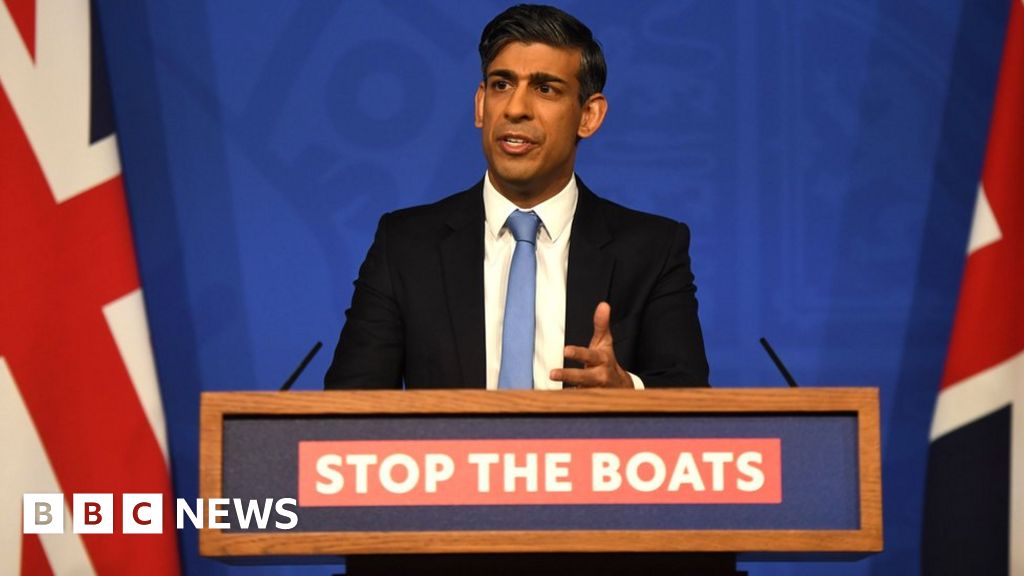
The prime minister answered questions on the Rwanda bill during Thursday's press conference
Prime Minister Rishi Sunak has urged the House of Lords to pass his flagship Rwanda bill, as he warned peers not to "frustrate the will of the people".
Giving a press conference after the legislation was approved by MPs, Mr Sunak said it was now up to the Lords to "do the right thing".
But he declined to give a date for when flights carrying asylum seekers would take off to Rwanda.
The PM would only say he wanted this to happen "as quickly as possible".
Although in the end only 11 Conservative MPs voted against the legislation as a whole, Mr Sunak still suffered his biggest rebellion since becoming prime minister when around 60 backed changes they said would toughen up the legislation.
The rebels argue the bill will not work in its current form as they believe flights will still be blocked by legal challenges.
The aim of the policy is to deter people from crossing the Channel in small boats, which Mr Sunak has made a key priority of his premiership.
However, Labour says it an expensive "gimmick", which is unworkable and unlawful.
Before becoming law, the bill must be approved by the House of Lords, where it is expected to face strong opposition.
The Lords are unlikely to vote it down completely but they can propose changes which would delay its progress.
Crossbench peer Lord Carlile, a leading lawyer and former independent reviewer of terrorism legislation, described the bill as "a step towards totalitarianism".
He told BBC Radio 4's Today programme many peers would see it as "a step too far" and an "illegitimate interference by politics with the law".
Mr Sunak urged peers to pass the bill unamended and as quickly as possible to get flights up and running, describing this as "an urgent national priority".
"The treaty with Rwanda is signed and the legislation which deems Rwanda a safe country has been passed unamended in our elected chamber," he said.
"There is now only one question. Will the opposition in the appointed House of Lords try and frustrate the will of the people as expressed by the elected House? Or will they get on board and do the right thing?"
Labour's shadow immigration minister Stephen Kinnock said the PM's comments were "bizarre".
"The House of Lords exists to scrutinise legislation," he said, adding that this function was "very important in our democracy".
Rishi Sunak’s Rwanda plan battle isn’t over yet
Asked if he could guarantee flights would take off before the next general election, which is expected this year, Mr Sunak said: "I've been crystal clear that we want to do this as quickly as possible… and it's now up to the House of Lords."
Earlier, Home Office minister Chris Philp told BBC Breakfast the "target" was for flights to leave by the spring, with Mr Sunak also previously saying this is his aim.
However, the prime minister did not give a concrete date when asked by journalists at the press conference.
Peers are due to begin debating the Rwanda bill before the end of this month, with the most crucial votes held in early March, according to senior House of Lords sources.
After this, the legislation will enter "ping pong", where the Commons and Lords try to reconcile their versions of the bill.
This is likely to involve the government trying to remove any changes inserted by the Lords.
If all goes to plan the bill should pass around mid-March.
Even after it becomes law, Mr Sunak's critics believe legal challenges could still delay or block deportation flights.
London — At their most recent public outing, attending the annual Christmas Day church service in Sandringham, England, Britain's King Charles III and his daughter-in-law Princess Catherine were the picture of health. So, the twin announcements Wednesday that the future queen was already in a private London clinic recovering from abdominal surgery and the monarch is set to undergo treatment next week for an enlarged prostate came as a bit of a shock.
A palace source said it was the king himself who wanted to make the details of his diagnosis public — an important openness from the new monarch after being crowned only last year.
"More human than what they used to project"
"It's an area of the body that's generally very sensitive – people are squeamish about," said CBS News chief medical correspondent Dr. Jon LaPook. "He's saying, 'Look, I'm a human. I have this problem, and here's how I'm going to take care of it.'"
The announcement about Charles came just an hour after it was revealed that Catherine, the Princess of Wales, or Kate as she's more often known, was recovering from what Kensington Palace called a "planned" abdominal surgery.
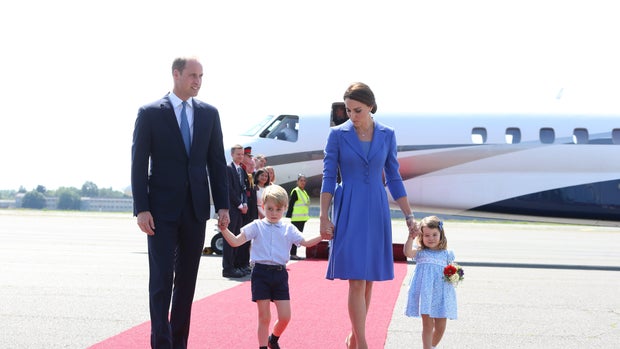
Catherine, Princess of Wales, with her family on Dec. 25, 2023 in Sandringham, England.Samir Hussein/WireImage/Getty
The palace said Kate would spend up to two weeks at the private London clinic where she had the procedure, and then up to several months recuperating at home in Windsor, making it unlikely she will return to public duties until after Easter at the end of March. The palace stressed that surgery was not cancer related, but it has given no further detail, noting that Kate is keen to maintain her privacy.
The royal family has a history of closely guarding, or at least attempting to closely guard its most personal information, and some Brits welcomed them even acknowledging their health issues.
"I think it certainly shows that they're more human than what they used to project to the public," one Londoner told CBS News.
But given 42-year-old Kate's relatively young age and general good health, the limited detail provided by the royals about such a senior family member's hospitalization may have surprised or concerned some people. One veteran royal watcher and biographer says it's par for the course, however.
"Protecting those three children"
The palace statement reflected the fact that the princess "has always put herself as a mother first, and she doesn't want her children to be exposed to any kind of speculation or intrusion," CBS News royal contributor Amanda Foreman said, adding that it was worded "100% with a mind to protecting those three children."
Prince William, Kate's husband and the next in line to inherit the British throne, will also temporarily step back from his royal duties to be at the princess' side and to help care for their children, Prince George, 10, Princess Charlotte, 8, and Prince Louis, 5, the palace said. William was seen arriving at the London clinic to visit his wife on Thursday.
"The tradition has always been to err on the side of caution, and in particular, with the royal family, as we know there were instances in the young princes' growing up where they were incredibly scarred by media speculation about their mother" the late Princess Diana, Foreman told CBS News. "So, that mindfulness is why they have gone in this direction."
"An incredibly busy time for the princess"
Kate frequently polls as one of the most popular members of the royal family. Since the death of Queen Elizabeth II, and in the wake of her brother and sister-in-law Harry and Meghan's sensational exit from royal life, she has increasingly undertaken public engagements on her own.
Foreman said Kate was being side-lined from those royal duties at "an incredibly busy time for the Princess of Wales," noting the looming landmark dates on the Christian calendar around Easter.
"There's a lot that goes on around now, and the royal family plays a big role in that, and as an ambassador for mental health and for children, the big thing is that she has a very physical role — she's always standing up, sitting down, kneeling, picking up, and that's where she has to be particularly careful," Foreman said.
The length of Kate's expected recovery time "is very significant," noted Foreman, "but don't forget there are procedures that can require very long recovery times — for example, a hysterectomy can take weeks to recover — and it doesn't mean it's a life-threatening situation by any means."
"There are lots of procedures people don't want to have discussed. It is personal to them," noted the author. "So, this makes a lot of sense within the framework of what we're hearing."
It was one of Joe Biden’s first major foreign policy decisions.
Less than a month after taking office in January 2021, the United States president lifted two “terrorist” designations imposed by his predecessor, Donald Trump, against Yemen’s Houthi rebels.
At the time, Secretary of State Antony Blinken said the move came in “recognition of the dire humanitarian situation in Yemen”. The United Nations, as well as humanitarian groups and US lawmakers, had warned the “terrorist” designations could interrupt the flow of aid to the country.
Now, almost exactly three years later, the Biden administration is reimposing one of the designations against the Houthis, declaring them to be a “Specially Designated Global Terrorist group” amid a series of attacks in the Red Sea.
And once again, rights advocates and political analysts are sounding the alarm over the negative effects the decision may have on Yemeni civilians. Many also question whether Wednesday’s designation will succeed in pushing the Houthis to end their attacks.
“I’m very concerned about the devastating consequences for ordinary people in Yemen,” said Afrah Nasser, a non-resident fellow at the Arab Center Washington DC who previously worked as a Yemen researcher at Human Rights Watch.
Nasser told Al Jazeera that the designation risks deepening the humanitarian crisis in Yemen, which has experienced a years-long war between the Houthis and a coalition led by Saudi Arabia and the United Arab Emirates.
More than half of the Yemeni population — 18.2 million people — is in need of assistance, according to the UN, as the country reels from an economic crisis, rising costs, mass displacement and hunger.
“The ordinary Yemeni family today is suffering because of both the Houthi domestic policies and also the international community policies in Yemen, such as this [US] designation that we heard today,” Nasser said. “Yemenis are caught between two fires.”
Red Sea attacks
In a statement on Wednesday morning, Blinken said the “Specially Designated Global Terrorist group” designation (SDGT) came in response to Houthi attacks on commercial vessels in the Red Sea.
“This designation seeks to promote accountability for the group’s terrorist activities. If the Houthis cease their attacks in the Red Sea and Gulf of Aden, the United States will reevaluate this designation,” the top US diplomat said.
The Iran-aligned Houthis, who control large swaths of Yemen, began firing missiles at Israel and attacking commercial ships in the Red Sea shortly after the war in Gaza began in October.
The group pledged to target Israel-linked vessels as part of an effort to pressure the country’s government to end its Gaza bombardment and allow more humanitarian aid deliveries into the coastal Palestinian enclave. It later expanded the threat to any commercial vessels travelling to and from Israel along the arterial trade route off Yemen’s coast.
The attacks led shipping companies to suspend operations in the Red Sea and drew condemnation from the US and its allies.
Washington launched a naval coalition to protect commercial vessels in December, and it also carried out several strikes against Houthi targets in Yemen this month in what observers called a “dangerous” escalation.
On Wednesday, the Biden administration defended its decision to reimpose the SDGT designation on the Houthis, saying there would be “carve-outs” to protect aid to Yemen.
“Today’s designation targets the Houthis, not the Yemeni people,” National Security Council spokesperson John Kirby said in a press conference.
When asked about how any related sanctions would impact negotiations with the Houthis, Kirby responded firmly: “There’s no negotiations. There’s not a bargaining chip. It’s a way of holding the Houthis accountable.”
But experts cast doubt on whether the SDGT designation would lead the Houthis to stop their attacks in the Red Sea, as the administration suggested.
“It seems highly unlikely to have any positive effect on the behaviour of the Houthis,” said Brian Finucane, a senior US programme adviser at the International Crisis Group think tank.
“I think it’s a form of do-something-ism,” he told Al Jazeera. The reimposition of the SDGT designation, he added, is a reflection of Washington’s refusal to recognise that recent Houthi attacks are linked to the war in Gaza.
“The Biden administration has put itself in a box … where it doesn’t have good policy options.”
The designation
An SDGT designation focuses primarily on the finances of an individual or a group. In this case, it will freeze the Houthis’ assets in the US and prohibit American citizens from having any financial dealings with the organisation.
And while “civil and criminal penalties may be assessed for violations”, the designation is more narrow in scope than the second label that the Trump administration had imposed on the Houthis: that of “Foreign Terrorist Organization” or FTO.
That label makes it a serious crime to provide support to a blacklisted group.
“This [SDGT designation] is sort of a minimal: restricting access to funds from abroad, access to international markets. These are things that Houthis don’t have and never had. They don’t own stock on the New York Stock Exchange,” said Nabeel Khoury, a former deputy chief of mission at the US embassy in Yemen.
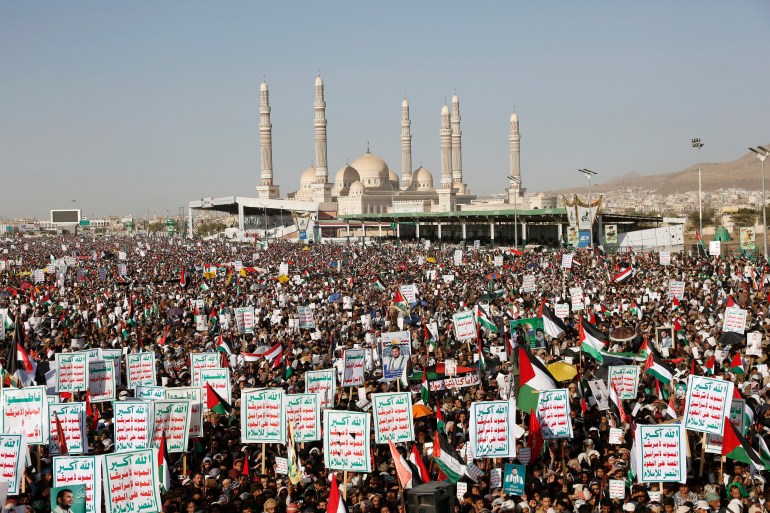
Houthi supporters attend a protest against US-led air strikes on January 12, 2024, in Sanaa, Yemen [AP Photo]
Nevertheless, Khoury told Al Jazeera that the Houthis are unlikely to make a distinction between an SDGT or FTO designation and will see Wednesday’s decision as an affront that could lead to further escalation.
Hours after the designation was announced, the Houthis said they fired “naval missiles” at an American ship in the Gulf of Aden. US Central Command later confirmed the US-owned and operated Genco Picardy was struck, causing some damage but no injuries.
“It’s really baffling what this administration is engaged in. I don’t think there’s much thought that went into this,” Khoury said. “This designation is more like an insult. It’s the old glove in the face, slap someone with your glove. You’re sort of challenging, but not really hurting them.”
Nasser also warned that the designation could further embolden the Houthis and “contribute in radicalising some parts of the population and strengthen the Houthi recruitment system”.
‘Level of uncertainty for Yemenis’
Yet, while the SDGT designation is “narrower” than an FTO, the Biden administration is aware “that these sanctions could make things worse for the people of Yemen”, said Finucane.
That’s because financial institutions and humanitarian organisations “are likely to be very cautious about engaging with the Houthis in Yemen”, particularly until clear rules around the redesignation are laid out, Finucane explained.
On Wednesday, the Biden administration said it is “taking significant steps to mitigate any adverse impacts this designation may have on the people of Yemen”. The decision will come into effect in 30 days, Blinken’s statement said, during which time the administration will consult with aid organisations and other stakeholders.
The US Department of Treasury also is expected to publish licenses “authorizing certain transactions related to the provision of food, medicine, and fuel, as well as personal remittances, telecommunications and mail, and port and airport operations on which the Yemeni people rely”.
An SDGT designation is doing something to do something. Like an FTO designation, it’s toothless and won’t have any desired effect. Where the FTO would have ushered in a certain catastrophe, an SDGT carries only a severe risk of catastrophe.
But that hasn’t dampened fears the designation will affect Yemenis negatively.
“This designation would add another level of uncertainty and threat for Yemenis still caught in one of the world’s largest humanitarian crises,” Scott Paul, associate director of peace and security at Oxfam America, told Al Jazeera in a written statement.
“The Biden administration is playing with fire, and we call on them to avoid this designation immediately and prioritise the lives of Yemenis now.”
With files from Al Jazeera’s Ali Harb in Washington, DC.